




Here's how it works
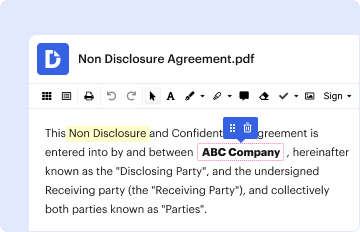
01. Edit your real estate assistant paperwork office online
Type text, add images, blackout confidential details, add comments, highlights and more.
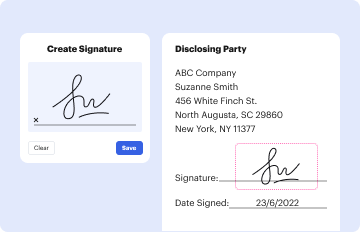
02. Sign it in a few clicks
Draw your signature, type it, upload its image, or use your mobile device as a signature pad.
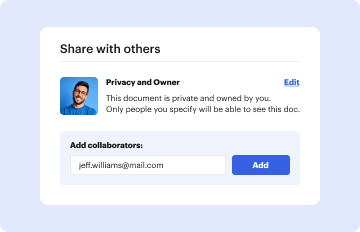
03. Share your form with others
Send information about brokerage services via email, link, or fax. You can also download it, export it or print it out.
How to use or fill out Maine Real Estate Brokerage Relationship Disclosure with our platform

- Click ‘Get Form’ to open the Maine Real Estate Brokerage Relationship Disclosure in the editor.
- Begin by reviewing the introductory section, which outlines your current status as a customer and the basic services you can expect from a real estate licensee.
- Decide whether you wish to be represented as a client or remain a customer. If you choose client representation, ensure you understand the implications of entering into a written agreement.
- Fill in your name and details in the designated fields for buyers or sellers, ensuring accuracy for effective communication.
- Complete the section regarding company policy on client-level services, selecting your preferred type of agency relationship if applicable.
- Finally, have the licensee complete their information at the bottom of the form, including their name and agency details before saving or sending it for signatures.
Start using our platform today to easily fill out and manage your real estate documents online for free!
Fill out Maine Real Estate Brokerage Relationship Disclosure online
It's free
It's free
See more Maine Real Estate Brokerage Relationship Disclosure versions
We've got more versions of the Maine Real Estate Brokerage Relationship Disclosure form. Select the right Maine Real Estate Brokerage Relationship Disclosure version from the list and start editing it straight away!
| Versions | Form popularity | Fillable & printable |
|---|---|---|
| 2006 | 4.8 Satisfied (88 Votes) |
Got questions?
We have answers to the most popular questions from our customers. If you can't find an answer to your question, please contact us.
Contact us
For what period must brokers retain brokerage relationship disclosure documents for residential transactions that result in a written contract?
brokers must retain brokerage relationship disclosure documents for five years for all residential transactions that result in a written contract to purchase and sell real property.
What is a written brokerage agreement?
These agreements clearly lay out what services you (as a homebuyer) expect your real estate professional to provide, and what your real estate professional will be paid. These agreements make things clear and reduce any potential confusion at the outset of your relationship with your real estate professional.
What is the written disclosure of brokerage relationships?
The brokerage disclosure is a written explanation signed by the prospective buyer or seller of real estate, which clearly explains the brokers role in the transaction.
What brokerage relationship does not have to be in writing?
A transaction broker provides limited representation to the buyer and does not represent either the buyer or the seller in the transaction. This type of relationship does not have to be in writing.
What is a brokerage relationship disclosure?
It is a resource to provide to a consumer when asked about the different brokerage relationships. It also provides assurance that the relationships have been explained to the consumer.
Security and compliance
At DocHub, your data security is our priority. We follow HIPAA, SOC2, GDPR, and other standards, so you can work on your documents with confidence.
Learn more


People also ask
When must the no brokerage relationship be disclosed to parties in a real estate transaction?
In real estate, there is no disclosure requirement when entering into a no brokerage relationship, as the agent does not represent either party. Other relationships like single agency, transaction broker, and dual agency require various disclosure levels due to their fiduciary duties.
What is the typical way to create a written brokerage relationship?
The typical written agreement is a listing agreement or a buyers agency agreement. The written agreement is the most appropriate and legally safe way to create an agency relationship.
What is a brokerage relationship in real estate?
A broker is usually not an employee. Rather, a broker acts as a special agent of his or her principal to accomplish the limited and specific purposes of the agency. In this relationship, the broker is authorized to solicit, negotiate and to act on behalf of the principal within the course and scope of the agency.