53a under 223a 2026

Get Form
53a under 223a Preview on Page 1

Here's how it works

01. Edit your form online
Type text, add images, blackout confidential details, add comments, highlights and more.

02. Sign it in a few clicks
Draw your signature, type it, upload its image, or use your mobile device as a signature pad.

03. Share your form with others
Send it via email, link, or fax. You can also download it, export it or print it out.

How to use or fill out 53a under 223a with our platform

Form edit decoration
9.5
Ease of Setup
DocHub User Ratings on G2
9.0
Ease of Use
DocHub User Ratings on G2
  1. Click ‘Get Form’ to open it in the editor.
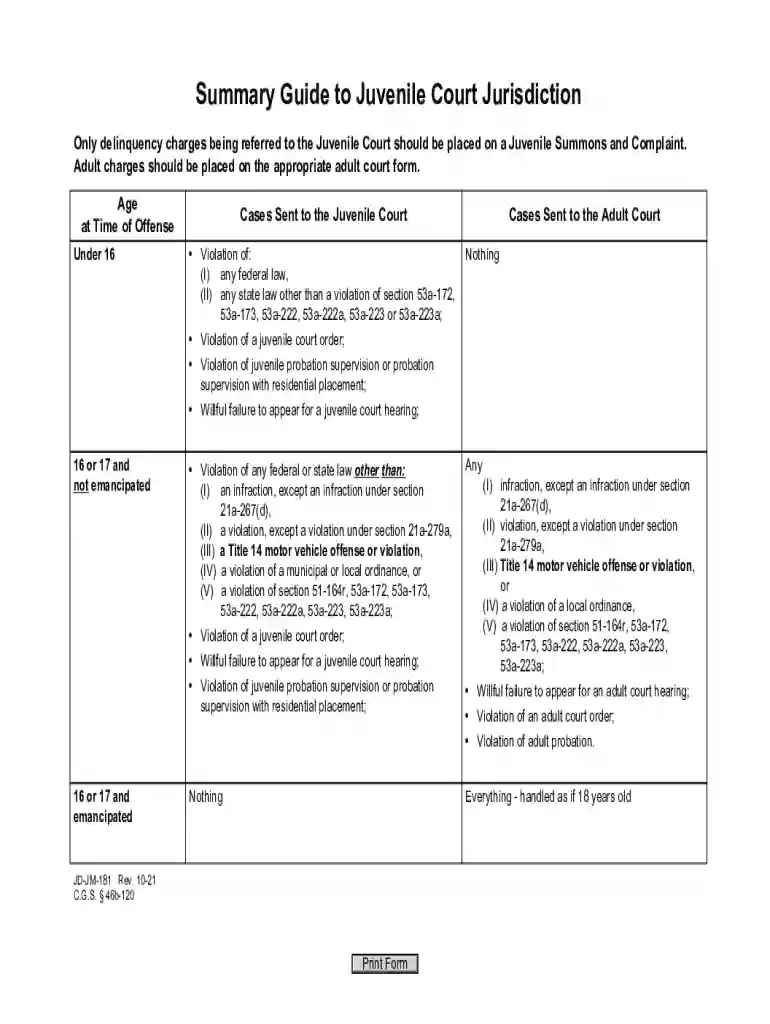
  2. Begin by entering the age of the individual at the time of the offense. This is crucial as it determines whether the case is sent to Juvenile or Adult Court.
  3. Next, review the list of violations applicable for individuals under 16. Ensure that any relevant charges are accurately noted in this section.
  4. For individuals aged 16 or 17 who are not emancipated, check all applicable violations listed. Make sure to include any juvenile court orders or probation violations.
  5. If the individual is emancipated and aged 16 or 17, note that all charges will be handled as if they were 18 years old. Confirm this selection clearly.
  6. Finally, review all entered information for accuracy before saving your document. Utilize our platform’s features to make any necessary edits easily.

Start using our platform today for free to streamline your form completion process!

See more 53a under 223a versions

We've got more versions of the 53a under 223a form. Select the right 53a under 223a version from the list and start editing it straight away!
Versions Form popularity Fillable & printable
2021 4.9 Satisfied (25 Votes)
2019 4.4 Satisfied (105 Votes)
2013 4.4 Satisfied (180 Votes)
be ready to get more

Complete this form in 5 minutes or less

Get form

Got questions?

We have answers to the most popular questions from our customers. If you can't find an answer to your question, please contact us.
Contact us
Criminal trespass in the first degree is a Class A Misdemeanor which is punishable by up to one full year in jail, a $2000 fine and probation.
What if the criminal orders of protection are violated? order and a standing criminal protective order is a Class D Felony, punishable by a $5,000 dollar fine and up to 5 years in prison.
In Connecticut, a Class D felony is punishable by up to 5 years in state prison and a fine of up to $5,000. A conviction for a Class C felony will result in a sentence of between 1 and 10 years in prison and a fine of up to $10,000. A felony charge wont just land you in prison for a year or longer.
Under Connecticut General Statutes 53a-223, it is illegal to violate the terms of an order of protection. This crime most commonly occurs in domestic violence cases.
The abuser can be held in civil contempt if s/he does anything that your restraining order tells him/her not to do and the judge can order whatever punishment that the judge believes is appropriate. To file for civil contempt, go to the clerks office and ask for the forms to file for civil contempt.

Security and compliance

At DocHub, your data security is our priority. We follow HIPAA, SOC2, GDPR, and other standards, so you can work on your documents with confidence.

Learn more
ccpa2
pci-dss
gdpr-compliance
hipaa
soc-compliance
be ready to get more

Complete this form in 5 minutes or less

Get form

People also ask

Reckless Endangerment in the First Degree in Connecticut is a Class A Misdemeanor, and penalties you face if convicted include: a maximum sentence of 1 year imprisonment. a fine of as much as $2,000. a term of up to 3 years of Probation.
Generally speaking, it is effective for 6 months from the date of the hearing. A victim/applicant can request that the restraining order after the hearing be extended when the 6 months is about to run out. They must file a motion to extend and the respondent must again get notice.
If a restraining order is issued against you, consequences can include legal restrictions, a damaged reputation, and potential criminal charges if you violate the order. You may also face job difficulties or strained personal relationships.

Related links