
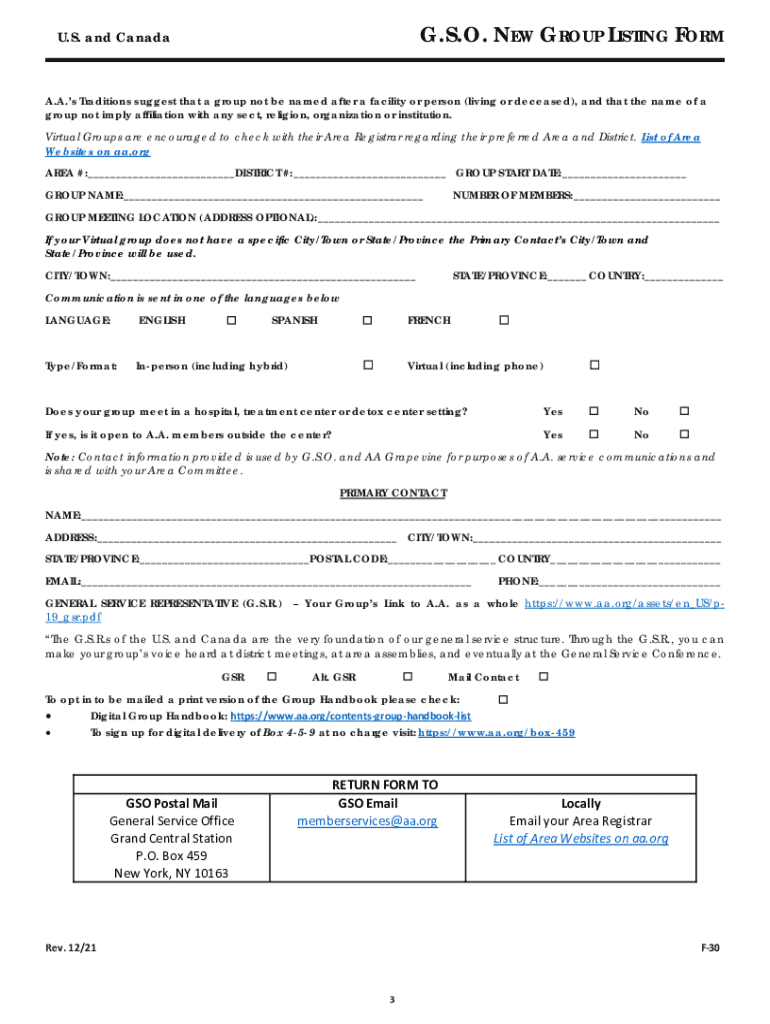







Definition and Purpose of F-30 Form
The F-30 form is a document typically used for specific administrative or regulatory purposes, varying by jurisdiction. It is often associated with official procedures such as tax filings, licenses, or registrations. Understanding its definition and purpose is crucial for ensuring compliance with relevant laws and regulations. Depending on its use case, the F-30 form might be mandatory for certain individuals or organizations. It is essential to identify the precise function of this form within the context of the specific regulatory framework it belongs to.
Main Functions
- Compliance: Ensures adherence to statutory or regulatory requirements.
- Documentation: Provides a documented record of specific transactions or declarations.
- Verification: Acts as a tool for verifying the accuracy of provided information.
Application Context
- Taxation: May be used for declaring specific financial transactions to tax authorities.
- Business Registration: Could be required for registering certain business activities or changes.
- Licensing: May serve as a component in applications for professional or operational licenses.
How to Use the F-30 Form
Using the F-30 form correctly involves several key steps to ensure proper completion and submission. Familiarizing oneself with these steps is critical for avoiding errors and potential rejections. Below is a general guide on how to effectively use the form.
Step-by-Step Guide
- Read Instructions Thoroughly: Ensure you understand all sections of the form to avoid common pitfalls.
- Gather Required Information: Compile all necessary documentation and data before starting.
- Complete All Sections: Fill out each part accurately, paying close attention to mandatory fields.
- Review for Accuracy: Double-check all entries to ensure there are no mistakes or omissions.
- Submit in the Correct Format: Follow specified submission guidelines, whether online, by mail, or in-person.
Practical Tips
- Ensure compatibility with any digital systems if submitting electronically.
- Keep a copy of the completed form for personal records.
How to Obtain the F-30 Form
Acquiring the F-30 form can vary depending on its official use or issuing agency. Knowing where and how to obtain the form is essential for timely completion and compliance.
Channels for Access
- Official Websites: Most forms, including the F-30 form, are available at government or agency websites.
- Mail or In-Person Requests: Some offices may provide forms upon request via mail or in-person visit.
Considerations
- Check for the latest version to avoid compliance issues with outdated forms.
- Ensure you access it from a reputable source to confirm its authenticity.
Steps to Complete the F-30 Form
Filling out the F-30 form efficiently requires understanding its structure and the specifics of each section. Clarity and concentration on details are important for successful submission.
Step-by-Step Instructions
- Locate all required fields.
- Provide necessary identification details, such as name, address, and social security or tax ID numbers.
- Fill in the relevant sections applicable to your specific situation.
- Insert any additional documentation that might be needed to support your application.
- Ensure the signature line is completed if necessary; sometimes this must be done in the presence of a witness or notary.
Who Typically Uses the F-30 Form
The F-30 form is generally used by specific groups determined by the regulatory or administrative body issuing it. Recognizing whether or not you fall within these groups helps identify your need to complete the form.


User Categories
- Business Entities: Companies or organizations likely require this form for regulation compliance.
- Individual Filers: Self-employed individuals or professionals needing licensure or registration.
- Taxpayers: Certain taxpayers may need forms like the F-30 for reporting purposes based on financial activity.
Key Elements of the F-30 Form
Understanding the core elements of the F-30 form is critical for accurate completion. Each element generally prepares the groundwork for the overall purpose of the form by gathering precise information.
Main Components
- Identification Information: Personal or entity data essential for recognition.
- Transaction Details: Information related to the specific transactional or reporting activity.
- Declaration and Signature: Informative assertions and acknowledgment by the filer, confirming truthfulness and accuracy.
Legal Use of the F-30 Form
Ensuring the legal use of the F-30 form is fundamental to maintaining compliance and avoiding legal consequences. Understanding its legal context can help prevent misuse or misinterpretation.
Legal Framework
- Adherence to Regulations: Aligning with government statutes or administrative rules.
- Official Record Keeping: Submitting the form establishes an official record that may be referenced in audits or reviews.
Required Documents for the F-30 Form
Compiling the correct documents to accompany the F-30 form ensures its acceptance and avoids unnecessary delays. These documents often substantiate the claims or information provided in the form.
Document Checklist
- Identification Proof: Valid IDs or business registration certificates.
- Financial Statements: Bank statements or proof of financial transactions declared in the form.
- Supporting Documents: Any additional paperwork required by the issuing authority, such as licenses or prior filings.
Filing Deadlines and Important Dates
Timely submission of the F-30 form is crucial. Being aware of filing deadlines and relevant dates prevents late submissions and potential penalties.
Critical Timelines
- Submission Deadline: Specific dates are often outlined by the issuing agency.
- Extension Options: Some forms may offer extension periods but require formal requests.
Understanding and adhering to these guidelines ensures proper completion and submission of the F-30 form, aligning with regulatory requirements and preventing future complications.




