
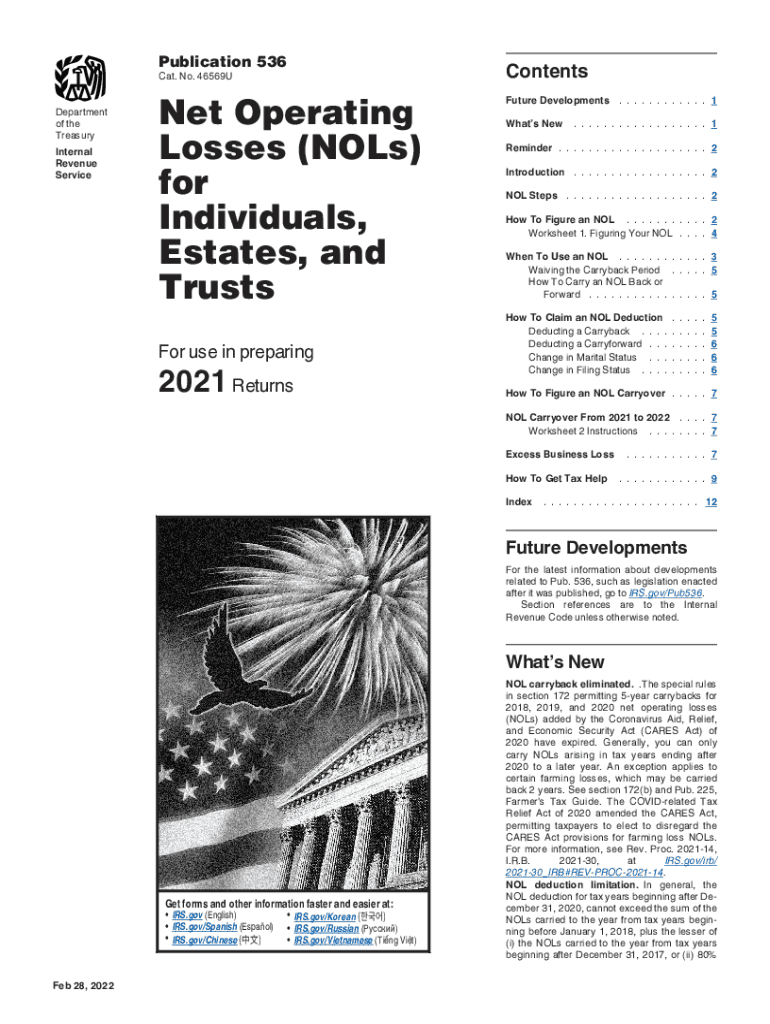







Understanding Publication 536: Definition and Purpose
Publication 536 is a crucial document from the IRS that provides guidance on Net Operating Losses (NOLs) for individuals, estates, and trusts. The primary purpose of this publication is to detail how taxpayers can calculate NOLs, when they can be utilized, and how to carry them backward or forward. This essential document outlines changes in tax law affecting NOL deductions, making it an invaluable resource for understanding tax obligations and opportunities for potential tax relief.
Steps to Complete Publication 536
-
Gather Necessary Information: Before calculating NOLs, gather all financial records for the relevant tax years. This includes income statements, deductions claimed, and any carryovers from previous years.
-
Read IRS Guidelines: Thoroughly review IRS Publication 536 to understand specific rules and recent changes in tax law. This will help you ascertain how NOLs are calculated and applied.
-
Use Provided Worksheets: Utilize the worksheets included in Publication 536 to calculate your NOLs accurately. These worksheets guide you in listing income, deductions, and losses comprehensively.
-
Determine Carryback and Carryforward Potential: Analyze whether it is advantageous to carry back the loss to previous tax years or carry it forward. Consider current financial situations and potential tax benefits.
-
Complete Required Forms: Fill out necessary tax forms as instructed in the publication, ensuring all information aligns with your NOL calculations.
-
Seek Professional Assistance: Consider consulting a tax professional if the calculations or applicable rules are complex or beyond your proficiency.
Why Should You Utilize Publication 536?
Publication 536 offers extensive benefits for those with qualifying NOLs. By understanding and applying NOLs appropriately:
-
Tax Relief: Reduce taxable income in profitable years by applying losses from less profitable ones, thus lowering overall tax liability.
-
Strategic Tax Planning: Plan strategically for future tax years, optimizing tax results through careful calculation and application of the NOLs.
-
Compliance Assurance: Stay compliant with IRS regulations by understanding the current legal framework and correctly applying it when reporting NOLs.
Who Typically Uses Publication 536?
Publication 536 is primarily used by:
-
Individuals: Taxpayers with personal income streams who experience fluctuations in income can leverage NOLs to manage their tax burdens.
-
Estates and Trusts: These entities often face variable income and can benefit from applying NOLs to manage taxation.
-
Self-Employed: Small business owners or freelancers who might have irregular income and expenses across different years.
Key Elements of Publication 536
-
Calculation of NOLs: Detailed instructions on calculating NOLs, considering various income and deduction factors.
-
Recent Legal Changes: Information on changes to NOL deductions due to legislation such as the Tax Cuts and Jobs Act and the CARES Act.
-
Worksheets: Tools and checklists to assist in accurate NOL calculation and application.
-
Examples: Real-world scenarios illustrating how NOLs can be applied, offering practical understanding.
IRS Guidelines on Publication 536
Publication 536 emphasizes compliance with the IRS's regulations on NOLs:
-
Documentation: Maintain comprehensive records to support your NOL claims.
-
Accuracy: Ensure precise calculations to avoid IRS audits or penalties.
-
Updates: Stay informed about any updates to IRS guidelines regarding NOLs, as tax laws can change.
Digital vs. Paper Version of Publication 536
-
Digital Version: Easily accessible on the IRS website, offering interactive features such as digital worksheets and updates.
-
Paper Version: Available for those preferring printed materials, beneficial for note-taking and offline access.
Penalties for Non-Compliance with NOLs
Failure to correctly apply Publication 536 can lead to:
-
IRS Audits: Incorrect or misleading NOL calculations can trigger audits, leading to a review of all tax returns.
-
Financial Penalties: Inaccurate reporting may result in fines or additional taxes owed.
-
Delayed Refunds: Mistakes or misapplications may hold up tax refunds, impacting cash flow.
Examples of Using Publication 536
-
Self-Employed Consultant: A consultant with variable income over several years can use publication guidelines to smooth tax burdens by applying a large loss from one year to another profitable year.
-
Estate Management: Executors handling estates with investment fluctuations might apply NOLs to efficiently manage tax liabilities over multiple tax periods.
By focusing on these elements, users can maximize the potential of Publication 536, ensuring calculated NOLs leverage tax benefits accurately and legally.




