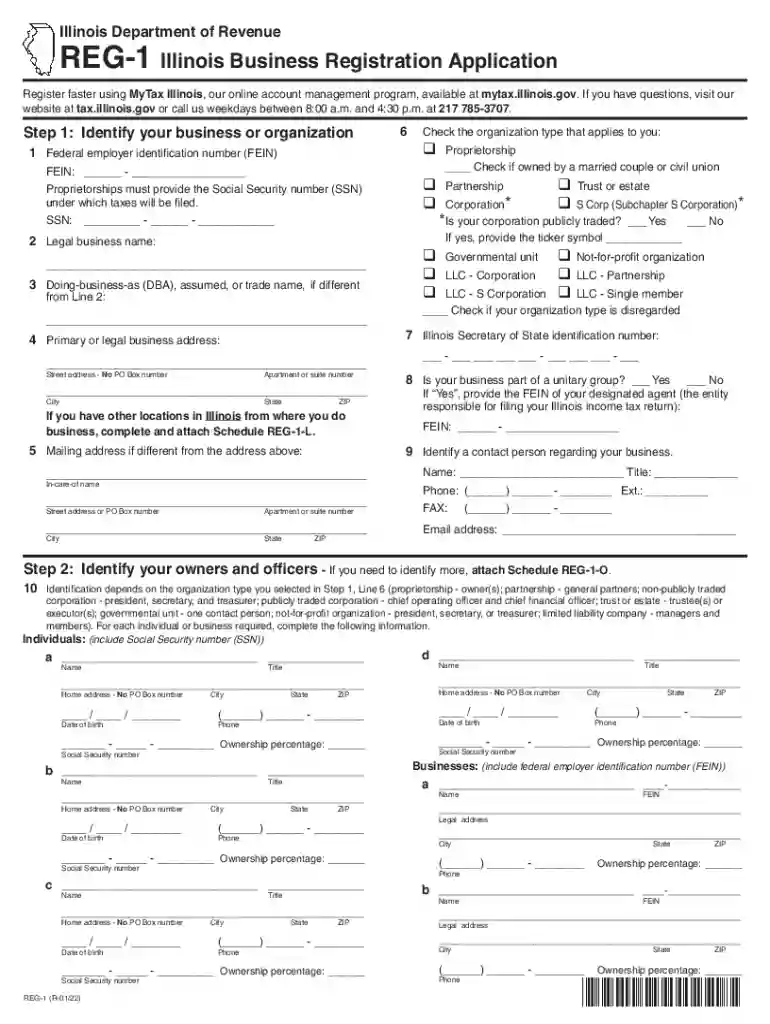
Definition and Purpose of the Illinois REG-1 Form
The Illinois REG-1 Form, officially known as the Illinois Business Registration Application, is a crucial document provided by the Illinois Department of Revenue. Its primary purpose is to facilitate the registration of businesses operating within the state of Illinois. This form is essential for entrepreneurs and entities seeking to establish a presence in Illinois, as it requires detailed information about the business type, ownership, and activities. The application helps to ensure compliance with state tax obligations and lays the groundwork for managing tax accounts accurately.
Key Features of the REG-1 Form
- Business Identification: The form captures the basic details about the business, including its legal and trade names, addresses, and entity type (such as LLC, corporation, or partnership).
- Owner Information: It requires the disclosure of information about the principal owners or officers of the business, which may involve providing Social Security Numbers for verification purposes.
- Activity Description: Businesses must outline their primary activities, allowing the state to categorize and assess applicable taxes.
- Tax Obligations: The form covers several tax registration areas, such as sales tax, withholding tax, and excise tax, depending on the nature of the business.
How to Obtain the Illinois REG-1 Form
Acquiring the Illinois REG-1 Form is a straightforward process, with multiple avenues available for business owners. This flexibility ensures that all entrepreneurs, regardless of their preferred method, can access the form with ease.
- Online Access: The simplest way to obtain the form is through the Illinois Department of Revenue's official website, where it is available for download in PDF format.
- MyTax Illinois: For those who prefer a digital approach, opening an account on MyTax Illinois allows for the direct submission of the REG-1 Form electronically, streamlining the application process.
- In-Person or By Mail: While digital methods are encouraged for efficiency, the form can also be requested from local Department of Revenue offices or through traditional mail services for those who prefer physical documentation.
Steps to Complete the Illinois REG-1 Form
Completing the Illinois REG-1 Form requires careful attention to detail to ensure accuracy and compliance with state regulations. Here is a step-by-step guide to assist applicants in filling out the form correctly:
- Gather Required Information: Before starting, compile all necessary details about the business, including owner information, business address, and anticipated start date.
- Fill Out Business Information: Enter the name, type, and address of the business. This includes specifying any trade names or DBA (Doing Business As) titles.
- Provide Ownership Details: List the names and personal information of the principal owners or corporate officers.
- Describe Business Activities: Clearly outline the primary activities and services provided by the business to help determine applicable taxes.
- Select Tax Types: Indicate which taxes the business will be responsible for, such as sales, use, or withholding taxes.
- Review and Sign: Double-check all entries for accuracy before signing the form to confirm that the information provided is correct.
Importance of the Illinois REG-1 Form
The Illinois REG-1 Form plays a pivotal role for any business operating within the state, as it ensures that businesses are properly registered for tax purposes. This registration is a legal requirement, serving as the first step in establishing a reputable business presence in Illinois.
- Legal Compliance: Without completing the REG-1 Form, businesses risk operating illegally, which can lead to penalties and fines.
- Tax Management: Proper registration aids in the efficient management of tax obligations, simplifying the process of filing returns and making payments.
Who Typically Uses the Illinois REG-1 Form
A diverse range of businesses and entities within Illinois are required to complete and submit the REG-1 Form. While some businesses may have alternative forms, the REG-1 is essential for several primary categories:

- Startups and New Enterprises: Any new business in Illinois must complete this form as part of the initial registration process.
- Existing Businesses Expanding Operations: Companies that expand into Illinois or introduce new taxable activities are required to update their registration via this form.
- Non-Illinois Businesses with Nexus: Out-of-state businesses that establish a presence or significant activity levels in Illinois must register using the REG-1 Form.
Key Elements of the Illinois REG-1 Form
The Illinois REG-1 Form is structured to capture critical information that facilitates efficient business registration and tax management. Understanding these elements is crucial for accurate completion:
Business Details
- Entity Type: Identifies whether the business is a corporation, partnership, sole proprietorship, or another form.
- Official Dates: Includes the start date for business operations and specific dates relevant for tax periods.
Ownership Information
- Principal Owners: Detailed information about each principal officer or owner, which may include personal identification numbers.
- Nature of Control: Indication of the type of control each owner or officer holds within the business structure.
Tax Registration
- Types of Taxes: Specification of the taxes applicable to the business, which could include sales, use, or payroll taxes.
- Filing Frequency: Indication of how often tax returns will be filed, which can impact business operations and financial management.
State-Specific Rules for the Illinois REG-1 Form
Familiarity with state-specific rules related to the Illinois REG-1 Form ensures compliance and reduces the likelihood of errors or omissions during the registration process.
- Threshold Criteria: Illinois has specific criteria and thresholds for different tax types, impacting when and how businesses should register.
- Nexus Guidelines: Out-of-state businesses should be aware of Illinois' nexus rules that determine when their activities warrant registration for tax purposes.
- Penalties for Non-Compliance: Ignorance of rules leads to penalties, which may include fines or interest on unpaid taxes, emphasizing the importance of understanding Illinois-specific requirements.