




01. Edit your it 213 online
Type text, add images, blackout confidential details, add comments, highlights and more.

Type text, add images, blackout confidential details, add comments, highlights and more.

Draw your signature, type it, upload its image, or use your mobile device as a signature pad.

Send form it 213 via email, link, or fax. You can also download it, export it or print it out.
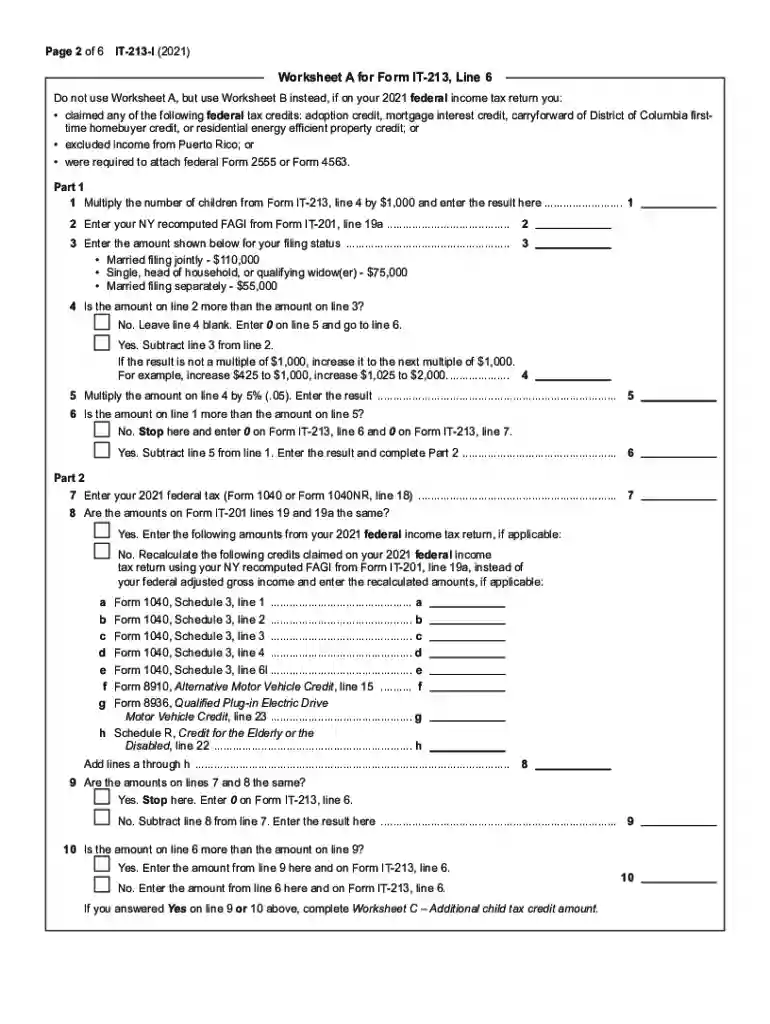
Form IT-213 is a document issued by New York State for individuals looking to claim the Empire State Child Credit. The purpose of this form is to provide a tax credit to qualifying residents who have dependent children that meet certain eligibility criteria. The credit aims to alleviate some of the financial burdens associated with raising children by allowing taxpayers to reduce their state tax liability based on a percentage of the federal child tax credit or a fixed amount per qualifying child. Understanding the form's purpose is essential for taxpayers who wish to utilize it effectively in their tax filings.
To accurately complete Form IT-213, follow these detailed steps:
Gather Necessary Information: Obtain the Social Security numbers and birth dates for all qualifying children. Ensure that you have documentation to prove residency and relationship to the child.
Determine Eligibility: Assess if your dependents meet the age and residency requirements. Children must be under a certain age and have lived with the taxpayer for more than half of the tax year.
Calculate the Credit: Use the instructions on the form to calculate the credit amount. This involves determining whether you will apply a percentage of your federal child tax credit or use the fixed amount per child.
Complete the Form: Enter personal details and the calculated credit amount in the appropriate sections of the form. Ensure accuracy to avoid processing delays.
Attach Required Documents: Prepare any necessary supporting documents, such as birth certificates or prior tax returns, to substantiate your claims.
Submit the Form: File the completed form with your New York State tax return by the specified deadline to claim the credit.
Eligibility for the Empire State Child Credit via Form IT-213 is based on several criteria:


Taxpayers can access Form IT-213 in several ways:
Form IT-213 consists of critical sections that include:
The legal obligations associated with Form IT-213 require:
New York State imposes particular rules and nuances for Form IT-213:
Adhering to important filing dates for Form IT-213 is crucial:
By understanding and implementing these guidelines, taxpayers can efficiently navigate the complexities of Form IT-213, ensuring they maximize potential credits while maintaining compliance with New York State tax regulations.
We've got more versions of the it 213 form. Select the right it 213 version from the list and start editing it straight away!
At DocHub, your data security is our priority. We follow HIPAA, SOC2, GDPR, and other standards, so you can work on your documents with confidence.
IT-213. Claim for Empire State Child Credit. Tax Law Section 606(c-1). Submit this form with Form IT-201. Name(s) as shown on return. Your Social SecurityRead more
Feb 23, 2018 To deduct car expenses under either method, you must keep records that follow the rules in chapter 5 of Pub. 463. In addition, you must completeRead more


