
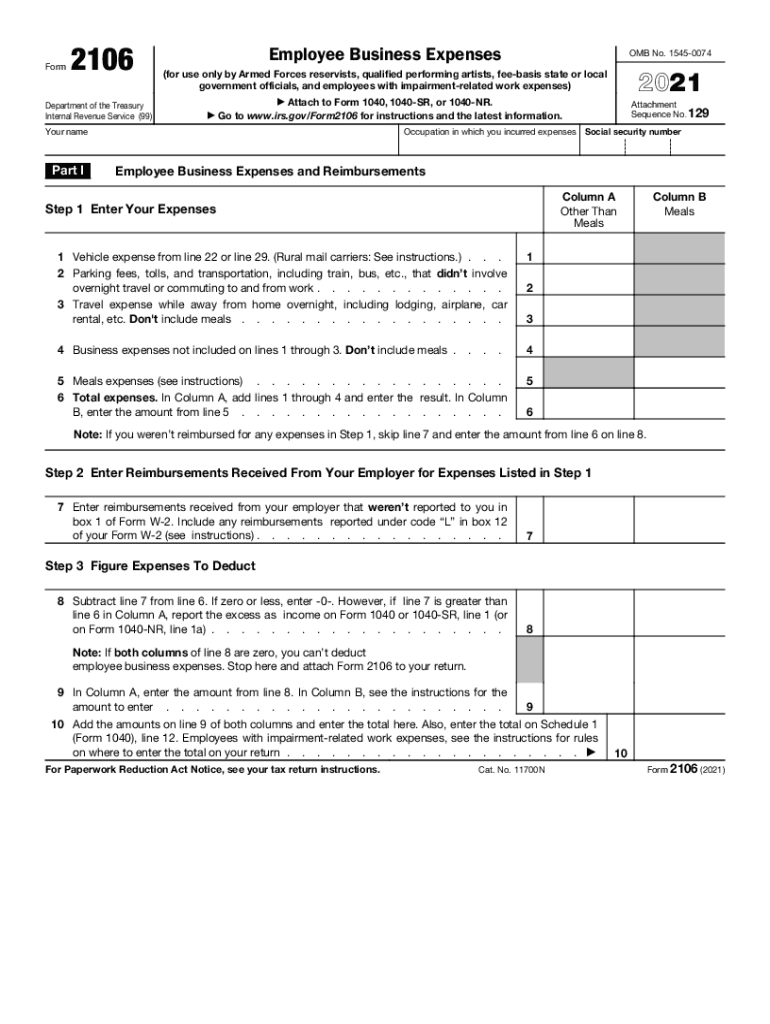







Definition and Purpose of Form 2106
Form 2106, Employee Business Expenses, is a tax document used primarily by certain categories of employees in the United States. These include Armed Forces reservists, qualified performing artists, fee-basis state or local government officials, and employees with impairment-related work expenses. The form is used to report employee business expenses and reimbursements for the year 2021. It's essential for those who need to claim deductions related to work expenses that aren't covered by their employer. Understanding the detailed purpose of Form 2106 helps in identifying when and why it should be utilized in the tax filing process.
User Eligibility for Form 2106
Certain individuals can utilize Form 2106 to claim deductions for unreimbursed job expenses. This includes:
- Armed Forces reservists who travel more than 100 miles away from their home to perform their duties.
- Qualified performing artists who meet specific income and expense criteria.
- Fee-basis state or local government officials who receive compensation on a fee basis.
- Employees with impairment-related work expenses enabling them to work.
Understanding the eligibility criteria is crucial for determining if Form 2106 applies to your specific professional situation.
Key Elements of Form 2106
Form 2106 consists of several critical sections that help in calculating deductions. These sections typically focus on:
- Vehicle Expenses: Calculating deductions for mileage and total vehicle operating costs.
- Other Business Expenses: Detailing costs such as travel, meals, and lodging.
- Reimbursements Received: Accounting for any reimbursements by the employer which affect the total deductible amount.
Each element plays a significant role in accurately capturing all eligible expenses.
Step-by-Step Guide to Completing Form 2106
Completing Form 2106 involves several steps to ensure all relevant expenses are captured:
- Gather Required Documents: Collect all receipts, logs, and statements that document the business expenses incurred.
- Calculate Mileage: Keep an accurate log of miles driven for business purposes if claiming vehicle expenses.
- Detail Business Expenses: List all other eligible business-related expenses.
- Account for Reimbursements: Subtract any reimbursements received from the employer for business expenses.
- Complete Deductions Section: Fill out sections related to total expenses and reimbursement impacts on deductions.
Accurately completing each step ensures a valid submission that maximizes the applicable deductions.
How to Obtain Form 2106
Obtaining Form 2106 is a simple process for taxpayers:
- Online Access: It’s available on the IRS official website as a downloadable PDF.
- Tax Preparation Software: Most tax programs, like TurboTax or H&R Block, include it as part of their forms library.
- Professional Assistance: Accountants or tax preparers can typically provide the form during consultations.
Having easy access to this form can streamline the process of preparing your tax returns.
IRS Guidelines on Usage
The IRS provides specific guidelines on using Form 2106, emphasizing the importance of accurate documentation and truthful reporting. Key points include:
- Deduction Limits: Understand the threshold limits for various types of expenses.
- Record-Keeping: Maintain detailed records for potentially several years in case of audit.
- Documentation Requirements: Ensuring all claims can be substantiated with physical records.
Following these IRS guidelines is critical to avoid penalties or issues during review processes.
Filing Deadlines and Important Dates
Form 2106 should be filed along with your other tax returns by the April deadline, subject to any IRS extensions. Important dates include:
- Annual Filing Deadline: Typically April 15, unless it falls on a weekend or public holiday.
- Extension Requests: Available if needed, typically extending the deadline by six months.
Being aware of these dates ensures timely submission and avoids penalties associated with late filing.
Submission Methods for Form 2106
There are various methods to submit Form 2106, depending on the taxpayer’s preference:
- Online Submission: Most tax software solutions offer electronic filing options, making the process efficient and quick.
- Mail: Physical copies can be mailed to the IRS address provided for your state or service center.
- Professional Help: Tax professionals can help ensure proper filing through both online and paper methods.
Selecting the appropriate submission method can impact processing times and the ease of tracking status updates.




