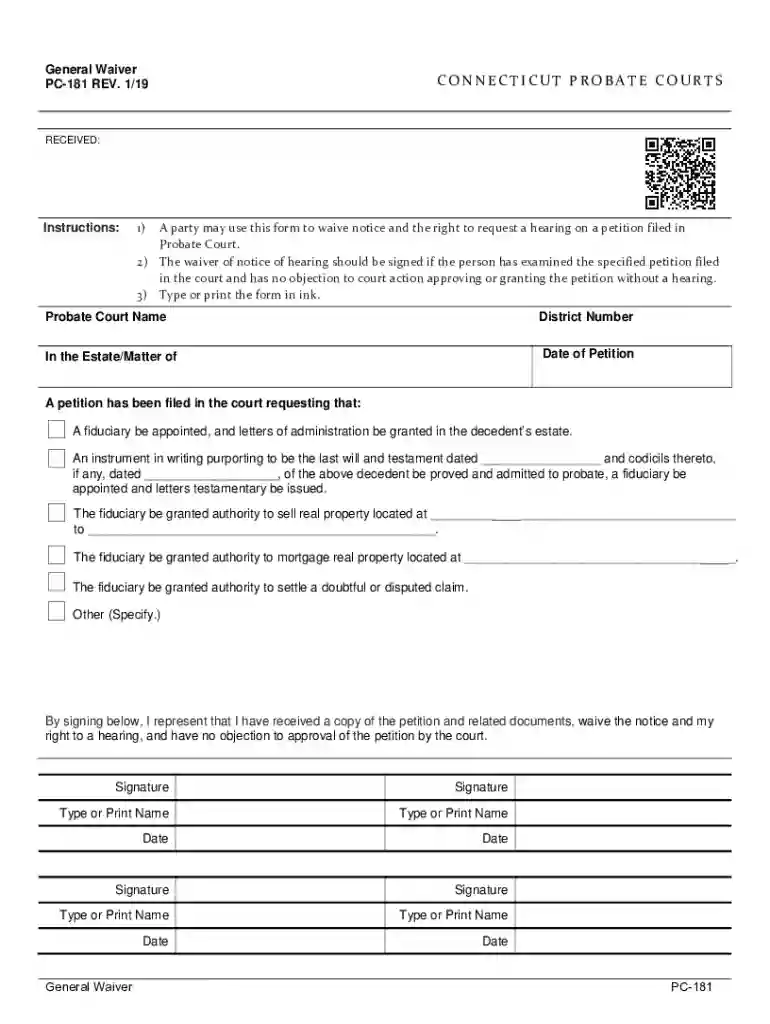
We've got more versions of the connecticut probate general form. Select the right connecticut probate general version from the list and start editing it straight away!
How much does an estate have to be worth to go to probate in CT?
In Connecticut, full probate is required when the decedent: owned individually held property without a beneficiary designation that is greater than $40,000; or. had any amount of solely owned real estate; or. has certain legal actions (such as a wrongful death claim) pending that need to be untaken by the estate.
How does Connecticut probate work?
When a person who owns property dies, the Probate Courts oversee division of the property. Most often the division is carried out according to the persons wishes as set forth in a will. If no will exists, the property is divided according to Connecticut law.
Do you have to go through probate when someone dies in CT?
Full probate is ONLY required by law if the person who dies, with or without a will, (1) owned real estate (not just a life use) that does not pass by the deed to the surviving joint owner, OR (2) owned $40,000 or more of other assets that also dont pass by beneficiary or joint ownership to another person.
How long does it take for probate in CT?
In Connecticut, the length of probate varies depending on the complexity of the estate. For a relatively simple estate, you can expect it to take at least six months, but many estates take a year or longer to settle completely.
What is the general administration of probate?
Probate is the general administration of a deceased persons will or the estate of a deceased person without a will. An executor is commonly named in the will or an administrator, if there is no will, to complete the probate process.
Related Searches
Connecticut Probate Court case lookupCT Probate formsConnecticut probate questionsCT Probate forms OnlineCT probate forms InstructionsCT Probate Court District numbersNew Haven Probate CourtProbate Court Hartford CT
Related forms
ASP Basic Certification ABC - ASP Instructor Portal - home
How long does an executor have to settle an estate in CT?
In general, the Executor may distribute assets five months after being appointed, except for the amount needed to pay claims, taxes and administration expenses. If necessary, payments can be made before that time for support of the decedents spouse and dependent children.
Related links
Adolescent Domestic Battery Typology Tool Manual
by W Nussbaum 2015 Cited by 7 Mr. Berry served as the Court Administrator for the Delaware. County (Ohio) Juvenile and Probate Court(s) from 1984-2003 and was the Family
Cookie consent notice
This site uses cookies to enhance site navigation and personalize your experience.
By using this site you agree to our use of cookies as described in our Privacy Notice.
You can modify your selections by visiting our Cookie and Advertising Notice.