Type text, add images, blackout confidential details, add comments, highlights and more.
02. Sign it in a few clicks
Draw your signature, type it, upload its image, or use your mobile device as a signature pad.
03. Share your form with others
Send it via email, link, or fax. You can also download it, export it or print it out.
How to use or fill out icwa consulta with our platform
Ease of Setup
DocHub User Ratings on G2
Ease of Use
DocHub User Ratings on G2
Click ‘Get Form’ to open the icwa consulta in the editor.
Begin by entering the child's name in the designated field. This is crucial for identifying the subject of the consultation.
Next, input the case number. This helps link your form to any existing legal documentation.
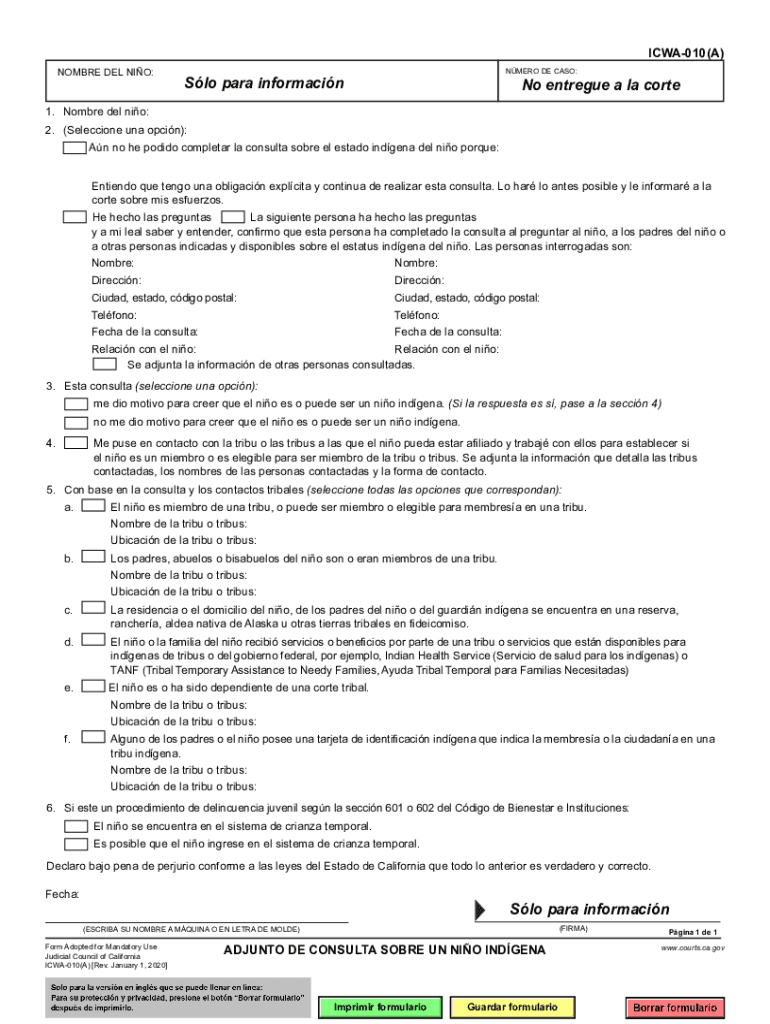
In section 2, select an option regarding your progress on the consultation about the child's indigenous status. Be sure to provide accurate information based on your efforts.
Fill in details about individuals consulted regarding the child's status, including names, addresses, and relationships. This information is vital for transparency.
Proceed to section 3 and indicate whether you believe the child may be indigenous based on your consultations.
If applicable, contact relevant tribes as outlined in section 4 and document your findings thoroughly.
Finally, complete section 5 by selecting all relevant options that apply to the child's situation and sign at the bottom of the form.
Start using our platform today for free to streamline your icwa consulta process!
Providing Active Efforts Under the Indian Child Welfare Act in
by C Crandall 2019 Cited by 6 Since the Act passed, the Supreme Court has heard a limited number of cases involving the ICWA, leaving state courts and tribal courts most-.Read more
ICWA-010(A) la consulta sobre los antecedentes indgenas del menor. Se adjunta la informacin de otras personas consultadas. la informacin que detalla las
Cookie consent notice
This site uses cookies to enhance site navigation and personalize your experience.
By using this site you agree to our use of cookies as described in our Privacy Notice.
You can modify your selections by visiting our Cookie and Advertising Notice.