
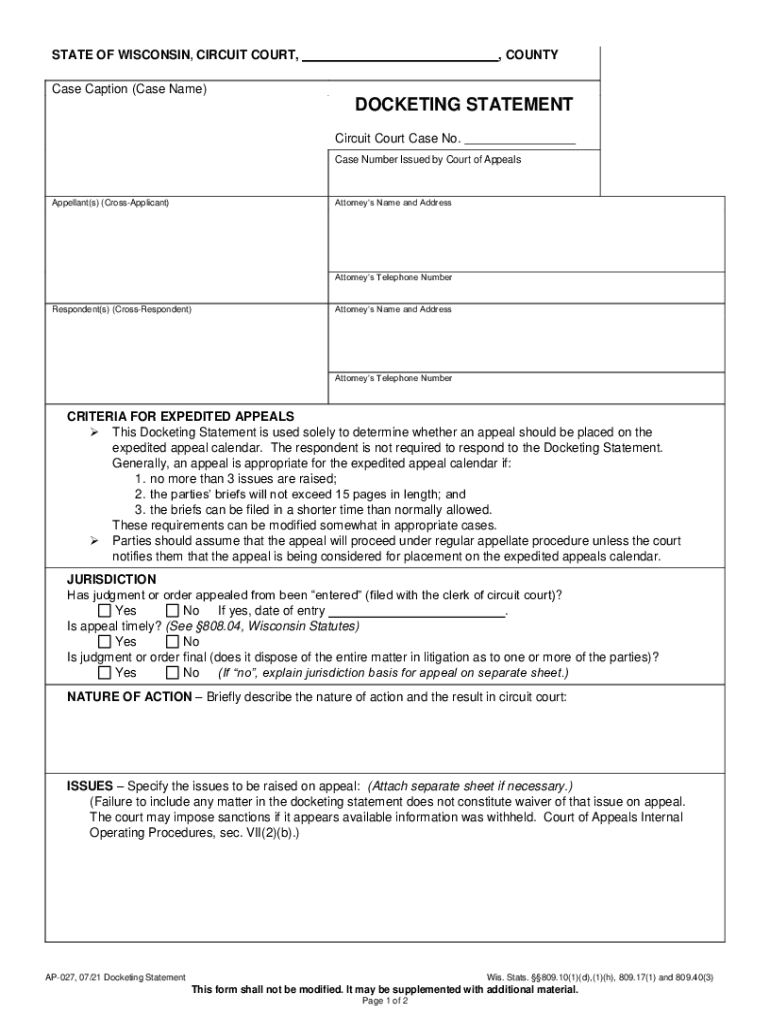







Definition and Purpose of the Wisconsin Docketing Statement
The Wisconsin Docketing Statement is a formal legal document used specifically in the Circuit Court of Wisconsin to streamline the appeals process. It is a vital component for cases that require expedited reviews, ensuring that all relevant details are presented to the appellate courts in a structured manner. This form outlines critical aspects of the case, including jurisdiction details, case information, legal issues on appeal, and the standard of review. Its primary objective is to provide a concise summary of the case to facilitate efficient judicial review.
Key Elements of the Document
- Case Information: Includes the full title of the case, case number, and the parties involved.
- Jurisdiction Questions: This section identifies any jurisdictional challenges that might affect the court's ability to hear the appeal.
- Nature of Action: Describes the type of legal action taken in the original trial, providing context for the appeal.
- Issues to be Raised on Appeal: Lists the specific legal issues or errors that will be contested in the appellate court.
- Standard of Review: Indicates the criteria that the appellate court will use to evaluate the legal arguments and rulings of the lower court.
How to Use the Wisconsin Docketing Statement
The docketing statement serves as a roadmap for the appeals process. To utilize this form effectively, legal practitioners should fill out each section completely and accurately. This requires thorough preparation and document gathering from the original trial proceedings. Attorneys commonly complete the docketing statement before submitting it to ensure that the appellate court has all the necessary information to proceed with the case.
Steps to Complete the Form
- Gather Required Documents: Collect all relevant trial court documents, including the judgment or order being appealed.
- Fill in Case Information: Provide accurate details about the case, including contact information for all parties involved.
- Specify Jurisdictional Questions: Clearly state any jurisdictional issues to be addressed, ensuring they are comprehensible and justified.
- Outline the Nature of the Action: Give a succinct overview of the original case, focusing on significant elements of the trial.
- Identify Issues for Appeal: Pinpoint specific legal arguments or decisions that are being disputed on appeal.
- Determine the Standard of Review: State the review standard relevant to each issue raised, which guides how the appellate court will assess the case.
Obtaining the Wisconsin Docketing Statement
The Wisconsin Docketing Statement can be obtained directly from the office of the Clerk of the Circuit Court where the original trial court proceedings took place. Many courts also make these forms available online for convenience. Accessing the form online often allows for downloading and digital completion, which can help streamline the submission process.
Form Submission Methods
- Online Submission: Some jurisdictions may offer the option to submit the form electronically via a designated court website.
- Mail Submission: The form, along with required documents, may be sent to the court via postal service.
- In-Person Submission: Documents can be delivered directly to the Clerk’s Office for immediate processing and filing.
Who Typically Uses the Wisconsin Docketing Statement
The primary users of the Wisconsin Docketing Statement are legal professionals such as attorneys and paralegals representing clients in appellate cases. Self-represented litigants who wish to appeal a lower court decision may also need to use this form. Legal practitioners rely on this document to succinctly convey critical case information to appellate judges, ensuring that the appeal is based on substantive grounds.


Legal Use of the Wisconsin Docketing Statement
The Wisconsin Docketing Statement is an integral legal document that carries significant weight in the appellate process. All information provided must be accurate and truthful, as misleading details can result in dismissal or other legal ramifications. The completion and filing of this form adheres to strict procedural rules and timeframes set by the Wisconsin Court System, ensuring due process. Legal representatives must remain vigilant about these rules to safeguard their clients' rights during the appeals.
State-Specific Rules for the Wisconsin Docketing Statement
Given that this document is specific to the state of Wisconsin, there are unique procedural rules that legal professionals must follow. These include specific filing deadlines, document formats, and submission protocols. Attorneys must familiarize themselves with these state-specific regulations to ensure compliance and avoid potential penalties for late or incorrect filings. Awareness of these rules enables efficient navigation through the appeals process.
Filing Deadlines and Important Dates
Properly adhering to the filing deadlines associated with the Wisconsin Docketing Statement is crucial for the appeals process. Deadlines are typically set from the date of the judgment or decision being appealed. Missing these deadlines can result in forfeiting the right to appeal and may lead to the dismissal of the case. Therefore, attorneys and litigants need to mark these critical dates and plan submissions accordingly, allowing ample time for any potential revisions. Legal practitioners often create timelines or utilize court calendars to keep track of these dates.
Examples of Using the Wisconsin Docketing Statement
Consider a civil case where the plaintiff wishes to contest the trial court’s decision regarding a contract dispute. The plaintiff’s attorney would use the Wisconsin Docketing Statement to raise specific legal errors made during the trial, such as misinterpretation of contractual terms or improper jury instructions. By doing so, the appellate court can focus on these critiqued aspects during its review, potentially leading to a reversal or modification of the original judgment.
Another scenario might involve a criminal case where the defendant appeals a conviction on the basis of evidentiary errors. In this example, the docketing statement would highlight which evidence was allegedly mismanaged and how it impacted the trial's outcome, aiding the appellate court in assessing the validity of these claims.




