






Understanding the RD-110: Employer's Quarterly Return of Earnings Withheld
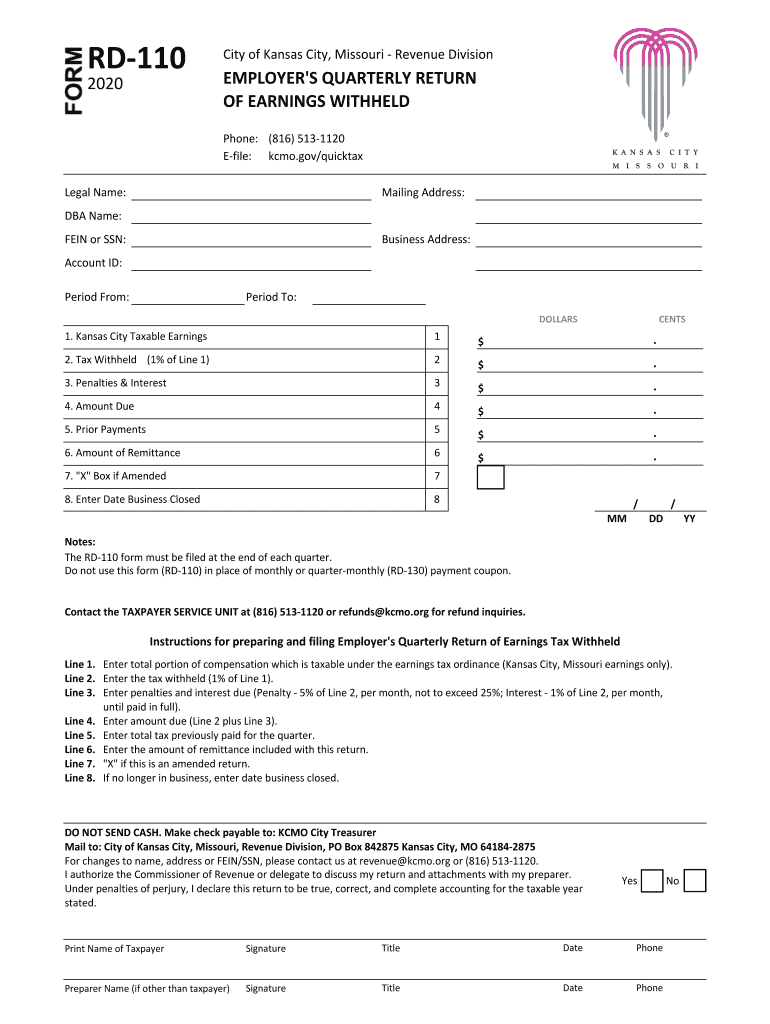
The RD-110 is an essential form for employers in Kansas City, Missouri, used to report quarterly earnings and taxes withheld from employees. This document serves as the Employer's Quarterly Return of Earnings Withheld, playing a crucial role in ensuring compliance with local taxation laws.
Steps to Obtain the RD-110
Employers can obtain the RD-110 form from the City of Kansas City's official website, where it is available as a downloadable PDF. It can also be acquired by visiting local tax offices in person. Employers must ensure they have the most current version to maintain compliance.
Completing the RD-110 Form Correctly
Filling out the RD-110 involves several key steps:
- Employer Information: Enter the business's legal name, address, and employer identification number (EIN).
- Earnings Reported: Specify total taxable earnings for the quarter.
- Tax Withheld: Record the amount of tax deducted from employee earnings.
- Balance Due or Refund: Calculate if additional taxes are owed or if a refund is due, based on prior payments.
- Signature and Date: Ensure the form is signed by an authorized person before submission.
Careful attention to detail is necessary to prevent errors that could lead to penalties.
Who Needs to File the RD-110?
Businesses operating in Kansas City, Missouri, that withhold earnings from employees are obligated to file the RD-110 each quarter. This includes a range of business types, such as corporations, partnerships, and sole proprietorships, ensuring they comply with local taxation requirements.
Legal Implications of the RD-110
The RD-110 serves as a legal document outlining employer tax obligations. Accurate and timely submission is required by law to avoid potential penalties. Employers must keep comprehensive records supporting the numbers reported for audit purposes if needed.
Filing Deadlines and Important Dates for the RD-110
The RD-110 must be filed quarterly with deadlines generally set for the last day of the month following the end of each quarter. This means:
- First Quarter: Due by April 30
- Second Quarter: Due by July 31
- Third Quarter: Due by October 31
- Fourth Quarter: Due by January 31 of the following year
It’s crucial for employers to adhere to these dates to avoid fines.
Submission Methods: Online vs. Paper Submission
The form can be submitted electronically through Kansas City’s online tax portal, which offers a convenient and fast method compared to mail submission. Traditional paper forms can be mailed to the designated local tax office. Each method requires ensuring that all information is complete and accurate.
Potential Penalties for Non-Compliance
Failure to submit the RD-110 on time or providing inaccurate information can result in financial penalties for the business. Penalties may include late filing fees, interest on unpaid taxes, and additional fines for repeated offenses.
State-Specific Considerations for the RD-110
While the RD-110 is specific to Kansas City, Missouri, employers should be aware of other state-specific requirements that may impact their filing obligations. It’s advisable to consult local regulations or a tax professional to ensure full compliance with applicable tax laws.
By understanding and properly managing the RD-110 form, employers in Kansas City can avoid unnecessary legal challenges and maintain good standing with taxation authorities.