



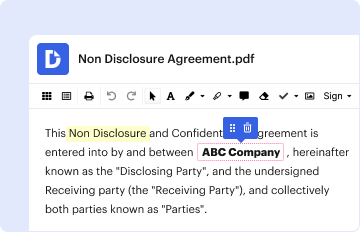
01. Edit your form online
Type text, add images, blackout confidential details, add comments, highlights and more.

Type text, add images, blackout confidential details, add comments, highlights and more.
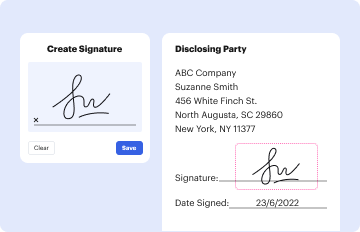
Draw your signature, type it, upload its image, or use your mobile device as a signature pad.

Send it via email, link, or fax. You can also download it, export it or print it out.
Federal Form 941, also known as the Employer's Quarterly Federal Tax Return, is a form used by employers in the United States to report taxes withheld from employee wages. This includes Social Security and Medicare taxes, as well as the federal income tax. It serves as a critical tool for the IRS to ensure that employers are collecting, reporting, and paying these taxes accurately. By using this form, employers can maintain compliance with federal taxation regulations, as it details the amounts withheld from each employee’s paycheck throughout the quarter.
Completing Form 941 involves several key steps, each of which must be followed meticulously to avoid errors. Here’s a detailed guide:
Gather Necessary Information: Before starting, collect all data related to employee wages, tips, and withheld taxes for the quarter.
Fill Out Employer Details: This includes inserting the Employer Identification Number (EIN), business name, and contact information.
Report Wages and Taxes: Enter the total wages and tips, calculate Social Security and Medicare taxes, and step into the details of adjustments if any.
Calculate Tax Deposits: Sum up the taxes already deposited and compare them against the liability for the quarter.
Complete Remaining Sections: Address any balance due or overpayment, and ensure all figures are double-checked for accuracy.
Sign and Submit: The form must be signed by an authorized individual before submission.
Obtaining the federal Form 941 is straightforward and can be done through several channels:
IRS Website: The form can be downloaded directly from the IRS's official website as a PDF.
Mail: Employers may request a copy by mail from the IRS if they prefer a paper version.
Tax Software: Many tax filing software like TurboTax and QuickBooks include Form 941 in their suite, providing users with guided assistance.
Form 941 is composed of multiple sections, each serving an essential purpose:
Part 1: Asks for wage details and amounts withheld for taxes.
Part 2: Covers adjustments, if any, such as corrections from previous quarters.
Part 3: Requires information on future deposit schedules and reconciliation of any discrepancies.
Provide comprehensive examples of how each section is used to maintain compliance.
The IRS sets forth specific guidelines that must be adhered to when filing Form 941. Compliance with these regulations is vital:
Employers must file by the end of the month following the end of the quarter.
Late submissions can result in penalties, underscoring the importance of timely filing.
Accurate reporting is crucial, as discrepancies can lead to audits or further inquiries by the IRS.
Discuss potential pitfalls and how to avoid them when completing the form.
Several scenarios highlight when and how different types of businesses might interact with Form 941:
Small Businesses: Small enterprises with a few employees must ensure they withhold the correct amount of Social Security and Medicare taxes.
Corporations and Partnerships: Larger entities may deal with more complex wage structures and thus require detailed attention to withholding amounts.
Seasonal Employers: Those who operate on a seasonal basis need special attention to compliance if they hire employees temporarily.


Understanding the penalties associated with Form 941 is crucial for any employer:
Late Filing Penalty: Up to 5% of the tax owed can be charged for each month or part of a month that a return is late.
Late Payment Penalty: Typically ranges from 0.5% to 1% per month of the tax amount that remains unpaid.
Interest: Interest accrues on any unpaid tax from the due date until the date of payment.
Offer real-world examples of penalties businesses have faced, emphasizing the importance of timely filing.
Choosing between a digital or paper submission of Form 941 can depend on several factors:
Digital Submission: Offers speed and convenience, with many tax software options simplifying the process.
Paper Submission: Although slower, it may be preferred by some employers who wish to retain a physical record of their filings.
Assess the advantages of each method in terms of efficiency and security.
At DocHub, your data security is our priority. We follow HIPAA, SOC2, GDPR, and other standards, so you can work on your documents with confidence.
The Form 941, Employers Quarterly Federal Tax Return, is used to perform a reconciliation (e.g. true-up) of the total federal tax payments made by anRead more
Apr 1, 2025 Dont use Form 941-V to make federal tax deposits. You can also pay your balance due by EFT instead of sending Form 941-V. If you pay yourRead more
May 2, 2017 Be sure that the payers name and EIN on Forms W-2 and. W-3 are the same as those used on the Form 941,. Employers QUARTERLY Federal Tax ReturnRead more


