






Definition & Meaning of the Power Outage Incident Action Checklist
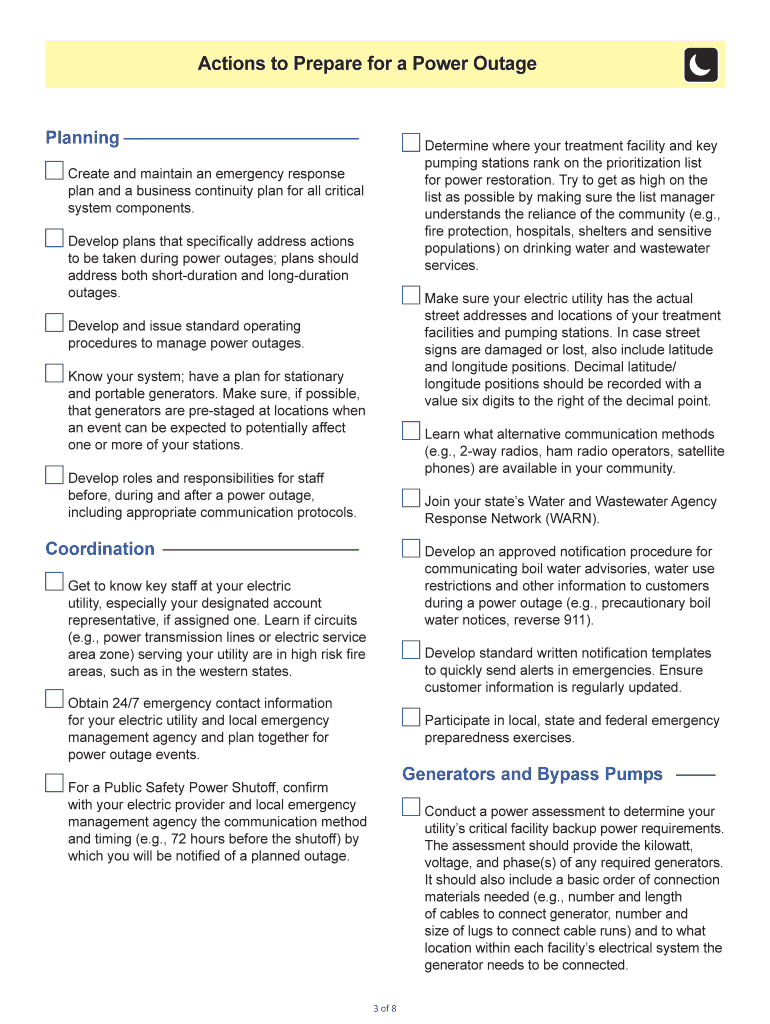
A power outage incident action checklist is an organized tool that helps individuals and organizations prepare for, respond to, and recover from power outages. It outlines specific steps and considerations to ensure continuity of operations and safety during incidents of power loss. This checklist serves as a critical resource across various sectors, particularly for utilities, healthcare facilities, and businesses that rely on consistent energy supply for operations. It encompasses everything from pre-planned response strategies to post-outage recovery actions.
Important components of the checklist often include:
- Preparedness Strategies: These involve actions taken before an outage to minimize impacts, such as inventorying equipment and securing backup power sources.
- Response Procedures: Steps that outline how to react effectively during an outage, including communication protocols and emergency contacts.
- Recovery Tactics: Guidance on restoring normal operations and assessing damages after power is restored, crucial for minimizing downtime and protecting assets.
Effective implementation of this checklist can significantly reduce operational disruptions and enhance safety during unexpected power interruptions.
Key Elements of the Power Outage Incident Action Checklist
A comprehensive power outage incident action checklist should include several key components that serve to guide users in their preparedness and response efforts. Below are critical sections and their explanations:
-
Identification of Critical Systems:
- Outline which systems are vital for operations, such as refrigeration in healthcare facilities or production lines in manufacturing. Identifying these systems drives focused preparedness efforts.
-
Backup Plan Development:
- This component includes strategies for obtaining backup power, such as generators, and ensuring their proper maintenance and accessibility. Regular testing of these systems is essential to increase reliability during an outage.
-
Communication Protocols:
- Establish clear lines of communication for all stakeholders, including internal teams and external partners. This may involve creating contact lists and templates for communicating with employees and customers.
-
Emergency Contact Information:
- Maintaining a list of emergency contacts, including utility companies and local emergency services, enables quick access to information and assistance when needed.
-
Training and Drills:
- Conduct regular training sessions and drills to ensure all team members are familiar with the checklist. This builds confidence and preparedness among staff.
-
Post-Outage Assessment:
- Procedures should include steps for evaluating the impact of the outage, reporting on damages or losses, and updating the checklist based on lessons learned from the incident.
By incorporating these elements, organizations can develop a robust and effective power outage response framework.
Steps to Complete the Power Outage Incident Action Checklist
Completing a power outage incident action checklist involves systematic steps to ensure effective deployment. Here’s a detailed outline of the process:
-
Preparation Phase:
- Audit existing power systems and identify vulnerabilities.
- Document all critical assets and resources necessary for continued operation during outages.
- Distribute the checklist to all relevant personnel to ensure understanding and compliance.
-
Response Actions:
- Immediately assess the situation upon learning of the outage to determine its cause and expected duration.
- Activate emergency communication protocols to inform staff and stakeholders.
- Deploy backup power solutions where applicable, ensuring that critical systems remain operational.
-
Assessment and Documentation:
- Log all actions taken during the outage, including times and conditions. This creates an event record for future reference.
- Evaluate the effectiveness of the response against established criteria and note any failures or delays in the process.
-
Recovery Steps:
- Upon restoration of power, conduct a thorough inspection of all systems to ensure they are functioning correctly.
- Collect feedback from team members on response and recovery processes and document any changes needed for future incidents.
-
Review and Update:
- Hold a debriefing session to review the overall effectiveness of the checklist.
- Update all sections based on new insights or changes to business operations to maintain relevance.
Following these steps ensures thorough execution of the checklist, reinforcing preparedness for future outages.
Examples of Using the Power Outage Incident Action Checklist
A power outage incident action checklist can be implemented in various real-world scenarios to illustrate its effectiveness:
-
Healthcare Facility Response: In a hospital, the checklist might lead to immediate activation of backup generators when a power outage occurs. The checklist guides staff to prioritize patient safety by ensuring critical equipment, like life-support systems, remain operational. Regular drills based on the checklist keep the team prepared for swift action.
-
Manufacturing Plant Scenario: A manufacturing facility experiences an unexpected outage. Using the checklist, the operations manager communicates with the supply chain and logistics teams while monitoring inventory levels affected by the outage. The documented response procedures help manage potential losses and minimize downtime.
-
Educational Institution Use: A university aligns its power outage procedures with the checklist, ensuring all critical areas like classrooms and laboratories are equipped with emergency lighting and backup power sources. The checklist facilitates effective communication with students and faculty about safety and operational plans during an outage.
These examples highlight the versatility of the power outage incident action checklist in a range of settings, emphasizing its role in enhancing safety and operational continuity.
Important Terms Related to the Power Outage Incident Action Checklist
Being familiar with essential terminology can help users better understand and implement a power outage incident action checklist effectively. Here are several important terms:
-
Backup Power: Refers to secondary power solutions, like generators or uninterruptible power supplies (UPS), utilized when the main power source fails.
-
Incident Response: The process of identifying, assessing, and mitigating the impacts of unexpected disruptions, such as power outages.
-
Stakeholders: Individuals or entities with an interest in the operation of a business or organization, often affected by outages and involved in communication protocols.
-
Downtime: Periods when operations cease due to power disruptions, leading to potential financial losses and operational challenges.
-
Asset Recovery: Measures taken to restore and rehabilitate affected infrastructure or systems following an outage.
Understanding these terms fosters better comprehension of the guidelines established in the checklist, enabling users to act decisively and effectively.