







Definition & Meaning
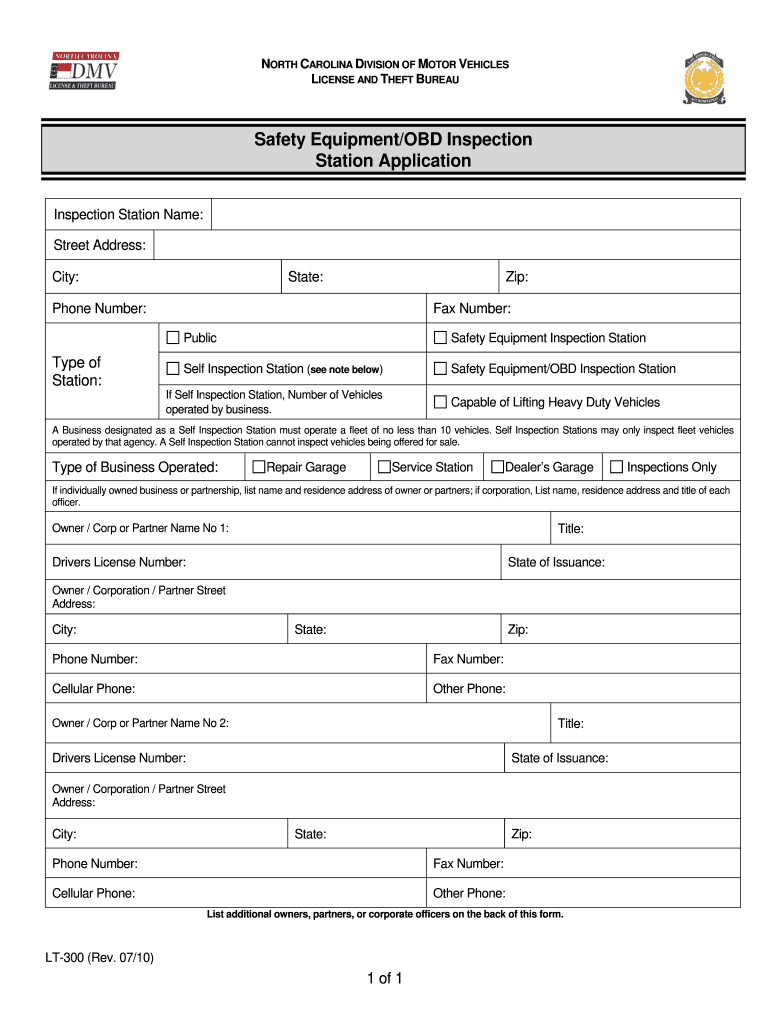
The North Carolina LT 300 is an essential form used for the state's vehicle inspection program. It primarily applies to safety equipment inspections and Outline-Based Diagnostics (OBD) compliance. This form is crucial for vehicle owners and inspection stations to demonstrate adherence to state regulations regarding vehicle safety standards.
The form collects important information about the inspection station, including the name, address, and type of inspection services provided. Additionally, it outlines requirements specific to the inspection process, emphasizing the necessity for certified technicians to conduct the inspections. This ensures that all vehicles meet the safety and emissions standards mandated by the North Carolina Division of Motor Vehicles (NC DMV).
How to Use the North Carolina LT 300
To effectively use the North Carolina LT 300 form, follow these steps:
-
Gather the Required Information:
- Owner's information, including name and contact details.
- Station details like physical address and inspection types offered.
-
Complete the Form:
- Fill out the sections related to business operations, ownership structure, and technician certifications.
- Ensure all fields are filled accurately to avoid processing delays.
-
Submit the Form:
- Choose your submission method: online, through mail, or in person.
- Keep a copy of the form for your records, as it may be needed for future reference or compliance checks.
Continual updates or changes in station operations should prompt a review and potential resubmission of the LT 300 to remain compliant with state regulations.
Steps to Complete the North Carolina LT 300
Completing the North Carolina LT 300 involves several detailed steps:
-
Section One: Station Information
- Include the official name of the inspection station and the physical address. Ensure that the contact number is current.
-
Section Two: Ownership Details
- Specify the type of ownership (e.g., sole proprietorship or partnership). Include the owner's name and relevant identification details.
-
Section Three: Certified Technicians
- List all certified technicians who will perform inspections. Attach copies of their certifications to the form if required.
-
Section Four: Declaration
- Sign and date the form, affirming the accuracy of the provided information and compliance with all pertinent laws and regulations.
-
Final Review:
- Review the entire form for completeness and accuracy. Check for any missing signatures or required attachments before submission.
Following these steps diligently will facilitate a smooth processing of the LT 300 form by the NC DMV.
Important Terms Related to the North Carolina LT 300
Understanding key terms related to the North Carolina LT 300 is vital for proper completion and compliance.
-
Safety Equipment Inspection: This refers to a formal examination of a vehicle's safety features to ensure they meet North Carolina's legal standards.
-
OBD (On-Board Diagnostics): A standardized system within vehicles that monitors engine performance and emissions control systems. Compliance with OBD standards is crucial for vehicle registration.
-
Certification: This indicates that a technician has met specific educational and practical training standards to perform vehicle inspections.
-
Inspection Station: A business authorized by the NC DMV to conduct vehicle inspections, including safety evaluations and emission testing.
Clarifying these terms not only aids in better understanding the LT 300 form but also allows for more informed discussions regarding vehicle inspection standards.
Legal Use of the North Carolina LT 300
The legal use of the North Carolina LT 300 is grounded in state regulations governing motor vehicle inspection procedures. The form enables the NC DMV to enforce compliance with safety standards required by law. As part of the submission process, the form verifies that the inspection station operates within the parameters set forth by North Carolina laws.
Using this form legally involves:
- Ensuring that all information provided is accurate and truthful, as any misinformation could lead to penalties or revocation of inspection privileges.
- Following state guidelines for vehicle safety inspections to maintain compliance.
- Keeping the LT 300 updated with any changes in ownership or technician certifications.
Failing to use the form correctly or neglecting compliance can potentially result in significant fines or legal repercussions, emphasizing the importance of adherence to regulations.
Examples of Using the North Carolina LT 300
Here are a few practical examples that demonstrate the usage of the North Carolina LT 300:
-
New Inspection Station Opening: When a new vehicle inspection station opens, the owner must complete and submit the LT 300 to obtain the necessary operating permits from the NC DMV. Updates on technician certifications and equipment will also need to be documented.
-
Ownership Change: If there is a change in ownership of an existing inspection station, the current owner must fill out the LT 300 to reflect new ownership information and update the DMV.
-
Compliance Checks: During routine inspections by DMV officials, they may request a copy of the LT 300 form to verify compliance. If the form is not correctly filled out or updated, it could result in penalties or the station losing its operational license.
These scenarios illustrate the critical role of the LT 300 in ensuring safety compliance and operational legitimacy in North Carolina's motor vehicle inspection landscape.
Required Documents for the North Carolina LT 300
When submitting the North Carolina LT 300, specific accompanying documents are typically required to streamline the approval process.
-
Certification Copies: Submit copies of technicians' certifications who will perform the inspections. This ensures that only qualified personnel are conducting the evaluations.
-
Proof of Business Registration: Provide documentation proving that the inspection station is legally registered with state authorities, which may include operating licenses or business name registrations.
-
Insurance Verification: Documentation showing liability insurance coverage is necessary to protect against potential legal claims resulting from inspections.
-
Prior Inspection Records: If applicable, provide any historical records of prior inspections conducted by the station to illustrate compliance with state regulations.
These documents are crucial for establishing the legitimacy of the inspection station and ensuring compliance with North Carolina Department of Motor Vehicles requirements.
Form Submission Methods for the North Carolina LT 300
The submission of the North Carolina LT 300 can be conducted through various methods, allowing flexibility to the inspection stations and operators.
-
Online Submission:
- Utilize the NC DMV online portal to upload and submit the form directly through their system. This method is typically the quickest and offers immediate confirmation of receipt.
-
Mail Submission:
- Completed forms can be mailed to the designated NC DMV office. Ensure to use a reliable mailing method and include a self-addressed, stamped envelope for confirmation of processing.
-
In-Person Submission:
- Visit a local DMV office to submit the form in person. This option also allows for immediate consultation with DMV representatives for clarifications or questions.
Choosing an appropriate submission method can significantly affect the processing time and efficiency of obtaining the necessary approvals for your inspection station.


