K 1 2026

Get Form
k 1 Preview on Page 1

Here's how it works

01. Edit your form online
Type text, add images, blackout confidential details, add comments, highlights and more.

02. Sign it in a few clicks
Draw your signature, type it, upload its image, or use your mobile device as a signature pad.

03. Share your form with others
Send it via email, link, or fax. You can also download it, export it or print it out.

How to use or fill out K-1 with our platform

Form edit decoration
9.5
Ease of Setup
DocHub User Ratings on G2
9.0
Ease of Use
DocHub User Ratings on G2
  1. Click ‘Get Form’ to open the K-1 document in the editor.
  2. Begin by entering your name and identifying information in the designated fields. Ensure accuracy as this information is crucial for tax reporting.
  3. Proceed to Section 1, where you will input your share of ordinary business income or loss. This amount is typically found in Box 1 of your K-1.
  4. Next, navigate to Section 2 for rental real estate income or loss. If applicable, enter the amounts from Box 2, ensuring you follow any specific instructions related to passive activity limitations.
  5. Continue filling out other relevant sections such as deductions and credits, referring to the corresponding boxes on your K-1 form. Pay attention to codes and additional notes provided for each item.
  6. Once all fields are completed, review your entries for accuracy before saving or exporting the document. Utilize our platform's features to sign and distribute your completed K-1 form seamlessly.

Start using our platform today for free and simplify your K-1 form completion!

See more k 1 versions

We've got more versions of the k 1 form. Select the right k 1 version from the list and start editing it straight away!
Versions Form popularity Fillable & printable
2022 4.7 Satisfied (26 Votes)
2021 4.8 Satisfied (166 Votes)
2020 4.4 Satisfied (130 Votes)
2019 4.2 Satisfied (78 Votes)
2018 4.3 Satisfied (207 Votes)
2017 4.4 Satisfied (81 Votes)
2015 4.3 Satisfied (45 Votes)
2014 4.4 Satisfied (50 Votes)
2011 4.1 Satisfied (36 Votes)
be ready to get more

Complete this form in 5 minutes or less

Get form

Got questions?

We have answers to the most popular questions from our customers. If you can't find an answer to your question, please contact us.
Contact us
A Schedule K-1 can impact your personal taxes in key ways. It reports income from partnerships, S-corporations, and trusts. This income is often considered pass-through, meaning it goes directly to you without being taxed at the entity level.
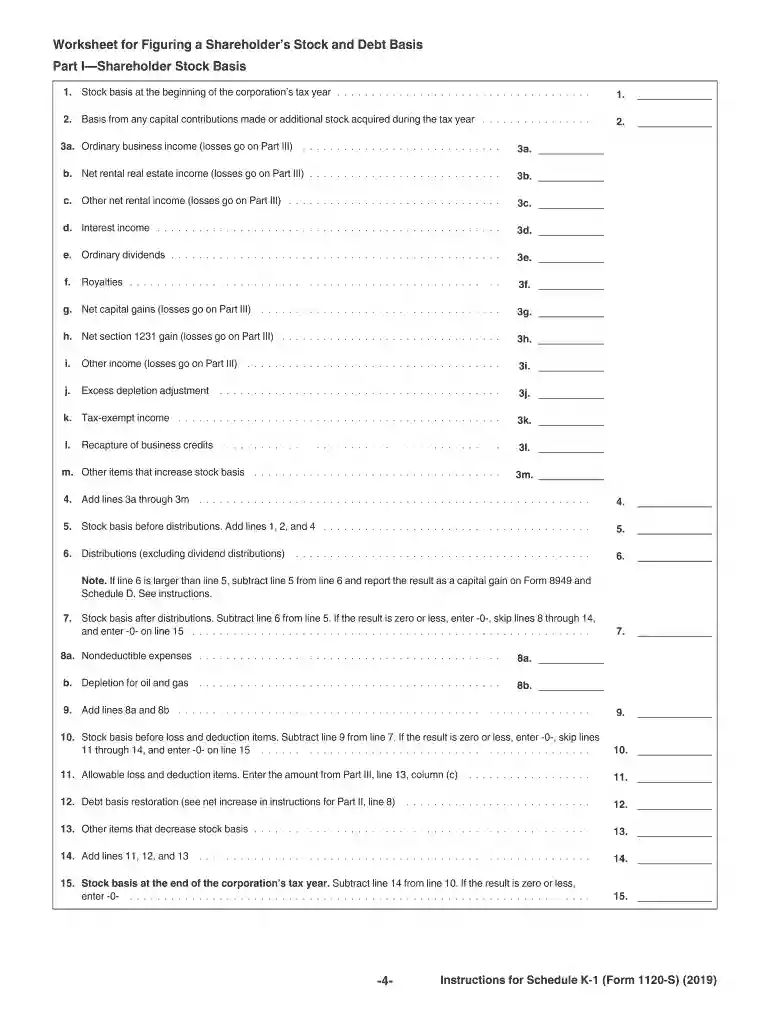
If your Schedule K-1 reports a loss, you might be able to deduct it on your tax return. However, limitations apply, including: Basis Limitation: You can only deduct losses up to your investment basis in the entity. At-Risk Rules: Losses are limited to the amount you have at risk in the business.
The Schedule K-1 tax form is for inheritance recipients who need to report their share of income, deductions, or credits from the trust or estate. Get the clarity you need to file your income taxes correctly as a beneficiary.
What is a K-1 form? The United States tax code allows some entities to use pass-through taxation. This effectively shifts the income tax from the earner to those who benefit. The Schedule K-1 is the form that reports the amounts that are passed through to each party that has an interest in the entity.
Purpose of Schedule K-1 The partnership uses Schedule K-1 to report your share of the partnerships income, deductions, credits, etc. Keep it for your records. Dont file it with your tax return unless youre specifically required to do so. (See Code O under Box 15, later.)

Security and compliance

At DocHub, your data security is our priority. We follow HIPAA, SOC2, GDPR, and other standards, so you can work on your documents with confidence.

Learn more
ccpa2
pci-dss
gdpr-compliance
hipaa
soc-compliance

People also ask

Schedule K-1 rules are complex, and many taxpayers make these common mistakes, including: Misclassifying income as passive or active. Ignoring at-risk or passive activity loss limitations. Using capital account instead of basis for deductions.
While both forms impact tax filings, the K-1 offers potential tax advantages associated with pass-through entities, whereas the 1099 represents a straightforward creditor relationship without the complexities of ownership tracking.

Related links