




01. Edit your form 1957 online
Type text, add images, blackout confidential details, add comments, highlights and more.

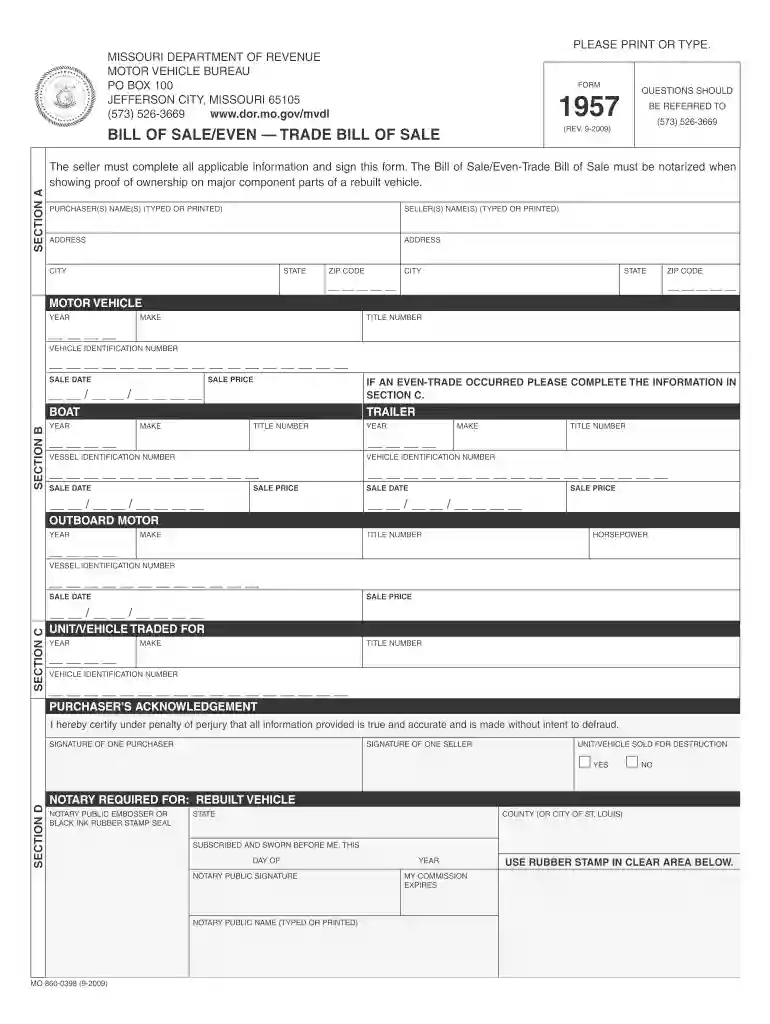
Type text, add images, blackout confidential details, add comments, highlights and more.

Draw your signature, type it, upload its image, or use your mobile device as a signature pad.

Send missouri form 1957 via email, link, or fax. You can also download it, export it or print it out.
The bill of sale in Missouri is a crucial document that serves as a legally binding agreement recording the sale of goods or property, particularly vehicles. This form provides details about the transaction between the buyer and seller, ensuring that both parties have documentation of the sale for their records. Understanding its definition is essential, as it clarifies the responsibilities and rights of each party involved.
Understanding these components ensures both parties adhere to regulations while providing clarity and security throughout the transaction process.
Filling out the Missouri Bill of Sale form involves a few straightforward steps. Completing it accurately ensures that both the seller and buyer are protected legally.
Following these steps accurately will help streamline the process and minimize potential disputes in the future.
Acquiring the bill of sale form in Missouri is a straightforward process. Several avenues can be pursued to obtain this vital document without complication.
Choosing a method that suits your needs ensures proper documentation and adherence to legal standards in Missouri.
Understanding the legal parameters surrounding the use of the bill of sale form in Missouri is crucial for effective compliance. These requirements ensure all parties understand their rights and responsibilities after completing a transaction.
Adhering to these legal uses and requirements ensures a smooth sales process while safeguarding both parties’ interests.
The bill of sale in Missouri is utilized by a variety of individuals and organizations, serving distinct purposes based on the nature of the transaction. Understanding these common uses helps clarify its practical applications.
Understanding these common scenarios aids sellers and buyers in using the bill of sale effectively, providing the necessary documentation for their specific needs.
We've got more versions of the form 1957 form. Select the right form 1957 version from the list and start editing it straight away!
At DocHub, your data security is our priority. We follow HIPAA, SOC2, GDPR, and other standards, so you can work on your documents with confidence.
Dec 11, 1997 IMPORTANT - Award will be made on this Form or on Standard Form 26, or by other authorized official written notice. EXCEPTION TO STANDARD FORMRead more
The seller must complete all applicable information and sign this form. The Bill of Sale or Even-Trade Bill of Sale must be DocHubd.Read more
by C Mulligan 2017 Cited by 22 In its current form, section 109(b) limits the first sale doctrine by stating that owners of particular copies of sound recordings and computer programsRead more


