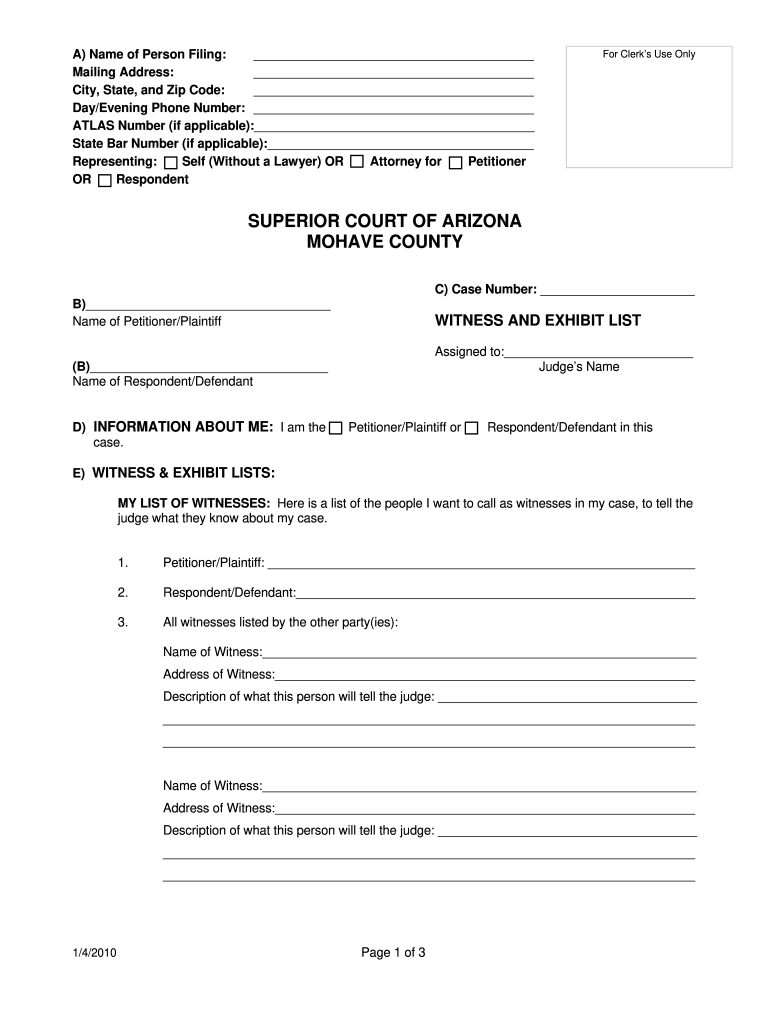







Definition and Significance of the Witness and Exhibit List
The witness and exhibit list serves as an essential component in legal proceedings, particularly in trials. This document outlines the individuals who will be presented as witnesses alongside the physical or documentary evidence, known as exhibits, that will be introduced during the trial process. Its primary purpose is to provide clarity and structure to the court and all parties involved, detailing who will attest to the facts of a case and what supporting materials will substantiate those claims.
- Witnesses: These are individuals who possess relevant information or insights regarding the case. Their testimony can significantly influence a judge or jury's understanding of the factual context.
- Exhibits: This includes documents, photographs, charts, or anything that can be presented as tangible evidence in court. Each exhibit must be clearly labeled and referenced appropriately in the list.
The inclusion of both witnesses and exhibits is not merely procedural; it plays a critical role in ensuring fair representation and transparency in legal proceedings. The integrity of the witness and exhibit list can influence case outcomes, making its proper preparation vital.
How to Use the Witness and Exhibit List Effectively
Utilizing the witness and exhibit list effectively requires a strategic approach to gathering information and presenting it correctly in court. Here are some steps to follow:
- Identify All Potential Witnesses: Compile a comprehensive list of individuals who can support your case. This may include expert witnesses, fact witnesses, and anyone influenced by the case's details.
- Gather and Organize Exhibits: Collect all relevant documents and evidence. Ensure you have them properly indexed and described, as courts often require specific descriptions for reference.
- Example: If a document is being used as an exhibit, its title and date, along with a description of its significance to the case, should be clearly noted.
-
Format the List Properly: Follow a recognized structure for presenting the witness and exhibit list. This often includes sections for witness names, contact information, the nature of their testimony, and exhibit details such as titles and types.
-
Updating the List: Maintain flexibility by allowing for the addition or amendment of witnesses and exhibits as necessary. The list should be a living document adaptable to case developments.
Steps to Complete the Witness and Exhibit List
Completing a witness and exhibit list involves several meticulous steps to ensure accuracy and compliance with legal standards:
-
Gather Information: Collect contact details and background information for each witness planned to be called. This should include their full name, address, phone number, and the specific facts they will testify about.
-
List Exhibits: For each item intended to be introduced as evidence:
- Identify the exhibit type (e.g., documentary, physical item).
- Provide a brief description that outlines the exhibit’s relevance to your case.
- Number each exhibit sequentially for easy reference.
-
Review State Requirements: Different jurisdictions may have specific formatting or submission procedures. Check local court rules to ensure compliance with any applicable legal standards.
-
Sign and Date: Once completed, the list should be signed and dated, affirming its accuracy. In some jurisdictions, you may also need to file it with the court before the submission deadline.
-
Submit the List: Deliver the witness and exhibit list to the court and provide copies to all parties involved, ensuring everyone is aware of the witnesses and evidence that will be presented.
Important Terms Related to the Witness and Exhibit List
Understanding the terminology associated with the witness and exhibit list is critical for effective communication within legal contexts:
- Subpoena: A legal document ordering someone to appear in court as a witness.
- Affidavit: A written statement confirmed by oath or affirmation, used as evidence.
- Deposition: A witness's sworn testimony recorded outside of court for later use.
- Exhibit Numbering: The system used to identify each piece of evidence for easy reference during trial proceedings.
Familiarity with these terms can facilitate smoother preparations and communications throughout the legal process.
Legal Use of the Witness and Exhibit List
The legal framework surrounding the witness and exhibit list involves adherence to procedural rules, ensuring the integrity of the trial process. Courts view the list as a part of case management, helping to streamline testimony and evidence presentation. Mistakes or omissions in the list may lead to complications, such as:
- Exclusion of Evidence: If an exhibit is not listed properly, it may be deemed inadmissible in court.
- Contempt of Court: Failing to present the witness list timely can result in penalties or sanctions.
In the context of civil and criminal cases, a well-prepared witness and exhibit list reflects diligence and respect for the judicial system, which can influence the case's flow and outcome.
Examples of Using the Witness and Exhibit List in Different Cases
The application of the witness and exhibit list can vary significantly depending on the nature of the case. Here are a few examples:
- Civil Cases: In arbitration or civil litigation, the witness and exhibit list may include expert witnesses providing specialized knowledge, alongside documents such as contracts and emails to substantiate claims.
- Criminal Cases: A criminal defense may utilize character witnesses and evidence like surveillance footage to build the defense case against charges.
This varied usage underscores the form's flexibility and importance in a broad range of legal scenarios. Each case will demand a tailored list to meet its unique requirements while adhering to general procedural guidelines.