A List type: 2026

Get Form
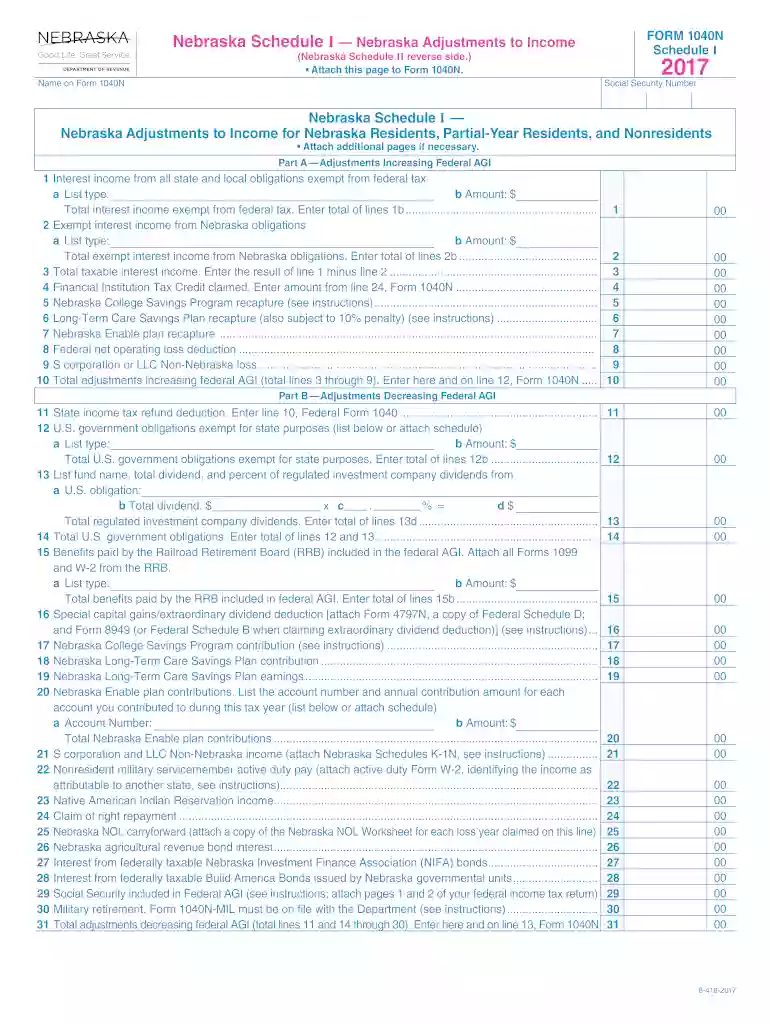
a List type: Preview on Page 1

Here's how it works

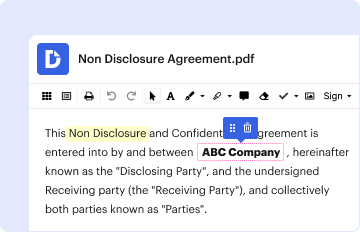
01. Edit your form online
Type text, add images, blackout confidential details, add comments, highlights and more.

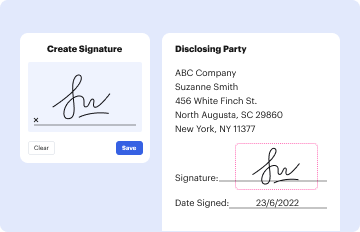
02. Sign it in a few clicks
Draw your signature, type it, upload its image, or use your mobile device as a signature pad.
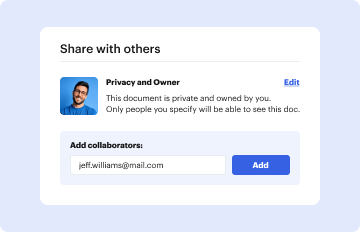
03. Share your form with others
Send it via email, link, or fax. You can also download it, export it or print it out.

How to use or fill out a List type: with our platform

Form edit decoration
9.5
Ease of Setup
DocHub User Ratings on G2
9.0
Ease of Use
DocHub User Ratings on G2
  1. Click ‘Get Form’ to open it in the editor.
  2. Begin by entering your name and Social Security Number at the top of the form. This information is essential for identification purposes.
  3. In Part A, you will find fields labeled 'List type:' followed by 'Amount:'. For each adjustment increasing federal AGI, provide the necessary details in these fields. Ensure that you enter the total amounts accurately.
  4. Continue to Part B, where similar 'List type:' fields are present. Fill these out with relevant information regarding adjustments decreasing federal AGI, ensuring clarity and accuracy.
  5. If additional entries are needed, feel free to attach extra pages as indicated. This flexibility allows you to provide comprehensive information without constraints.

Start using our platform today for free and streamline your document editing experience!

See more a List type: versions

We've got more versions of the a List type: form. Select the right a List type: version from the list and start editing it straight away!
Versions Form popularity Fillable & printable
2023 4.2 Satisfied (34 Votes)
2022 4.7 Satisfied (44 Votes)
2021 4.8 Satisfied (87 Votes)
2020 4.4 Satisfied (216 Votes)
2018 4.3 Satisfied (166 Votes)
2017 4.3 Satisfied (34 Votes)
be ready to get more

Complete this form in 5 minutes or less

Get form

Got questions?

We have answers to the most popular questions from our customers. If you can't find an answer to your question, please contact us.
Contact us

Upload your a List type: to DocHub (after you’ve set up an account for this). If you need to complete fields in it, use proper tools from the top pane. For example, add Signature Fields, assign each to specific party, and click on Sign → Request signatures from others. Personalize your message for your recipients and click Send Request. You can also send your form by fax or as a Signing link instead of using email (you’ll locate these options by navigating to the Menu → Send)

When you choose analog methods of completing your a List type:, you can easily download your file for printing. Search DocHub’s Forms & Templates catalog to locate the exact document template you require and open it for editing or download it on your gadget in the format of your liking. It is possible to complete your form electronically and place your handwritten signature on it right after printing or eSign your document with DocHub.

A Definition List in HTML is used to represent a list of terms along with their corresponding descriptions or definitions. The Definition List is created using the (Definition List) element, which wraps around one or more pairs of (Definition Term) and (Definition Description) elements.
List is a collection data type. It allows multiple values to be stored within the same field. In Table Design, you must configure the List data type with all the values that the field stores. These values will be available for the field in table Datasheet view and in DataPages.
As we learned, HTML provides you with three types of lists: Ordered lists, which have an inherent order and each item is numbered. Unordered lists, which have no inherent order and each item is bulleted. Description lists, which contain a list of terms and descriptions for each term.

Security and compliance

At DocHub, your data security is our priority. We follow HIPAA, SOC2, GDPR, and other standards, so you can work on your documents with confidence.

Learn more
ccpa2
pci-dss
gdpr-compliance
hipaa
soc-compliance
be ready to get more

Complete this form in 5 minutes or less

Get form

People also ask

The three list types unordered list used to group a set of related items in no particular order. ordered list used to group a set of related items in a specific order. description list used to display name/value pairs such as terms and definitions.
A list is a data structure in Python that is a mutable, or changeable, ordered sequence of elements. Each element or value that is inside of a list is called an item. Just as strings are defined as characters between quotes, lists are defined by having values between square brackets [ ] .
The list-style-type allows you to control the shape or appearance of the marker. first line or start underneath the start of the marker. The list-style-image specifies an image for the marker rather than a bullet point or number. The list-style serves as shorthand for the preceding properties.
A list within another list is referred to as a nested list in Python. We can also say that a list that has other lists as its elements is a nested list. When we want to keep several sets of connected data in a single list, this can be helpful.
Python has a great built-in list type named list. List literals are written within square brackets [ ]. Lists work similarly to strings -- use the len() function and square brackets [ ] to access data, with the first element at index 0.

Related links