






Definition and Purpose of a 7 Team Double Elimination Bracket
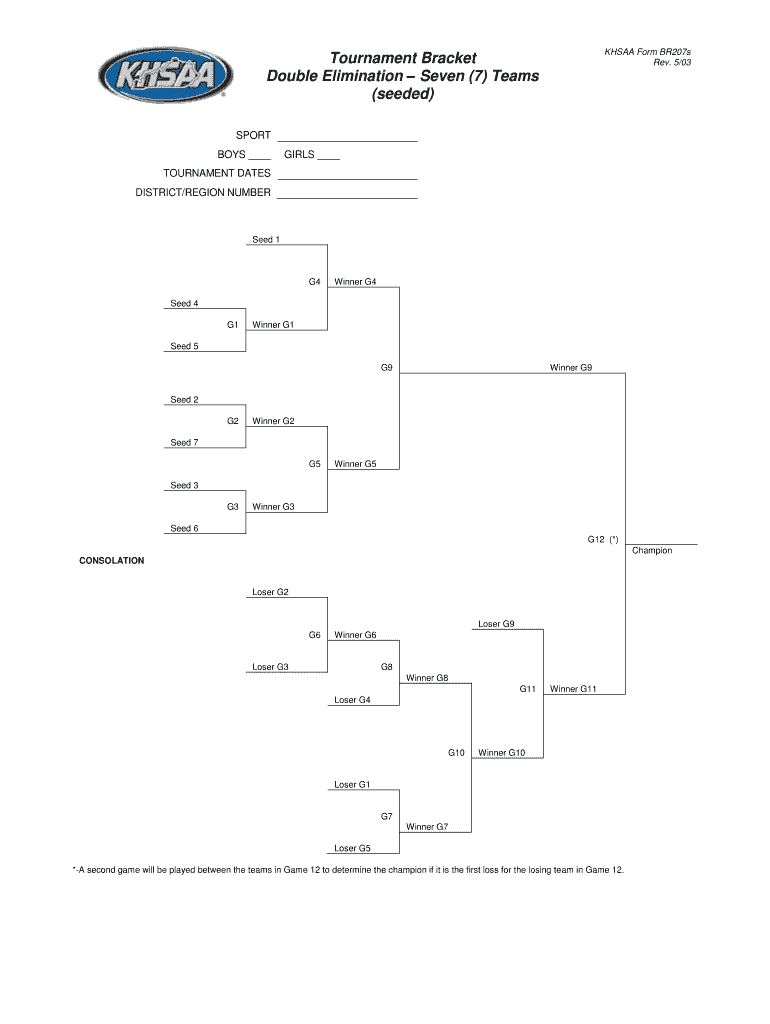
A seven team double elimination bracket is a tournament structure that allows teams to compete while providing them with the chance to lose once and still emerge as champions. This format is designed to ensure that a single loss does not eliminate a team from contention, making it ideal for competitive environments like sports, gaming, and academic contests. In this tournament structure, each team must lose twice to be fully eliminated.
- Tournament structure: The bracket is organized so that the initial rounds feature matchups where teams compete, and the losers of specific matches are placed in a "loser’s bracket," allowing them a second chance to compete for the championship.
- Advantage of double elimination: This format balances competition by reducing the impact of a single poor performance, allowing teams to showcase their skills over multiple matches.
How to Use the 7 Team Double Elimination Bracket
Using a seven team double elimination bracket requires a clear understanding of the match format and how to allocate teams throughout the tournament. Here’s how to effectively utilize this bracket format:
-
Initial Setup: Begin by listing the seven participating teams. Assign random seeding or arrange based on prior performance.
-
Match Pairings: In the first round, three matches are conducted, with one team receiving a bye. Following this, the winning teams advance to the winner's bracket, while the losing teams move to the loser’s bracket.
-
Progression: Continue conducting matches based on winners and losers. The winner of the winner's bracket faces the last remaining team in the loser’s bracket for the championship match. The loser of the winner bracket must lose twice to be eliminated.
-
Final Matches: Once the championship match is set, if the team from the winner's bracket loses, a final rematch may occur since they’ve only lost once.
- Example: Team A wins against Team B, Team C wins against Team D, and Team E wins against Team F. Team G, having received a bye, moves to the next round where they compete against the loser of another match.
Steps to Complete the 7 Team Double Elimination Bracket
Completing a seven team double elimination bracket involves creating a clear and organized format to track match outcomes. Follow these steps:
-
Create the Bracket Layout: Use a template or digital platform (like a bracket generator) to visually represent the matches. Ensure the bracket reflects all teams and possible paths.
-
Document Match Results: After each round, document the winners in the winner's bracket and the losers in the loser’s bracket. This helps to maintain clarity on each team's standings.
-
Schedule Matches: Set dates and times for each match. Communicate this schedule to participating teams to ensure availability.
-
Reassess after Each Round: After every match, quickly update the bracket to reflect the results, ensuring that all participants are aware of their next match.
- Additional Tips: Consider designating a tournament director who can manage any disputes and facilitate the organization.
Important Terms Related to the 7 Team Double Elimination Bracket
Understanding key terminology can significantly enhance comprehension of the seven team double elimination bracket:
- Bye: A situation where a team does not compete in a round because there is an uneven number of competitors.
- Loser’s Bracket: A section of the tournament where teams that have lost once are placed to allow further chances to compete.
- Seed: The method of ranking teams based on previous performance, affecting match pairings.
- Finals: The last matches of the tournament where the championship is decided between the winner’s bracket and the last remaining team from the loser’s bracket.
Examples of Using the 7 Team Double Elimination Bracket
Practical scenarios provide clarity on how the seven team double elimination bracket is applied:
-
Sports Tournaments: In high school basketball tournaments, teams often use the seven team double elimination bracket to ensure that every team has multiple chances to compete for the title.
-
Gaming Competitions: Esports tournaments frequently utilize this format to provide players with a more forgiving path in competitive stages, allowing them to recover from a single loss.
-
Academic Competitions: Science fairs or debate competitions may leverage a double elimination structure to allow participants to have a fairer chance to showcase their projects or arguments.
By understanding and correctly implementing the seven team double elimination bracket, organizers can provide a competitive yet fair experience to participants, serving the needs of varying competitive contexts.