
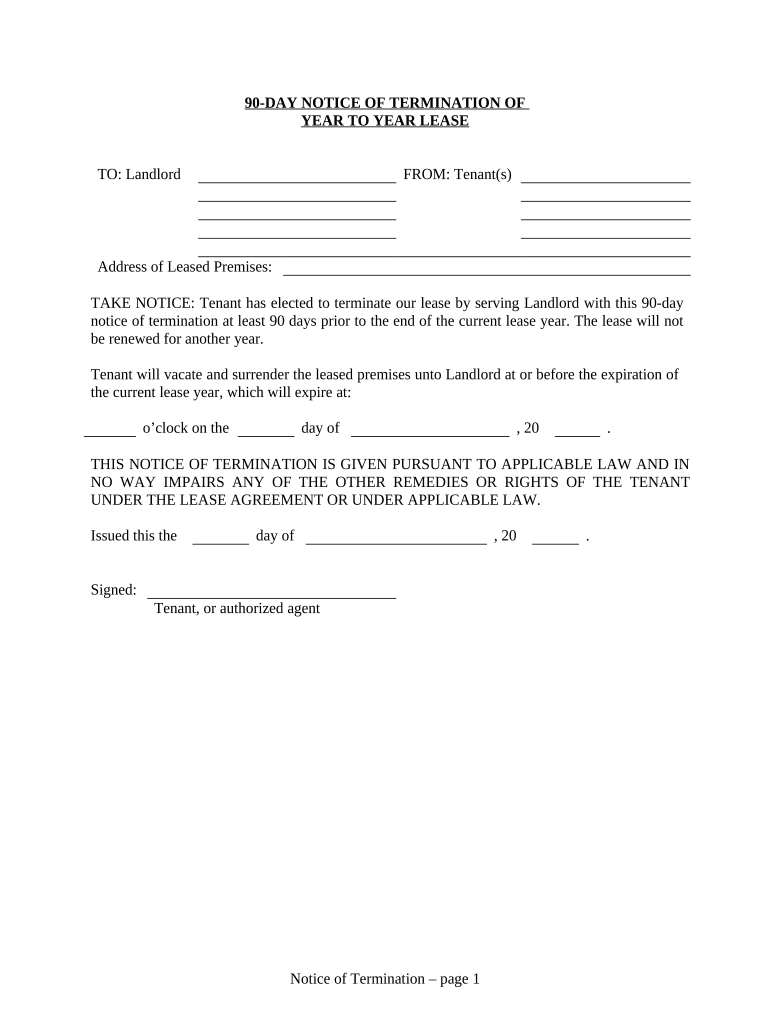







Definition and Meaning of a 90-Day Notice
A 90-day notice, specifically in the context of tenant-landlord relations, is a formal document that a tenant submits to their landlord. This notice signifies the tenant's intention not to renew their lease and to vacate the rental property by the end of the lease term. In the United States, such notices are particularly relevant in states with specific statutory requirements, including Washington State, which mandates that tenants provide 90 days' notice prior to moving out. This document is also pivotal for ensuring that tenants fulfill their obligations under their lease agreement while facilitating a smooth transition for both parties.
The primary function of a 90-day notice is to inform the landlord in advance, allowing them to prepare for the tenant’s departure and begin seeking new renters. This notice typically includes essential details such as the tenant's name, the address of the rental property, and the intended vacate date. It is paramount for the tenant to understand that issuing this notice does not abrogate their rights under the lease or relevant laws, such as the right to seek a security deposit refund.
Steps to Complete the 90-Day Notice
Completing a 90-day notice can be straightforward if tenants follow specific steps to ensure that their notice is comprehensive and complies with legal requirements.
-
Check State Regulations: Before drafting the notice, confirm that your state, such as Washington, indeed requires a 90-day notice to vacate. Familiarize yourself with any specific language or requirements mandated by local laws.
-
Draft the Notice: Create a written notice that includes:
- The date of writing the notice
- Tenant’s full name
- Rental property address
- A clear statement of intent to vacate, including the precise date of departure
-
Sign the Notice: Ensure the notice is signed by the tenant. Electronic signatures may also be acceptable, especially if the landlord consents to it.
-
Serve the Notice: The notice should be delivered to the landlord according to the lease agreement’s stipulations. This could involve:
- Personal delivery
- Mailing via certified mail
- Email, if previously agreed upon
-
Keep a Copy: It is vital to retain a signed copy of the notice for your records. This can serve as proof in case of disputes regarding the move-out date or security deposit.
Completing these steps diligently will support compliance with leasing obligations and foster a constructive relationship with the landlord.
Important Terms Related to a 90-Day Notice
Understanding the terminology surrounding a 90-day notice can greatly aid tenants in navigating the residential leasing process effectively. Here are some key terms:
- Lease Agreement: A legally binding contract detailing the rights and responsibilities of both tenant and landlord.
- Security Deposit: A sum of money held by the landlord to cover any damages or unpaid rent, typically returned if the property is left in good condition.
- Tenancy: The legal right to occupy a rental property, governed by the lease agreement's terms.
- Notice to Vacate: A broad term that includes any formal alert given by either party regarding the end of tenancy, typically which must specify the timeframe.
- Landlord: The owner or entity that rents out a property to tenants.
Familiarity with these terms empowers tenants, ensuring they can confidently communicate and adhere to the requirements set forth in their leases.
State-Specific Rules for the 90-Day Notice
Different states have varying regulations concerning the issuance and execution of 90-day notices. For example, in Washington State, landlords can require tenants to provide a 90-day notice to vacate if the lease is month-to-month. Familiarizing yourself with state-specific rules is crucial:
- Notice Requirements: Some states may allow for shorter notice periods under specific conditions or for certain types of rentals.
- Delivery Methods: Regulations may dictate how the notice must be served (e.g., in person, via certified mail).
- Variances for Non-Payment: If a tenant has not paid rent, some states may have different processes for terminating tenancy.
- Court Procedures: In cases of disputes, some states mandate that disputes be resolved through small claims court or specific landlord-tenant courts.
Understanding these state-specific details can protect tenants from legal repercussions and ensure proper compliance with local laws.
Examples of Using a 90-Day Notice
Real-world examples can illustrate the application of a 90-day notice in various scenarios:
-
End of a Lease Term: A tenant renting month-to-month decides they will not be renewing their lease and issues a 90-day notice on June 1, intending to vacate by September 1. This allows the landlord ample time to find another tenant.
-
Job Relocation: A tenant receives a job offer in another state and decides to relocate. They issue their 90-day notice on April 15, ensuring they can move out by July 15, meeting the notice period and allowing for a smooth transition.
-
Unforeseen Circumstances: In a case where a tenant experiences financial hardships and cannot afford the rent, they issue a 90-day notice to vacate to ensure they leave the property on good terms while adhering to their legal obligations.
These examples highlight the necessity of clear communication and adherence to proper procedures when issuing a 90-day notice, benefiting both tenants and landlords.




