
Mississippi nonprofit 2026

Get Form
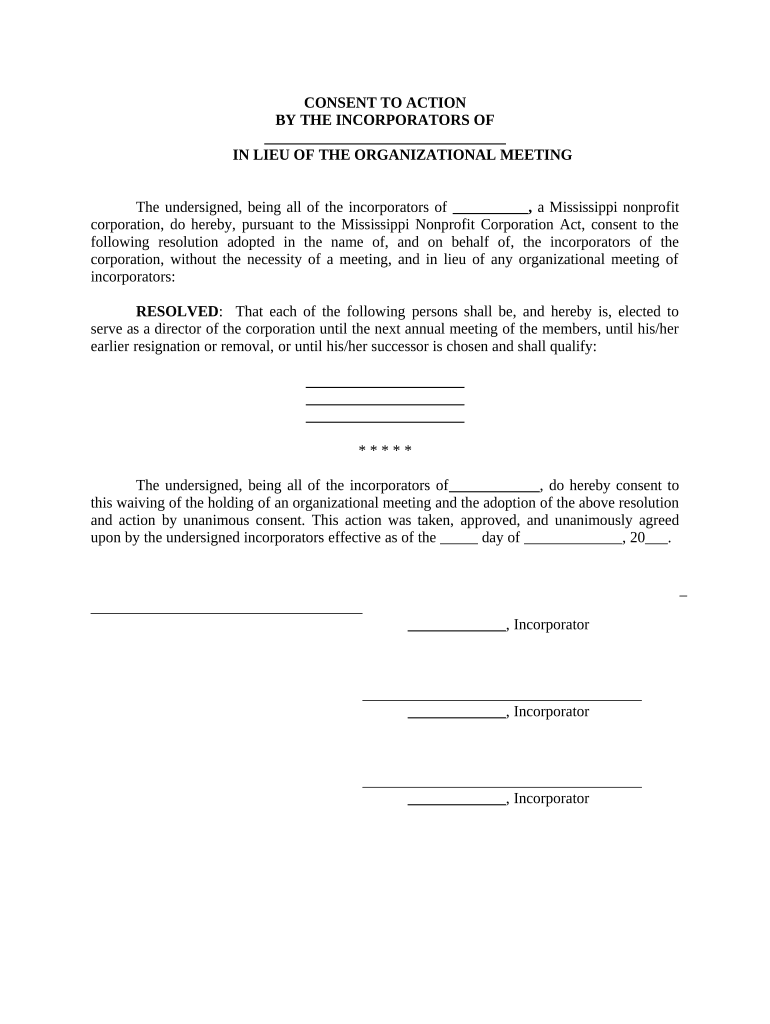
mississippi nonprofit Preview on Page 1

Here's how it works

01. Edit your form online
Type text, add images, blackout confidential details, add comments, highlights and more.
02. Sign it in a few clicks
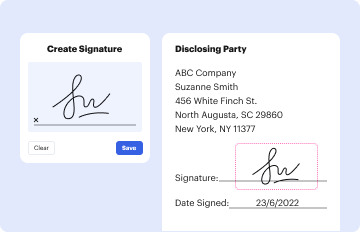
Draw your signature, type it, upload its image, or use your mobile device as a signature pad.
03. Share your form with others
Send it via email, link, or fax. You can also download it, export it or print it out.

How to use or fill out Mississippi Nonprofit with our platform

Form edit decoration
9.5
Ease of Setup
DocHub User Ratings on G2
9.0
Ease of Use
DocHub User Ratings on G2
  1. Click ‘Get Form’ to open the Mississippi nonprofit document in the editor.
  2. Begin by entering the name of your nonprofit corporation in the designated field at the top of the form. This is crucial for identifying your organization.
  3. In the section where directors are elected, list the names of individuals who will serve as directors. Ensure that each name is clearly written and spelled correctly.
  4. Next, indicate the date on which this consent action is effective. Fill in both the day and month in their respective fields.
  5. Finally, each incorporator must sign and print their name below their signature. This confirms their agreement to the resolution without a formal meeting.

Start using our platform today to easily complete your Mississippi nonprofit form for free!

be ready to get more

Complete this form in 5 minutes or less

Get form

Got questions?

We have answers to the most popular questions from our customers. If you can't find an answer to your question, please contact us.
Contact us
While a nonprofit corporation is a state-level designation, the 501(c)(3) status is a federal, nationwide designation awarded by the IRS. If a group has 501(c)(3) status, then it is exempt from federal income tax, which often also means you dont need to pay state income taxes either.
Its a simple concept that can help you achieve success in both your personal and professional life. Heres how it works: 33% of your time should be spent with mentors (people who challenge you), 33% with your peers (those on the same level as you), and 33% with people who you can mentor and guide.
How to Start a Nonprofit in Mississippi Name Your Organization. Recruit Incorporators and Initial Directors. Appoint a Registered Agent. Prepare and File Articles of Incorporation. File Initial Report. Obtain an Employer Identification Number (EIN) Store Nonprofit Records. Establish Initial Governing Documents and Policies.
The higher the ratio, the more liquid the organization. As a rule of thumb, organizations should strive for a current ratio of 1.0 or higher. An organization with a ratio of 1.0 would have one dollar of assets to pay for every dollar of current liabilities.
To start a nonprofit corporation in Mississippi, you must file nonprofit Articles of Incorporation with the Mississippi Secretary of State. You can submit Articles of Incorporation online or by mail for $50 (plus a $4 processing fee if you use a credit card).

Security and compliance

At DocHub, your data security is our priority. We follow HIPAA, SOC2, GDPR, and other standards, so you can work on your documents with confidence.

Learn more
ccpa2
pci-dss
gdpr-compliance
hipaa
soc-compliance

People also ask

In a not-for-profit organization, all funds must be used for pursuing the groups objectives and paying its running costs. Funds never go to the groups members, directors, or officers. Some not-for-profit organizations resemble for-profit organizations in their use of management techniques to run their enterprises.
If your organization receives more than 10 percent but less than 33-1/3 percent of its support from the general public or a governmental unit, it can qualify as a public charity if it can establish that, under all the facts and circumstances, it normally receives a substantial part of its support from governmental
In the United States, the general rule is that you can deduct up to 60% of your adjusted gross income (AGI) for cash donations to qualified public charities . For donations of appreciated assets like stocks or real estate, the deduction limit is typically 30% of your AGI .

Related links