






Definition & Meaning
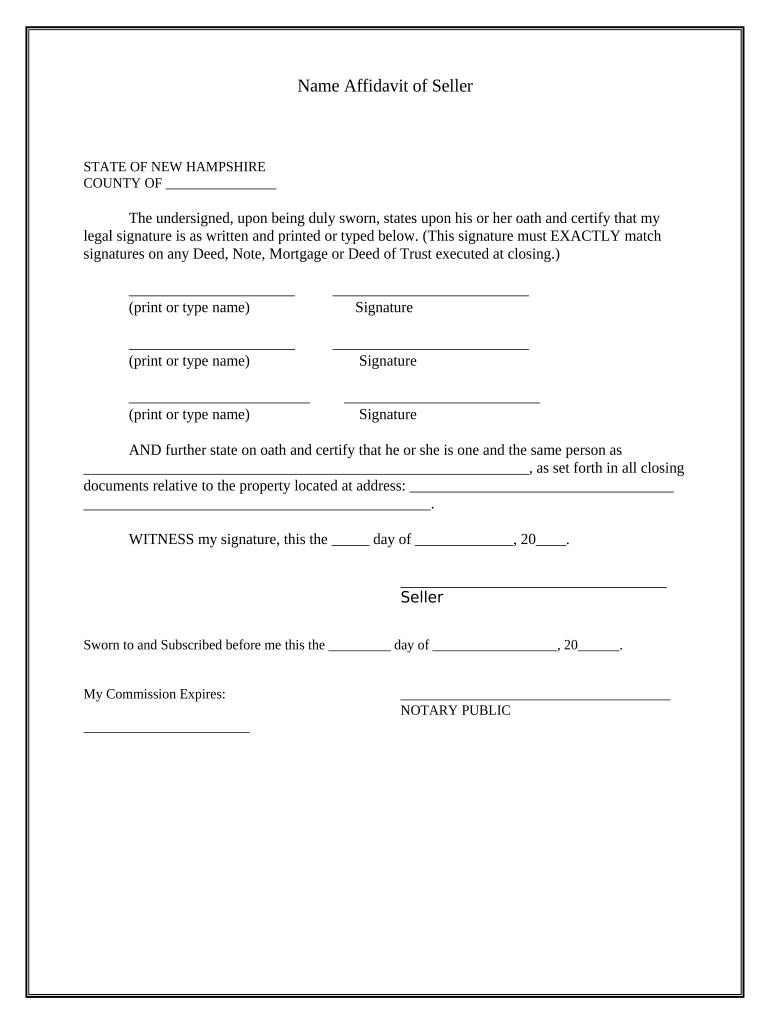
The Name Affidavit of Seller in New Hampshire is a legal document where the undersigned, typically the seller of a property, certifies their legal name and signature. This affidavit serves as a confirmation of identity, ensuring that the seller's name on legal documents accurately reflects their true and legal name.
- Purpose: To verify the seller’s current legal name as it appears on all relevant transaction documents.
- Uses: Commonly utilized in real estate transactions to prevent future disputes over the seller's identity.
How to Use the Name Affidavit of Seller - New Hampshire
Steps for Utilization
- Identify Necessity: Confirm if it is required by your lender or as part of the property transfer process.
- Complete the Form: Accurately fill in all personal details including current legal name and any previously used names.
- Signature: Sign the document in the presence of a notary to validate authenticity.
- Submission: Provide the completed affidavit to the relevant party such as the lender, real estate agent, or attorney.
- Documentation: Ensure that all accompanying documents that validate your identity are ready for review.
How to Obtain the Name Affidavit of Seller - New Hampshire
To secure a copy of this affidavit, interested individuals can:
- Visit Local Clerk Offices: Check with town or city clerk offices in New Hampshire, which often provide standard legal forms.
- Consult Real Estate Professionals: Real estate attorneys or agents may offer this form as part of their service packages.
- Online Resources: Many legal document websites offer downloadable versions tailored to New Hampshire law.
Steps to Complete the Name Affidavit of Seller - New Hampshire
Detailed Completion Process
- Gather Personal Information: Accurately record your full legal name, any aliases, and relevant contact information.
- Complete Legal Details: Include property details such as the address and unique identifiers related to the sale.
- Verification: Review all entered information for correctness before proceeding to notarization.
- Notarization: Sign the affidavit in front of a notary public. Notarization is crucial as it confirms the document’s legitimacy.
- Submission: Submit the notarized affidavit as required by your transaction agreements or legal advisor.
- Common Mistakes: Ensure consistency in the spelling of names throughout all transaction documents to avoid discrepancies.
Key Elements of the Name Affidavit of Seller - New Hampshire
Essential Components
-
Declarant’s Information: Full legal name, any other names used, and contact details.
-
Property Details: Address and any specific identifiers related to the transaction.
-
Notary Acknowledgment: A section for the notary public to endorse the signature.
-
Signature Block: Space for the seller's signature must match the name(s) declared in the affidavit.
-
Legal Language: The affidavit must include specific legal wording that confirms the seller's understanding and intent.
State-Specific Rules for the Name Affidavit of Seller - New Hampshire
New Hampshire’s legal requirements for the Name Affidavit of Seller include:
- Notary Requirement: The affidavit must be signed in the presence of a licensed New Hampshire notary public.
- Comprehensive Naming: All names that might have been used in past transactions or documents should be included.
- Duty of Accuracy: The declarant is legally obligated to ensure the information provided is accurate to avoid any legal repercussions.
Legal Use of the Name Affidavit of Seller - New Hampshire
Compliance Considerations
-
Real Estate Transactions: Primarily used in property sales to validate seller identity.
-
Fraud Prevention: Helps prevent identity fraud by ensuring that the seller’s identity aligns with their legal representation.
-
Binding Nature: Once notarized, the affidavit becomes a binding legal document and may be used in legal proceedings if identity issues arise.
Examples of Using the Name Affidavit of Seller - New Hampshire
Practical Scenarios
-
Example 1: A seller known by a maiden name provides an affidavit to confirm the current legal name used in the sale.
-
Example 2: A property sold in a trust’s name requires the trustee to use an affidavit to verify their signing authority and identity.
-
Example 3: When a seller has changed their name due to marriage or divorce, an affidavit ensures the property records reflect the most up-to-date personal information.
-
Key Consideration: The affidavit ensures clarity in identity for all parties involved in legal or real estate transactions.
Important Terms Related to Name Affidavit of Seller - New Hampshire
-
Affidavit: A written statement confirmed by oath or affirmation for use as evidence in court.
-
Declarant: The person who makes the declaration in the affidavit.
-
Notarization: The official fraud-deterrent process that assures the parties of a transaction that a document is authentic and can be trusted.
-
Alias: Any name by which a person is known other than their legal name.
-
Legal Identity: The combination of identifiers such as name, birth date, and social security number that establish a person’s identity.
Who Typically Uses the Name Affidavit of Seller - New Hampshire
-
Home Sellers: Individuals selling property who need to confirm their identity as part of the sale process.
-
Real Estate Agents: Professionals facilitating property sales, ensuring all necessary documents, including identity affidavits, are in order.
-
Attorneys: Legal experts who help structure property sales, including preparation and filing of affidavits.
-
Financial Institutions: Banks or lenders that require verification of the seller’s identity to process mortgage settlements correctly.