




01. Edit your aor form online
Type text, add images, blackout confidential details, add comments, highlights and more.

Type text, add images, blackout confidential details, add comments, highlights and more.

Draw your signature, type it, upload its image, or use your mobile device as a signature pad.

Send authorized representative via email, link, or fax. You can also download it, export it or print it out.
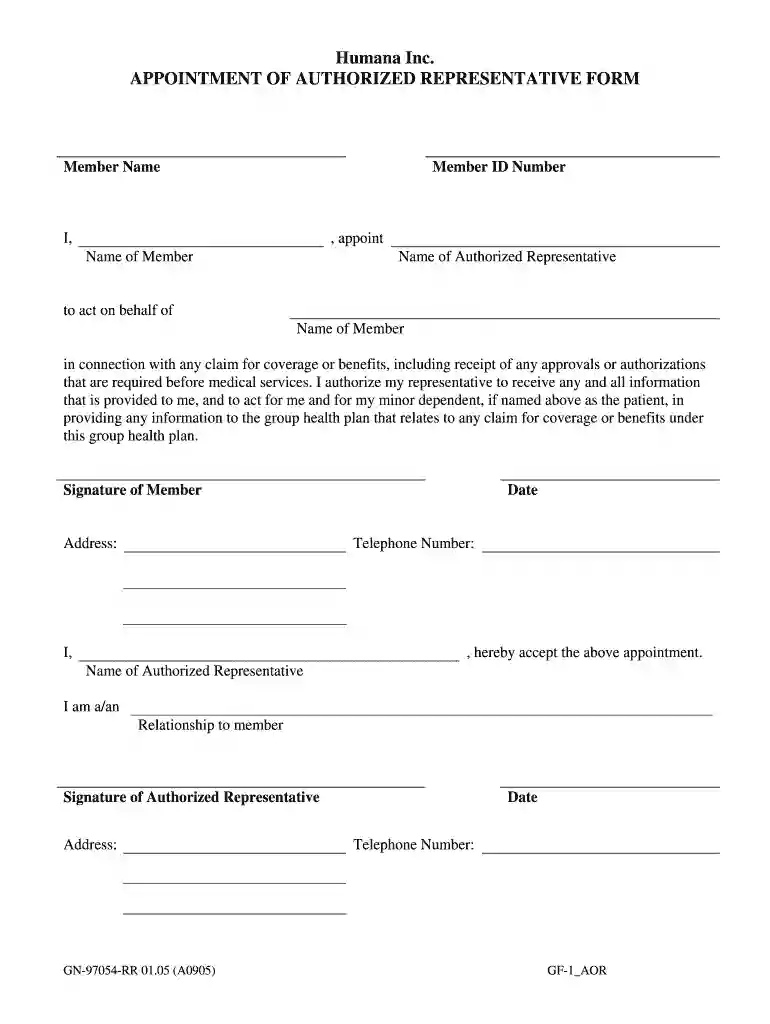
The appointment authorized representative form, often referred to as an AOR form, is a legal document that allows an individual to designate another person as their authorized representative. This representative can act on behalf of the individual in various matters, particularly when it involves health insurance claims, benefits, and other administrative issues. By completing this form, the member effectively grants the representative the authority to make decisions and obtain information related to their coverage and benefits.
This form is crucial in contexts where members may be unable to represent themselves due to various reasons. For example, elderly individuals might need someone to assist them with navigating medical claims, while those with disabilities may require support handling paperwork. This legally binding document ensures that any actions taken by the representative are recognized and respected by the relevant agencies, in compliance with regulations defined by organizations such as the Centers for Medicare & Medicaid Services (CMS).
Several essential components must be present in the appointment authorized representative form. Understanding these elements is crucial for ensuring that the form is filled out correctly and legally valid.
Member Information: This section typically requires the member's name, address, phone number, and identification details, such as a policy number. Providing accurate member information is imperative for identifying the individual and linking them to their benefits and coverage accurately.
Representative Details: Here, the member specifies the name of the authorized representative, along with their contact information. It is also useful to include the representative's relationship to the member, which may clarify any potential conflicts of interest.
Scope of Authority: The form should explicitly state what the representative is authorized to do on behalf of the member. This may include accessing information, making decisions regarding treatment options, or handling claims. Clearly defining the extent of the authority helps prevent any misunderstandings later.
Signatures: Both the member and the authorized representative must sign the form, indicating their consent and understanding of the arrangement. The inclusion of dates adds an important timeline reference.
Expiration or Revocation Clause: It is beneficial to include a statement about when the authorization ends or how it can be revoked, protecting both parties' rights. This allows the member to maintain control over their representation, ensuring that the authority can be taken back if necessary.
Filling out the appointment authorized representative form involves several methodical steps to ensure accuracy and compliance.
Gather Required Information: Collect all necessary details for both the member and the representative. This will typically include personal identification information and any relevant policy or account numbers.
Complete Member Information Section: Fill out the member's personal details accurately. Double-check to ensure that no information is omitted.
Fill in Representative Information: Enter the authorized representative's name, contact information, and relationship to the member.
Define Scope of Authority: Clearly outline what actions the representative is authorized to take on behalf of the member. Include the specific areas (e.g., medical decisions, claims handling) in which the authority applies.
Sign the Form: Both parties should sign and date the form to confirm their agreement and understanding of the terms.
Submit the Form: Choose the appropriate submission method, whether it be online, via mail, or in person, as per the requirements from the relevant organization.
The appointment authorized representative form serves critical roles in simplifying processes for members while ensuring compliance with healthcare regulations.
Streamlined Communication: By designating a representative, members can ensure that they have a knowledgeable advocate who can handle complex interactions with insurance companies or healthcare providers on their behalf.
Legal Protection: The authorization provides legal recognition of the representative's role and decisions, protecting both parties from potential disputes regarding authority.
Accessibility to Benefits: For members who might have difficulty managing their affairs independently due to health or other issues, the form provides a means to access necessary benefits without delay.
Facilitates Efficient Claims Processing: Ensures that representatives can communicate with relevant parties and expedite the resolution of claims, benefiting both the member and the organization.
Various individuals and entities may utilize the appointment authorized representative form based on their specific needs and circumstances.
Elderly Individuals: Older adults often require assistance navigating healthcare systems, making this form essential for ensuring their preferences are communicated effectively.
Individuals with Disabilities: For those who may be physically or cognitively unable to manage their healthcare and insurance needs, appointing a representative helps advocate for their rights and benefits.
Family Members: Relatives often step up to manage healthcare decisions on behalf of loved ones, necessitating the use of this form to formalize their role.
Legal Guardians: When a person requires a legal guardian due to incapacity, this form helps the guardian manage all necessary healthcare and benefits decisions.
Representatives in Business: In some cases, businesses may utilize this form to appoint representatives who can handle administrative tasks related to employee health benefits, reinforcing the importance of clear authorization in workplace contexts.
This document addresses a diverse range of scenarios, demonstrating its flexibility and importance across different demographics and situations.


We've got more versions of the aor form form. Select the right aor form version from the list and start editing it straight away!
| Versions | Form popularity | Fillable & printable |
|---|---|---|
| 2005 | 4.8 Satisfied (162 Votes) |
Yes, it is possible with DocHub. This secure and compliant online editor features a phone-based signing option. After you log in to your DocHub account and add your authorized representative form to our editor, fill out all necessary fields and utilize the Sign feature on the top barf. Click on Create your signature and select Phone from the available choices. Here, you scan a QR code using your smartphone and draw your signature on your phone screen, as you normally do when approving physical papers. If you access DocHub right from your mobile device, you can electronically sign your form by drawing your electronic signature, adding its photo, or simply with a typed name.
You may find and modify your aor forms online with the help of DocHub. Its straightforward but feature-rich design allows you to begin effective work immediately after you register your account. Create your account and add your file, then our interface will guide you via our stress-free form completion experience.
At DocHub, your data security is our priority. We follow HIPAA, SOC2, GDPR, and other standards, so you can work on your documents with confidence.
Appointment of Representative (AOR) form or other conforming written instrument contains the signatures of both the party and the appointed representative.Read more
The parties may jointly appoint a TRJ who is a qualified, experienced specialist (Florida Bar Board Certified) in the area of the legal dispute. Only attorneysRead more


