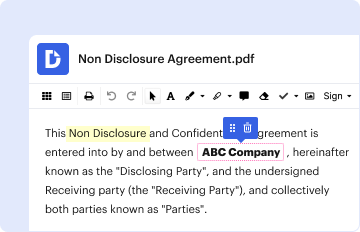
Type text, add images, blackout confidential details, add comments, highlights and more.
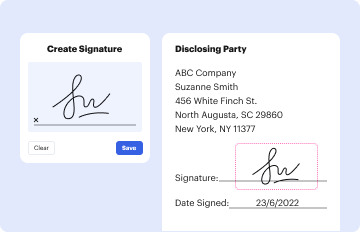
02. Sign it in a few clicks
Draw your signature, type it, upload its image, or use your mobile device as a signature pad.
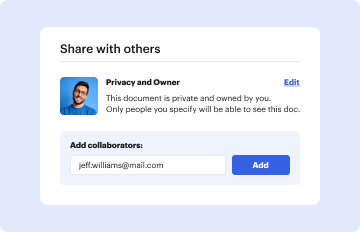
03. Share your form with others
Send it via email, link, or fax. You can also download it, export it or print it out.
How to use or fill out deed grantees with our platform
Ease of Setup
DocHub User Ratings on G2
Ease of Use
DocHub User Ratings on G2
Click ‘Get Form’ to open the deed grantees document in the editor.
Begin by entering the date of the deed at the top of the form. This is crucial for legal documentation.
In the 'Grantor' section, input the name and address of the individual transferring ownership. Ensure accuracy as this identifies who is granting the property.
Next, move to the 'Grantee' section. Here, you will enter the names and addresses of all individuals receiving ownership. If there are multiple grantees, list them clearly.
Designate how the grantees will hold the property by selecting from options such as Tenants in Common or Joint Tenants with Right of Survivorship. This choice affects future ownership rights.
Complete any additional fields regarding property description and exceptions if applicable. Be thorough to avoid future disputes.
Finally, ensure that all signatures are included where indicated, including notarization if required for your jurisdiction.
Start using our platform today to streamline your deed grantees process for free!
A grantee is the recipient of a grant, scholarship, or some other asset such as real estate property. In contrast, a grantor is a person or entity that conveys ownership of an asset to another person or entity: the grantee.
Is grantee the same as beneficiary?
The major difference between a grantor versus grantee is their roles in transaction and legal agreements. While grantors take the lead on transferring property ownership legally, grantees are on the flipside, taking over ownership of the property.
What does the term grantee mean?
When an individual becomes a grantee, they assume ownership responsibilities, which may include paying property taxes, maintaining the property and adhering to local zoning laws. Beyond individuals, corporate and institutional grantees play a docHub role in the real estate market.
What duties does a grantee have?
Trusts: The trust creator (grantor) transfers assets to a beneficiary (grantee). Property deeds: The seller (grantor) transfers ownership to the buyer (grantee).
What is a deed grantee?
A grant deed is a legal document that is used to transfer ownership of a property from a grantor to a grantee. Here are some additional details about grant deeds: Grant deeds are used in California, but other states may use similar documents with different names.
Related Searches
Does the grantee own the propertyGrantor vs grantee deed of trustWho is the grantee on a deed of trustGrantor vs grantee mortgageGrantor vs grantee quit claim deedWho is the grantee on a mortgageGrantor vs grantee lienQuitclaim deed
Security and compliance
At DocHub, your data security is our priority. We follow HIPAA, SOC2, GDPR, and other standards, so you can work on your documents with confidence.
The property owner (grantor) signs and records a TOD Deed with the county recorders office. The deed names a grantee beneficiary who will inherit the property when the owner passes away. During the owners lifetime, the deed is revocablethey can change or revoke it at any time.
Related links
grant deed | Wex | US Law | LII / Legal Information Institute
Grant deeds (also referred to as limited warranty deeds) are a type of legal transfer document that gives limited protection to the grantee.
Applications are currently being accepted for grants beginning July 1, 2025. Instructions. Information and Instructions for CIL and IPS Grant Applicants
Cookie consent notice
This site uses cookies to enhance site navigation and personalize your experience.
By using this site you agree to our use of cookies as described in our Privacy Notice.
You can modify your selections by visiting our Cookie and Advertising Notice.