






Understanding the Resolution Nonprofit
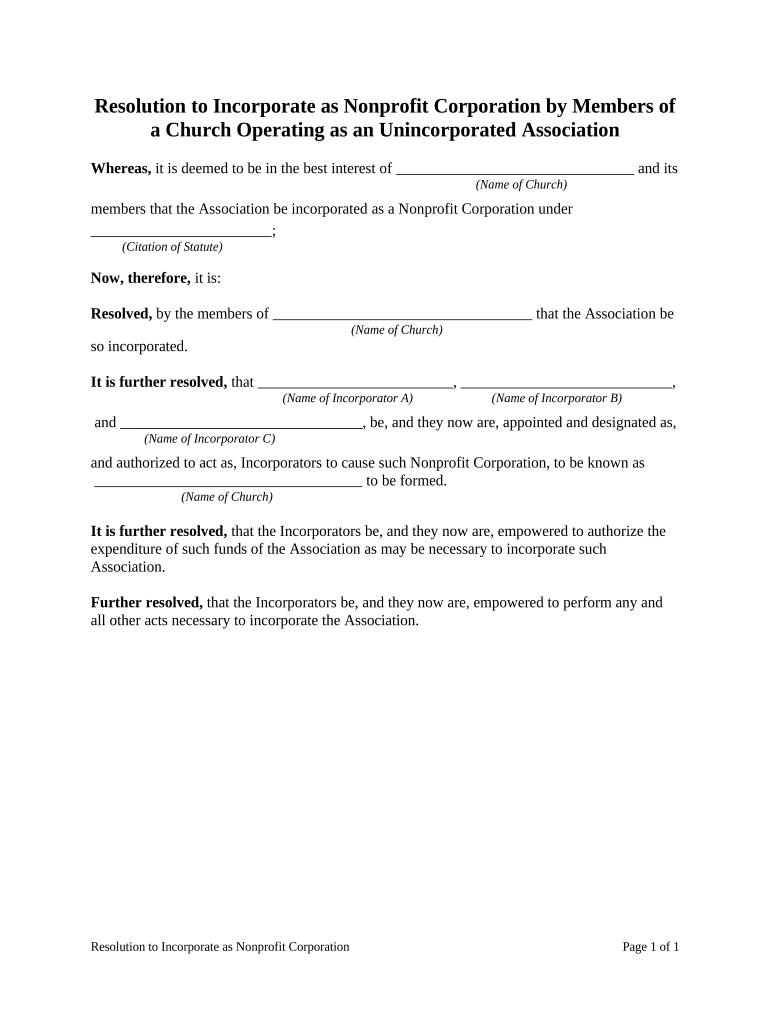
A resolution nonprofit is a formal decision made by the members of an organization, often a church or other community group, to incorporate as a nonprofit corporation. This resolution generally outlines key information, including the names of individuals authorized to act on behalf of the organization, the purpose of incorporation, and the specific powers granted to these individuals during the incorporation process.
How to Use the Resolution Nonprofit
To effectively utilize a resolution nonprofit, organizations need to follow a structured approach. Typically, this involves:
- Drafting the Resolution: Clearly articulate the intent to incorporate, specifying the reasons for doing so, such as limited liability and tax benefits.
- Gathering Support: Share the drafted resolution with other members for review and feedback.
- Holding a Meeting: Convene a meeting where members discuss and vote on the resolution, ensuring adherence to any relevant bylaws.
- Documenting the Decision: Following approval, document the resolution along with meeting minutes to maintain a formal record of the decision.
- Submitting for Incorporation: Use the resolution as part of the incorporation application to state authorities to establish the nonprofit officially.
Key Elements of the Resolution Nonprofit
A resolution nonprofit typically encompasses several vital components:
- Title of the Resolution: This should clearly state it is a resolution to incorporate as a nonprofit.
- Authority of the Incorporators: Names and titles of individuals authorized to act on behalf of the entity.
- Purpose Statement: A concise description of the organization’s mission and objectives.
- Powers Granted: Specific powers that the incorporators have to carry out actions necessary for incorporation, including financial and operational authority.
- Effective Date: The date when the resolution is considered effective, often the date of approval.
These elements must be tailored to reflect the organization's unique needs and comply with state-specific regulations.
Steps to Complete the Resolution Nonprofit
Completing a resolution nonprofit involves several methodical steps:
- Identify Purpose and Goals: Clarify the reasons for incorporating as a nonprofit.
- Engage Members: Discuss the implications with organization members and gain consensus on the proposed incorporation.
- Draft the Document: Write the resolution, ensuring it includes all necessary elements and follows legal guidelines.
- Review and Edit: Go through the draft with legal counsel if necessary to ensure compliance with state laws.
- Vote and Approve: Conduct a vote during a scheduled meeting, ensuring a sufficient quorum for legitimacy.
- Finalize the Document: Once approved, prepare final copies for all relevant parties, including filing with state authorities.
Important Terms Related to Resolution Nonprofit
Understanding the terminology related to resolution nonprofit is crucial for effective execution:
- Incorporators: Individuals legally responsible for forming the nonprofit corporation and named in the resolution.
- Bylaws: Rules that govern the operation of the nonprofit organization, including meetings and voting procedures.
- Tax-Exempt Status: A designation by the IRS qualifying the nonprofit for exemption from federal income tax.
- Nonprofit Corporation: A corporate entity organized for a public or mutual benefit other than generating profit for owners or investors.
Legal Use of the Resolution Nonprofit
The resolution of nonprofit is a legally binding document that helps establish the organization’s legitimacy and protect its members from personal liability. It aligns with state laws and federal regulations, and improper handling may jeopardize the organization’s legal standing. Organizations should ensure that their resolutions are crafted in compliance with applicable laws, especially regarding the incorporation process and eligibility for nonprofit status.
Examples of Using the Resolution Nonprofit
Practical examples of using a resolution nonprofit can provide clarity on its application:
- A community church decides to incorporate as a nonprofit to gain tax-exempt status, providing a formal resolution outlining its mission to serve the community.
- An animal rescue group must create a resolution to incorporate in order to apply for grants and receive donations that require a nonprofit status.
- A grassroots organization seeking to advocate for local environmental issues drafts a resolution to formally incorporate and establish credibility when applying for public funding.
By following these guidelines and examples, organizations can effectively navigate the incorporation process and leverage their resolution nonprofit to achieve their objectives.