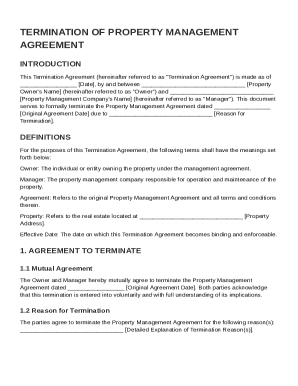
Seller's Disclosure of Forfeiture Rights for Contract for Deed - Massachusetts 2026

Get Form
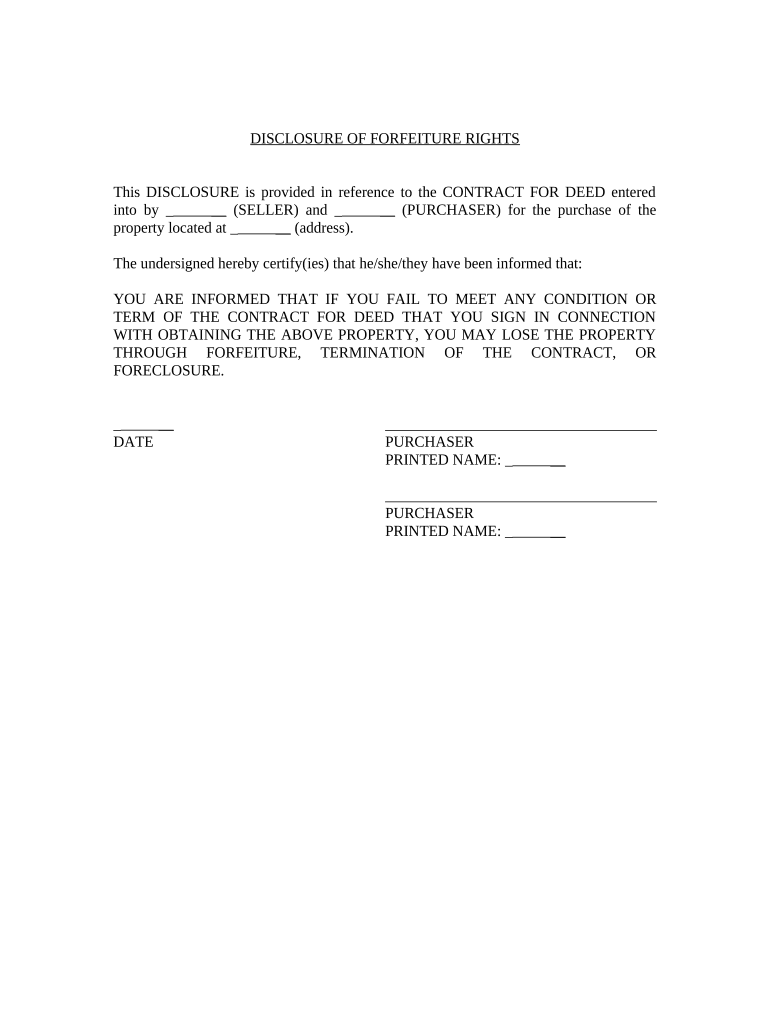
Seller's Disclosure of Forfeiture Rights for Contract for Deed - Massachusetts Preview on Page 1

Here's how it works

01. Edit your form online
Type text, add images, blackout confidential details, add comments, highlights and more.
02. Sign it in a few clicks
Draw your signature, type it, upload its image, or use your mobile device as a signature pad.
03. Share your form with others
Send it via email, link, or fax. You can also download it, export it or print it out.

How to use or fill out Seller's Disclosure of Forfeiture Rights for Contract for Deed - Massachusetts with our platform

Form edit decoration
9.5
Ease of Setup
DocHub User Ratings on G2
9.0
Ease of Use
DocHub User Ratings on G2
  1. Click ‘Get Form’ to open the Seller's Disclosure of Forfeiture Rights in the editor.
  2. Begin by entering the names of the Seller and Purchaser in the designated fields. Ensure that both parties' names are accurately spelled to avoid any legal issues.
  3. Next, input the property address where indicated. This is crucial as it identifies the specific property involved in the contract.
  4. Review the disclosure statement carefully. It informs you about potential forfeiture risks if contract terms are not met. Make sure you understand this section fully.
  5. Finally, both Purchasers must print their names and sign where required, along with dating the document to validate it.

Start using our platform today to fill out your forms online for free!

be ready to get more

Complete this form in 5 minutes or less

Get form

Got questions?

We have answers to the most popular questions from our customers. If you can't find an answer to your question, please contact us.
Contact us
The (TDS) describes the condition of a property and, in the case of a sale, must be given to a prospective buyer as soon as practicable and before transfer of title.
Anything that is attached to the home stays. Also, anything else that is written in the contract must stay as well. If it is personal property and it is not in the contract, you do not have to leave it behind. That includes furniture, washer and dryer, above ground pools, etc.
Massachusetts is one of the few states that still follows the old common law rule of caveat emptor, also known as buyer beware. This means that, as a seller, you are required to disclose very few things about your house and, as a buyer, you need to ask the right questions and make sure to get the home inspected
Most seller property disclosures are required for residential properties and vacant land. This means that when selling a residential property, the seller is legally obligated to disclose any known defects or issues with the property to potential buyers.
Estate agents are required to pass on any information that the buyer needs to know. This covers a broad range of subjects, and comes with the added complication that sellers are not honest about every detail. Paying for a survey and carrying out searches is recommended for potential buyers.

Security and compliance

At DocHub, your data security is our priority. We follow HIPAA, SOC2, GDPR, and other standards, so you can work on your documents with confidence.

Learn more
ccpa2
pci-dss
gdpr-compliance
hipaa
soc-compliance

People also ask

Massachusetts laws Sellers and brokers do not have to disclose to buyers or tenants the fact that a property is perceived to be tainted by the health of a previous occupant, a or suicide, or paranormal phenomena. However, they may not be deceitful in answers to questions about the property.
Although a disclosure statement is not required, the state does mandate the disclosure of two types of information to any prospective buyer: the existence and hazards of lead paint, and the presence of a septic system on the property. Sellers in Massachusetts must disclose the presence of lead to prospective buyers.
Disclosure Obligations: Real estate professionals and property sellers must disclose known material facts, such as structural issues, environmental hazards, and latent defects. Legal Requirements: State laws, such as the North Carolina Real Estate Commission guidelines, govern disclosure requirements.

Related links