






Definition and Meaning of Lease To Own Car Contract
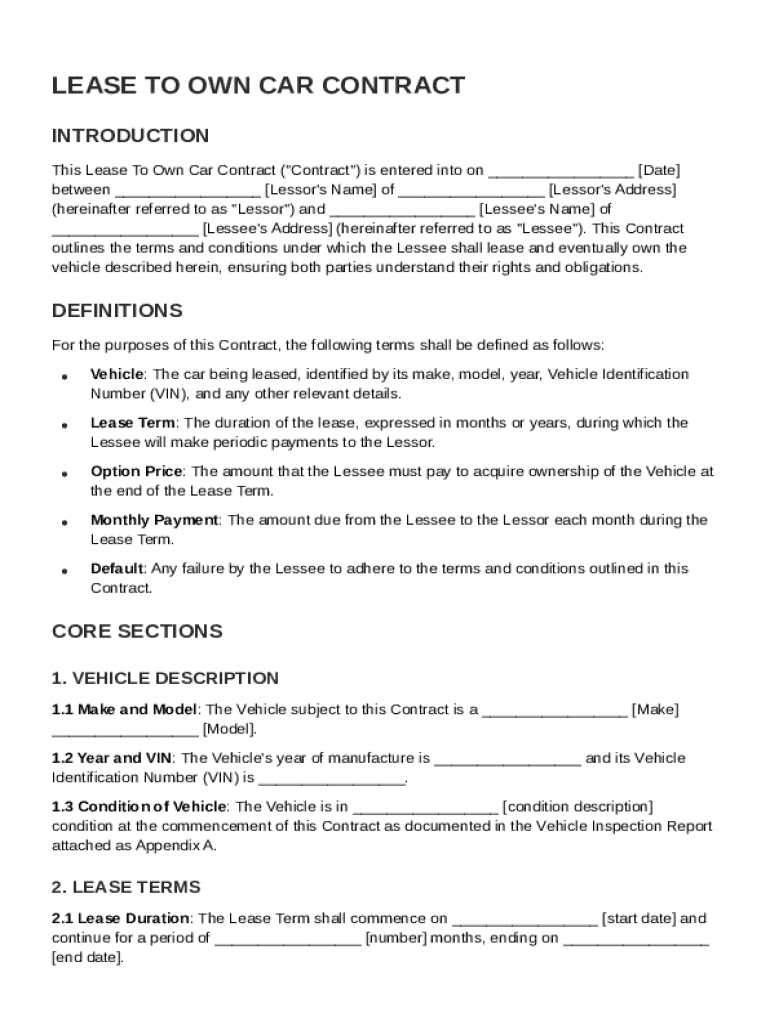
The Lease To Own Car Contract is a legally binding agreement between a lessor (car owner) and a lessee (individual leasing the car), which provides the latter the option to purchase the vehicle at the end of the lease term. Its primary purpose is to lay out the terms and conditions under which the car is leased and potentially acquired by the lessee. This agreement includes details such as the vehicle description, lease term, payment schedules, responsibilities of each party, and conditions for contract default or termination. By clearly outlining rights and obligations, this contract ensures that both parties understand their respective duties and the potential for ownership transition. It helps avoid disputes and provides a structured method for a lessee to transition to car ownership.
Key Elements of the Lease To Own Car Contract
A comprehensive Lease To Own Car Contract includes several crucial components that contribute to its effectiveness and legality:
- Vehicle Description: Detailed identification of the vehicle, including make, model, year, and Vehicle Identification Number (VIN).
- Lease Terms: Specifics about the duration of the lease, payment schedule, and total amount payable.
- Purchase Option: Clear explanation of how the lessee can exercise the option to purchase the car, including any purchase price or conditions.
- Responsibilities and Liabilities: Allocation of responsibilities such as maintenance, insurance, and repairs, as well as liabilities for damage or loss.
- Default and Termination Clauses: Conditions under which the contract may be terminated by either party and the implications of default.
- Governing Law: Jurisdiction and legal framework governing the lease to ensure enforceability in potential disputes.
Steps to Complete the Lease To Own Car Contract Template
Creating and finalizing a Lease To Own Car Contract requires careful attention to detail. Follow these steps to ensure completeness and accuracy:
- Gather Information: Collect all necessary details about the vehicle, lessor, and lessee to populate the contract accurately.
- Customize the Template: Insert specific terms such as lease duration, payment schedule, and conditions for purchase at the end of the lease term.
- Specify Obligations: Clearly outline the responsibilities of both parties including who handles insurance, maintenance, and any other recurring obligations.
- Review and Verify: Ensure all sections of the contract are filled out correctly and verify that the terms comply with applicable state laws.
- Sign and Distribute: Both parties should sign the contract. Use electronic signatures for convenience if the transaction is being conducted online, ensuring to save copies for record-keeping.
- Track and Maintain Compliance: Monitor adherence to the contract terms throughout the lease period and address any issues promptly to prevent disputes.
Legal Use of the Lease To Own Car Contract Template
The legal framework surrounding a Lease To Own Car Contract is of paramount importance. It ensures that the agreement is enforceable and protects the interests of both parties involved. Compliance with the following legal aspects is vital:
- Legally Binding Signatures: Ensure signatures are obtained legally, either manually or through trusted electronic signature solutions that comply with the ESIGN Act.
- State Law Adherence: The contract must comply with state-specific legal requirements as contract laws vary across different jurisdictions.
- Regulation Compliance: Ensure compliance with consumer rights legislation, which may influence terms related to finance charges, interest, and more.
State-Specific Rules for Lease To Own Car Contracts
Car leasing laws and regulations vary significantly from state to state in the U.S. This means specific attention should be paid to local requirements, which could impact:
- Sales Tax Regulations: Some states have particular rules for sales tax on lease-to-own agreements and may require this to be factored into payment structures.
- Consumer Protections: Certain states have additional consumer protection laws that mandate specific disclosures or conditions in lease agreements.
- Registration and Title Transfer: Rules about how a vehicle is registered and how the title is transferred upon purchase at the end of the lease vary across states.
Who Typically Uses the Lease To Own Car Contract Template
Several demographic and business groups benefit from using a Lease To Own Car Contract:
- Individuals With Limited Credit: Those who might struggle to secure a traditional auto loan but wish to own a vehicle incrementally through leasing.
- Dealerships and Leasing Companies: Entities providing flexible financing options to cater to a wider customer base by offering lease-to-own plans.
- Small Business Owners: Businesses who need vehicles but prefer a gradual payment solution that eventually leads to ownership.

Software Compatibility for Lease To Own Car Contract Templates
Creating and managing Lease To Own Car Contracts can be streamlined using document management systems:
- DocHub Integration: Provides functionality for importing documents from cloud services and supports a wide range of formats, making it easy to adapt and manage lease agreements.
- Document Editors: Popular software like Microsoft Word and Google Docs can be used for contract creation, allowing for comprehensive document formatting and collaboration.
- E-Signature Solutions: Integration with e-signature platforms ensures legal compliance of electronically signed contracts, enhancing ease of use and accessibility for all parties involved.
Important Terms Related to Lease To Own Car Contracts
Understanding specific legal and financial terms is crucial in executing a lease-to-own arrangement:
- Lessor and Lessee: The lessor refers to the vehicle owner, while the lessee is the individual or business leasing the vehicle.
- Residual Value: The estimated value of the vehicle at the end of the lease term, influencing the purchase price under a lease-to-own agreement.
- Option Fee: Sometimes required as an upfront payment to secure the purchase option, part of the total lease costs.
By considering these sections, users can thoroughly understand, execute, and benefit from a Lease To Own Car Contract, catering to both personal and business needs.