Type text, add images, blackout confidential details, add comments, highlights and more.
02. Sign it in a few clicks
Draw your signature, type it, upload its image, or use your mobile device as a signature pad.
03. Share your form with others
Send it via email, link, or fax. You can also download it, export it or print it out.
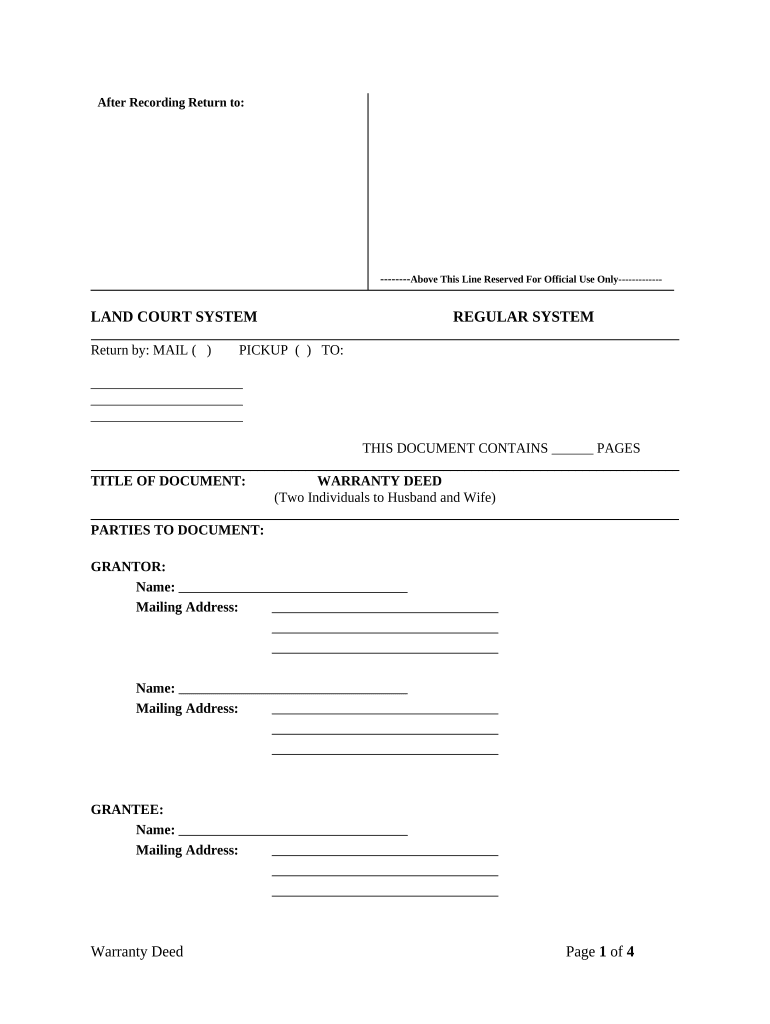
How to use or fill out Warranty Deed from two Individuals to Husband and Wife - Hawaii
Ease of Setup
DocHub User Ratings on G2
Ease of Use
DocHub User Ratings on G2
Click ‘Get Form’ to open it in the editor.
In the 'Parties to Document' section, enter the names and mailing addresses of both Grantors (the individuals transferring the property) and Grantees (the husband and wife receiving the property).
Fill in the 'Tax Map Key', 'Plat', 'Parcel', and 'CPR No.' fields as applicable to your property. This information is crucial for identifying the specific land being conveyed.
In the main body, specify the legal description of the property. If you have an attached Exhibit A, reference it accordingly.
Complete the date of prior instrument reference if applicable, ensuring all details are accurate for recordation purposes.
Both Grantors must sign and print their names at the designated signature lines. Ensure that a notary public witnesses this signing for legal validity.
Finally, review all entries for accuracy before saving or exporting your completed document.
Start using our platform today to easily complete your Warranty Deed online for free!
Fill out Warranty Deed from two Individuals to Husband and Wife - Hawaii online It's free
Hawaii Bureau of ConveyancesHawaii Bureau of Conveyances; recording requirementsHawaii Warranty deedQuitclaim deedQuitclaim deed HawaiiProperty ownership hawaiiConveyance Tax Certificate HawaiiBureau of conveyances boc website
Security and compliance
At DocHub, your data security is our priority. We follow HIPAA, SOC2, GDPR, and other standards, so you can work on your documents with confidence.
General Warranty Deeds. a. Contain specific protections for the grantee of the deed. General warranty deeds contain two sets of warranties: i. PresentRead more
A: A new deed needs to be prepared that will convey the existing interest to the new owners which will include you and the individual(s) you are adding. HawaiiRead more
Cookie consent notice
This site uses cookies to enhance site navigation and personalize your experience.
By using this site you agree to our use of cookies as described in our Privacy Notice.
You can modify your selections by visiting our Cookie and Advertising Notice.