







Understanding the WV Tax Exempt Form
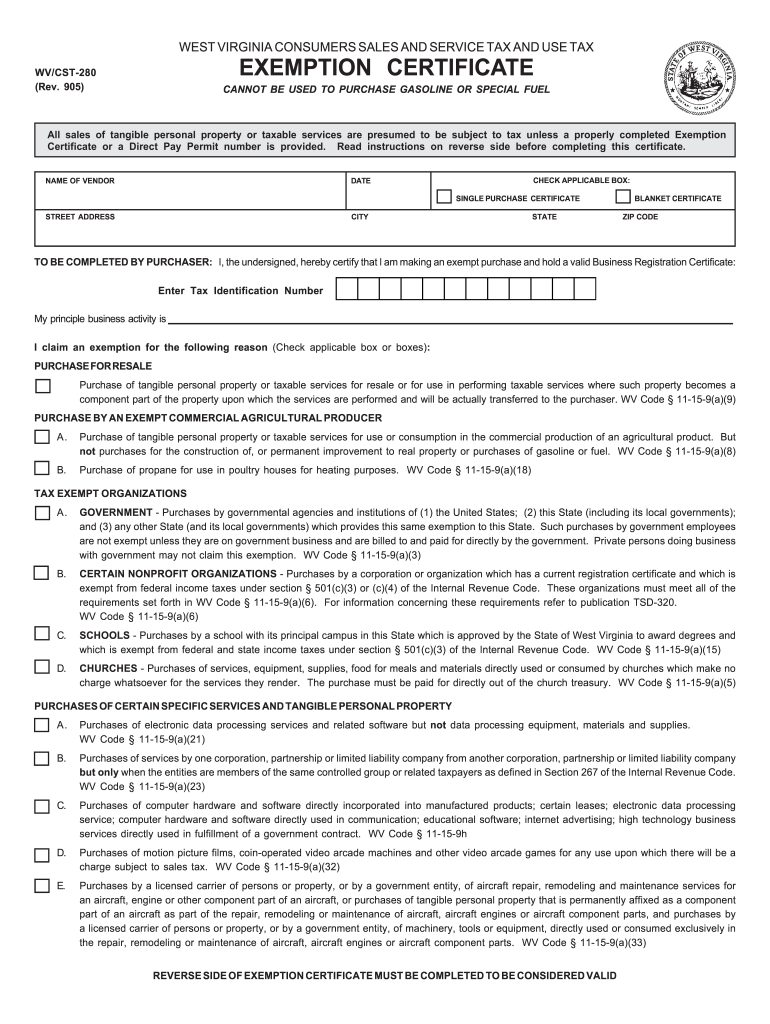
The West Virginia tax exempt form, formally known as the West Virginia Consumers Sales and Service Tax and Use Tax Exemption Certificate (WV/CST-280), allows certain entities to make purchases without the burden of sales tax under specific conditions. This form is primarily used for transactions related to the purchase of tangible personal property or taxable services. Understanding this certificate is crucial for businesses and individuals who qualify for these exemptions, ensuring compliance with state regulations while maximizing financial resources.
Who Typically Uses the WV Tax Exempt Form
This form is beneficial for various entities that qualify for tax exemptions, including:
- Nonprofit Organizations: Many charitable organizations use the exemption form when purchasing goods and services necessary for their operations.
- Government Entities: Municipal, state, and federal agencies typically utilize the form to avoid sales tax on purchases related to public services.
- Farmers and Agricultural Producers: The form allows them to purchase supplies without incurring tax, crucial for agricultural operations.
- Resellers: Businesses intending to resell products use this form to purchase items wholesale tax-free, focusing on resale rather than final consumption.
Businesses and individuals should confirm their eligibility and familiarize themselves with the specific requirements outlined in the state's tax regulations.


Key Elements of the WV Tax Exempt Form
Understanding the critical components of the WV tax exempt form is essential for accurate completion. Key elements include:
- Purchaser Information: Detailed information about the entity requesting the exemption, including name, address, and contact information.
- Description of Property or Services: A clear description of the items or services eligible for exemption must be detailed.
- Reason for Exemption: The form must specify the exemption category, such as resale or government use, which justifies the lack of tax.
- Signature of Authorized Representative: An authorized individual must sign the form, affirming the accuracy of the information provided.
These elements ensure that the document serves the intended function while meeting the state's legal standards.
Steps to Complete the WV Tax Exempt Form
The following steps outline the process to accurately complete the WV tax exempt form:
- Obtain the Form: Download the form from the state's tax department website or obtain it from your accountant.
- Fill in Purchaser Information: Enter the full name, address, and contact details of the buyer.
- Describe the Transaction: Clearly outline what products or services are being purchased.
- Select the Exemption Category: Identify the appropriate exemption category that applies to your situation.
- Signature: Ensure that a duly authorized person signs the form to validate its contents.
After completion, distribute copies to both the vendor and retain one for your records, maintaining a clear audit trail for future reference.
Legal Use of the WV Tax Exempt Form
The WV tax exempt form must be used following legal guidelines established by the West Virginia State Tax Department. Misuse of the form—such as fraudulent claims or incorrect exemptions—can result in significant penalties, including back taxes, fines, and interest. It is essential for users to accurately represent their status and the purpose of purchases. Individuals and organizations must also retain proper documentation related to their exempt purchases, as the state may require proof to verify compliance.
Important Terms Related to the WV Tax Exempt Form
Familiarity with relevant terminology enhances comprehension of the WV tax exempt form:
- Exemption Certificate: A document permitting a purchaser to buy goods without sales tax, specifying why the exemption applies.
- Sales Tax: A tax imposed on the sale of goods and services, which varies by locality.
- Tangible Personal Property: Physical items that can be owned, such as machinery, goods, and equipment.
- Nonprofit Status: A designation for organizations that operate primarily for charitable, educational, or other such purposes rather than profit.
Understanding these terms can help entities navigate the usage of the tax exempt form effectively.




