




01. Edit your attorney termination letter pdf online
Type text, add images, blackout confidential details, add comments, highlights and more.

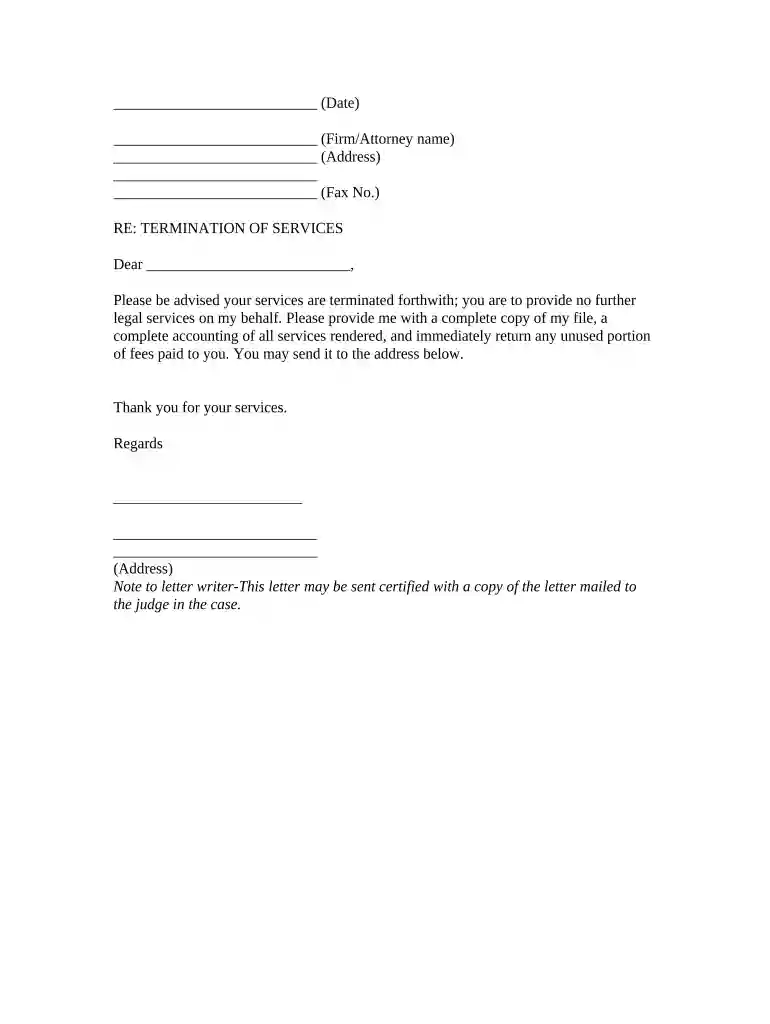
Type text, add images, blackout confidential details, add comments, highlights and more.

Draw your signature, type it, upload its image, or use your mobile device as a signature pad.

Send free attorney termination letter sample via email, link, or fax. You can also download it, export it or print it out.
A termination letter to an attorney serves as a formal notice to a legal service provider that their representation is no longer required. This type of letter is crucial because it outlines the intention to end the attorney-client relationship formally and documents the termination for both parties. By utilizing a termination letter, clients ensure that they communicate their decision clearly and are protected legally should any disputes arise in the future.
In the context of legal services, the termination letter acts as both a declaration and a record. It prompts the attorney to cease work on behalf of the client, return any files or documents, and provide a final accounting of services rendered. Having a well-crafted termination letter is especially important in maintaining professionalism and ensuring that all parties understand the next steps regarding any outstanding matters.
When drafting a termination letter to an attorney, it is important to include specific components to ensure clarity and formality:
Providing these essential elements in the termination letter can help in preventing misunderstandings and promote a smooth closure to the attorney-client engagement.
Creating a termination letter requires careful consideration to ensure all necessary details are included and communicated effectively. Below are the sequential steps to draft a comprehensive termination letter:
Identify the Need for Termination:
Create a Draft:
Write the Body of the Letter:
Review and Edit:
Send the Letter:
Follow Up:
These steps establish a clear, documented process of terminating the attorney-client relationship, minimizing potential disputes or misunderstandings.
The application of a termination letter to an attorney is often context-specific, influenced by the nuance of the client's situation. Here are common scenarios that illustrate its use:
Dissatisfaction with Services: A client may feel that their attorney is not adequately representing them or communicating effectively. In this case, a termination letter can formally express this and give the attorney an opportunity to respond before the relationship is officially severed.
Change of Legal Strategy: A business might shift its legal approach or needs, prompting the client to switch to a different attorney who specializes in a different area of law. A termination letter is necessary to initiate this change seamlessly.
Cost Concerns: A client may find that the attorney's fees are exceeding their budget. A termination letter can help formalize their decision to end the relationship while requesting accounting for any unbilled charges.
Each of these examples demonstrates how a termination letter can effectively and professionally communicate the decision to end an attorney-client relationship, safeguarding both parties' interests.
When using a termination letter to end the relationship with an attorney, it is essential to be aware of the legal implications involved. The termination letter should adhere to specific guidelines to ensure that it is legally sound and protects the client's rights:
Compliance with Legal Standards: The letter must comply with state and federal legal requirements, ensuring that it effectively communicates the termination while respecting any legal obligations.
Maintaining Professionalism: The tone of the letter should remain courteous and respectful, as this helps maintain professional relationships and avoid potential legal disputes.
Documenting Communication: Retaining a copy of the termination letter and any responses received provides a paper trail that can be beneficial in case of disagreements or claims regarding unpaid services or malpractice.
Understanding these legal considerations ensures that the termination of the attorney-client relationship is conducted within a framework that is respectful and legally sound.
While the general process for creating a termination letter to an attorney is quite similar across the United States, state-specific rules and regulations may impact how the letter is written and the processes that follow. Here are some factors to consider:
State Bar Regulations: Some states have specific guidelines on how clients must terminate their attorney representation, including mandatory filing or notification requirements.
Jurisdictional Laws: Local laws may dictate the necessary elements or procedures when terminating legal representation, including what documents must be returned or how outstanding fees are handled.
Dispute Resolution Requirements: Certain jurisdictions may require clients to go through mediation or dispute resolution processes before formally terminating representation.
Engaging with a local attorney or conducting research into state-specific requirements can help ensure compliance and a smooth transition when ending the attorney-client relationship. Adjusting the termination letter to incorporate these local considerations is vital for legal effectiveness.
At DocHub, your data security is our priority. We follow HIPAA, SOC2, GDPR, and other standards, so you can work on your documents with confidence.






Mar 5, 2026 Example scenarios for terminating your attorney-client relationship. Includes a sample termination letter form. Firing a Court-AppointedRead more
Feb 15, 2011 Early jail visit. 2. Speak clients language. 3. LISTEN to your client a. Dont immediately tell them the DAs plea offer, despite Rule 1.4,.Read more
Each party should be advised by their attorneys prior to the mediation that they will hear statements from the opposing attorney with which the party mayRead more


