



01. Edit your motion to amend example online
Type text, add images, blackout confidential details, add comments, highlights and more.

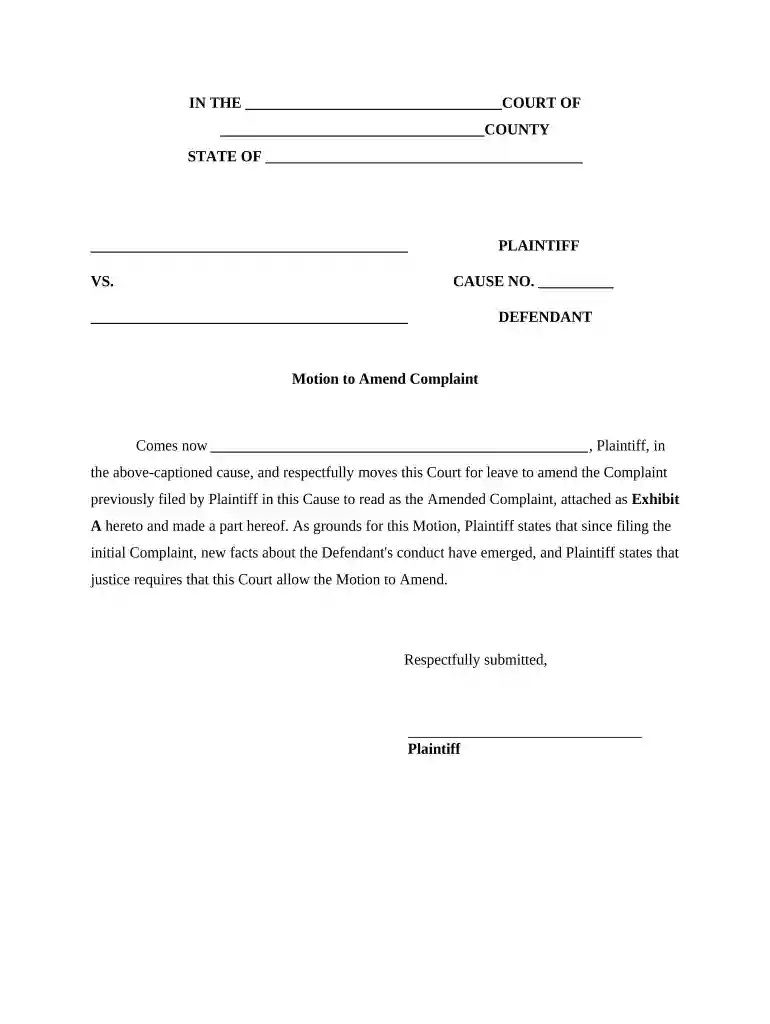
Type text, add images, blackout confidential details, add comments, highlights and more.
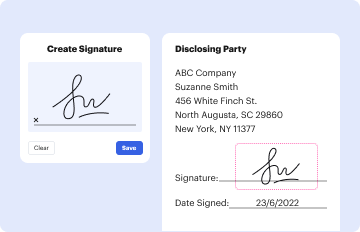
Draw your signature, type it, upload its image, or use your mobile device as a signature pad.

Send motion to amend complaint example via email, link, or fax. You can also download it, export it or print it out.
A motion to amend complaint refers to a legal request submitted to a court seeking permission to modify a previously filed complaint. This motion is crucial when new information emerges that impacts the case, requiring changes to the original claims or parties involved. An amended complaint allows for the introduction of additional facts, claims, or parties that were not included in the initial filing, enhancing the plaintiff's ability to present a complete case.
The legal significance of a motion to amend is multifaceted. It allows for the correction of mistakes, the addition of critical information, and ensures that all relevant legal theories can be argued. Courts generally favor amendments for promoting fair consideration of the case, provided they do not cause undue prejudice to the other party.
Completing a motion to amend a complaint requires careful attention to detail to ensure compliance with court rules and effective communication with the court and opposing counsel.
Draft the Motion
Articulate the Reasons for Amendment
Detail Proposed Changes
Observe Local Rules
File and Serve the Motion
Understanding the terminology associated with motions to amend is essential for effective legal practice. Here are important terms:
By familiarizing yourself with these terms, practitioners can navigate the complexities of motions to amend more effectively.
Each state in the U.S. has its own set of rules governing the amendment of complaints. It is critical to be aware of these variations to ensure compliance.
Practical application of the motion to amend complaint often involves various scenarios where its use is crucial.
Suppose a plaintiff discovers new evidence after filing the original complaint indicating that the defendant had prior knowledge of a defect in a product. This evidence necessitates an amendment to include allegations of negligence based on that knowledge.
If it is found that an incorrect party was included in the original filing, the plaintiff may need to amend the complaint to drop the incorrect party and add the relevant one. Properly making this change is vital to ensure that the correct entity is held accountable in the matter.
As cases develop, the legal strategy might shift. For instance, a plaintiff might initially plead breach of contract but later discover that tort claims for fraud or misrepresentation are more appropriate based on further investigations. The plaintiff would file a motion to amend the complaint to incorporate these new claims.
By understanding these scenarios, practitioners can strategically decide when and how to use the motion to amend to strengthen their case.
At DocHub, your data security is our priority. We follow HIPAA, SOC2, GDPR, and other standards, so you can work on your documents with confidence.


Plaintiffs hereby move this Court for leave to file the attached Amended Complaint pursuant to Federal Rule of Civil Procedure 15 and LR 7.1. For the reasonsRead more
Oct 5, 2018 COMPLAINT.The term covered com- plaint means a complaint relating to an alleged failure to satisfy a prompt payment requirement underRead more
A party may amend its pleading once as a matter of course no later than: (A) 21 days after serving it, or (B) if the pleading is one to which a responsiveRead more


