




Definition and Meaning of Waiver Release Equine
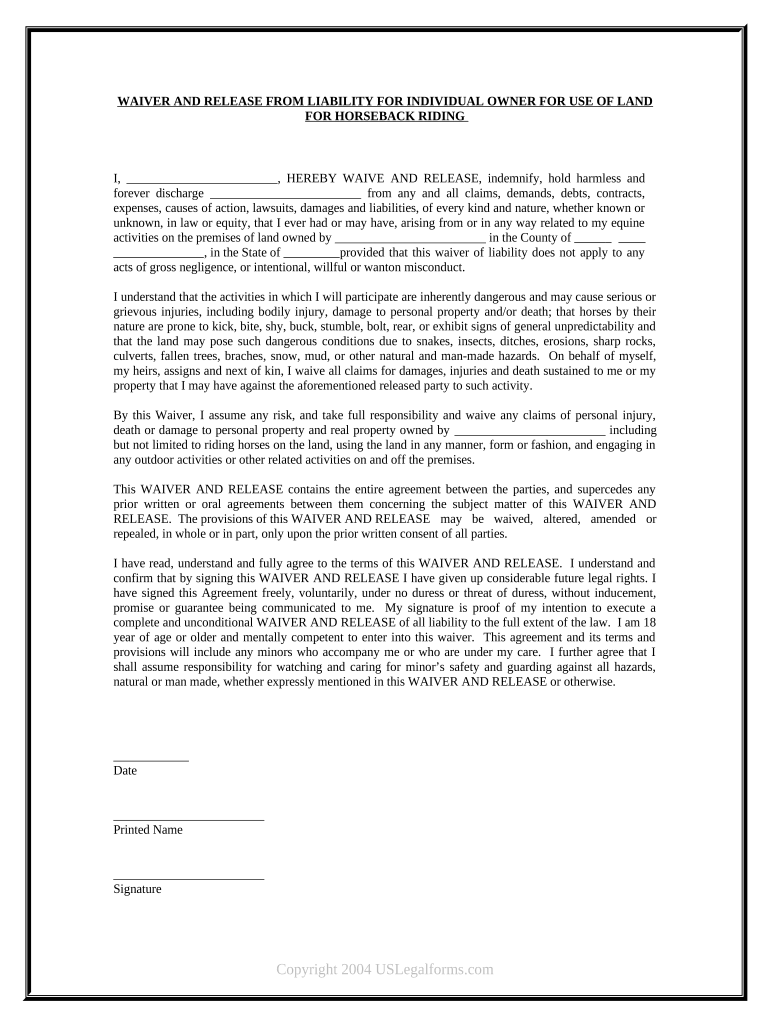
A waiver release equine is a legal document designed to protect landowners and equine facilities from liability in the event of an accident or injury sustained during equine activities, such as horseback riding. This document acknowledges the inherent risks involved in horseback riding, which include unpredictable horse behavior, falls, and equipment failure, among others. By signing the waiver, participants agree to relinquish their right to sue the landowner or riding facility for injuries incurred while engaging in equine activities. This form is crucial in the equestrian community as it establishes a clear understanding of risk and responsibility between riders and providers.
Key Components of the Waiver Release
- Acknowledgment of Risks: Participants explicitly recognize the potential dangers associated with horseback riding.
- Release of Liability: By signing, individuals agree not to hold the facility or landowner accountable for injuries that may occur.
- Exclusions: The waiver typically does not cover claims related to gross negligence or intentional misconduct.
- Minor Provisions: Additional clauses may address the participation of minors and the responsibilities of parents or guardians.
How to Use the Waiver Release Equine
Using a waiver release equine effectively begins with understanding its purpose. It serves as a document of consent for participants, ensuring that they are aware of the risks involved in equine activities and agree to take responsibility for any resulting injuries.
Steps to Utilize the Waiver
- Provide Clear Information: Before participants engage in any riding activity, provide them with the waiver along with clear information about the risks involved.
- Ensure Readability: It is essential that the language used in the waiver is straightforward, allowing participants to comprehend its contents fully.
- Obtain Signatures: Participants must sign the document prior to beginning any equine activities. This signature confirms their understanding and acceptance of the terms outlined in the waiver.
- Maintain Records: Keep signed waiver releases on file for at least several years to provide proof of consent if needed.
Benefits of Using the Waiver
- Protection for Landowners: The waiver protects landowners from potential lawsuits and showcases that participants acknowledge the risks.
- Encouragement of Safe Practices: By signing the waiver, participants are reminded to engage in safe riding practices.
Important Terms Related to Waiver Release Equine
Understanding key terminology associated with a waiver release equine can significantly aid in the creation and application of these documents. Here's a breakdown of some essential terms:
- Liability: Legal responsibility for one's actions or negligence, particularly in regard to injuries sustained by others.
- Indemnification: A provision that may require participants to compensate and protect the landowner from claims brought against them.
- Gross Negligence: A failure to exercise even slight care, which goes beyond ordinary negligence.
- Hold Harmless: A clause that ensures participants cannot hold the landowner liable for any injuries or losses incurred while riding.
Key Elements of the Waiver Release Equine
Several critical elements must be included in a waiver release equine to ensure its validity and effectiveness in protecting landowners:
- Identification of Parties: Clear identification of the participant and the facility or landowner.
- Activity Description: A thorough description of the activities that the waiver covers, detailing the type of equine experiences offered.
- Notification of Risks: An articulation of the inherent risks involved in horseback riding that participants should be aware of.
- Signature and Date: A section for participants to sign and date the document, which is mandatory for it to be legally binding.
Legal Considerations
Waivers must comply with state regulations and should be drafted to withstand legal scrutiny. Consulting legal counsel is advisable to ensure that the language used in the waiver is up to date with current laws.
Examples of Using the Waiver Release Equine
There are various scenarios in which a waiver release equine may be applied across the equestrian community:
- Riding Schools: Students enrolled in horseback riding lessons are required to sign waivers before participation.
- Equine Events: Participants in rodeos or equestrian competitions must complete waivers to partake in their respective events.
- Trail Riding: Individuals riding on public or private trails may need to sign a waiver for the venue they are using, ensuring that the trail owners are not held liable for accidents.
Scenario Application
- Riding with Minors: If a parent brings a child to ride, the parent must sign the waiver on behalf of the minor while acknowledging the child's participation in an activity fraught with risk.
- Multiple Participants: For group activities, it is important to ensure that all parties involved have separately signed waivers to limit liability collectively.