




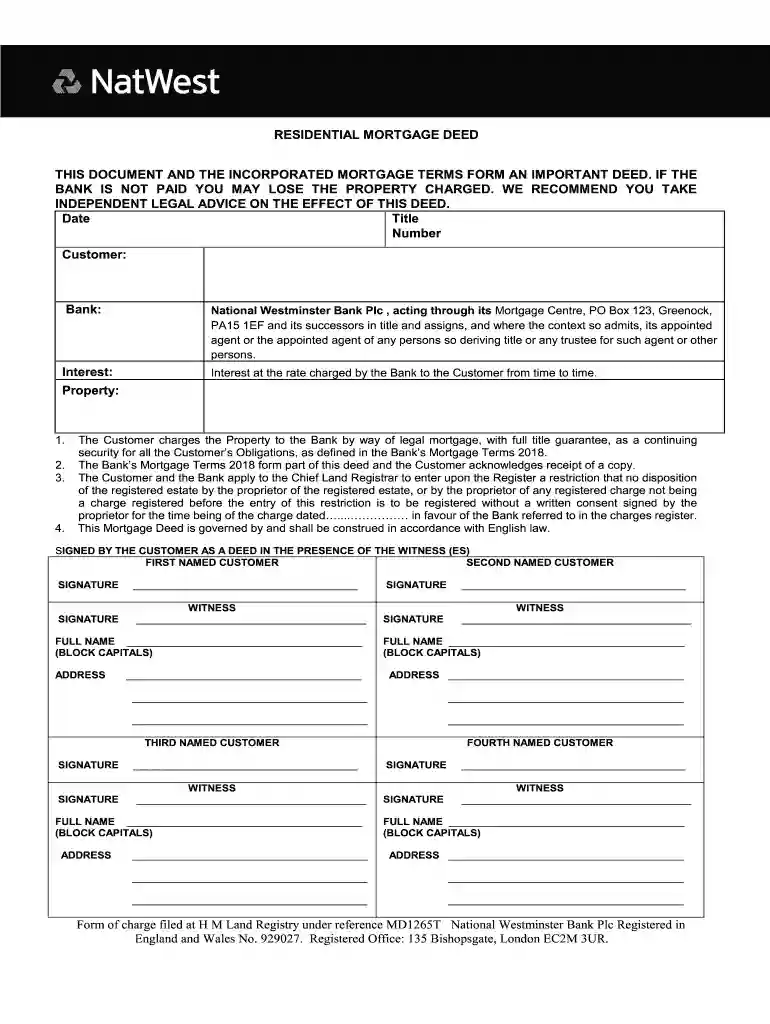
01. Edit your natwest mortgage deed online
Type text, add images, blackout confidential details, add comments, highlights and more.

Type text, add images, blackout confidential details, add comments, highlights and more.

Draw your signature, type it, upload its image, or use your mobile device as a signature pad.

Send natwest mortgage deed download via email, link, or fax. You can also download it, export it or print it out.
The NatWest mortgage deed is a legal document executed between the borrower and National Westminster Bank Plc, establishing a mortgage loan agreement. It outlines the terms under which a property is used as collateral for a loan. The mortgage deed specifies the borrower's obligations to repay the loan and the rights of the lender, particularly in the event of default.
Understanding these components is essential for both parties involved to ensure compliance and clarity in the mortgage process.
Acquiring a NatWest mortgage deed involves a few strategic steps, often initiated during the mortgage application process.
Mortgage Application Submission:
Approval Process:
Review and Signing:
Document Retention:
By following these steps, borrowers can effectively secure their mortgage deed without unnecessary complications, ensuring that all parties fully understand their obligations.
Completing the NatWest mortgage deed requires attention to detail and compliance with legal standards.
Gather Required Documentation:
Complete the Mortgage Application:
Review Loan Terms:
Sign the Deed:
Store Documentation Safely:
This structured approach not only ensures compliance but also protects the interests of the borrower throughout the mortgage process.
Understanding key terminology associated with the NatWest mortgage deed is crucial for clarity in the mortgage process.
These terms serve as the foundation of understanding the implications, rights, and responsibilities tied to a NatWest mortgage deed.
The legal enforceability of the NatWest mortgage deed is significant in protecting both the lender and the borrower’s interests.
The legal framework surrounding the NatWest mortgage deed is structured to promote safe lending practices and uphold borrowers' rights within a regulated environment. Ensuring compliance with legal standards is indispensable in preventing disputes throughout the mortgage term.
At DocHub, your data security is our priority. We follow HIPAA, SOC2, GDPR, and other standards, so you can work on your documents with confidence.
by L Pogue 28 A pledge is a legal security interest rather than an equitable interest, which is an important distinction as legal interests have priority.Read more
Assets: The Issuer will make payments on the Notes from, inter alia, payments of principal and revenue on a portfolio comprising mortgage loans originated byRead more


