
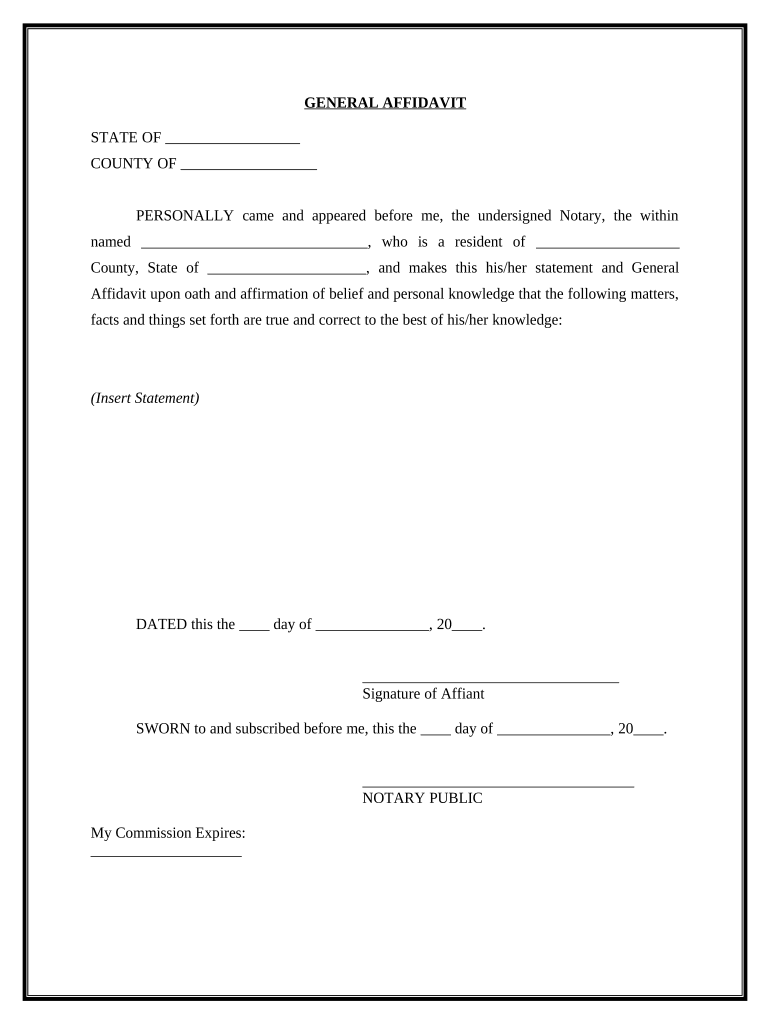







Definition & Meaning of the General Affidavit
A general affidavit is a legal document in which an individual, known as the affiant, makes a sworn statement of fact. It is typically used to assert the truthfulness of information, often in legal proceedings, and is signed under penalty of perjury. The affidavit serves as a means for the affiant to communicate facts in a way that can be relied upon by courts and other entities. This document usually includes key details such as the affiant's personal information, a declaration of the truth of the statements provided, and space for signatures from both the affiant and a notary public.
Key Components of a General Affidavit
- Affiant Information: Personal details such as name, address, and contact information.
- Statement of Facts: A clear articulation of the facts the affiant is attesting to.
- Signature: The affiant's signature, typically in the presence of a notary.
- Notary Verification: The notary public's signature and seal affirming the validity of the affidavit.
This document is particularly significant in legal contexts, where it may be used for various purposes such as proving identity, establishing residency, or confirming details related to financial matters or property ownership.
How to Use the General Affidavit
The general affidavit can be employed in numerous situations and contexts, depending on the specific requirements of the case at hand. Below are common usages and tips for effectively leveraging the affidavit.
Situational Uses
- Court Proceedings: Often required to support claims or defenses in civil and criminal cases.
- Real Estate Transactions: Used to confirm ownership, residency, or contractual obligations.
- Municipal Matters: May be needed for zoning applications, tax assessments, or certification of facts for local government processes.
Steps to Utilize an Affidavit
- Determine Purpose: Identify the specific legal or procedural context in which the affidavit will be used.
- Draft the Document: Use a general affidavit template or form to draft the necessary information.
- Gather Supporting Evidence: Prepare any additional documentation that may substantiate the claims being made in the affidavit.
- Sign Before a Notary: Ensure the document is signed in front of a notary public who can provide the necessary verification.
- File or Submit as Required: Depending on the purpose, submit the affidavit to the relevant authority or court.
Steps to Complete the General Affidavit
Completing a general affidavit requires careful attention to detail to ensure that all necessary information is accurately represented. Here are the steps involved in completing the form.
- Obtain the Template: Start with a reliable general affidavit form or template, which can often be found online or provided by legal professionals.
- Fill in Personal Information: Input your full name, address, date of birth, and contact information at the beginning of the document.
- Draft the Statement: Articulate the facts you are attesting to, ensuring they are clear, concise, and truthful. It is essential to include relevant details that support your statements.
- Review for Accuracy: Double-check the information entered for accuracy, as any discrepancies can lead to issues later.
- Notarization: Schedule an appointment with a notary public to have the affidavit officially witnessed and validated.
Important Considerations
- Language and Clarity: Use straightforward language to minimize misunderstandings.
- Legal Jurisdiction: Ensure that the affidavit complies with the legal requirements of the jurisdiction in which it is being submitted.
Key Elements of the General Affidavit
Understanding the key elements of a general affidavit is critical for its effective use in legal proceedings. Here are the core components to include.
- Affiant’s Declaration: A clear statement affirming that the contents of the affidavit are true to the best of the affiant’s knowledge.
- Facts Stated: A sequential listing of the fact-based assertions, which should be backed by evidence when applicable.
- Witness Signature: The notary’s signature and seal must be present to authenticate the affidavit.
This structured format helps maintain the affidavit's integrity while providing a transparent outline of the claims being made.
Legal Use of the General Affidavit
The legal use of a general affidavit is broad, serving as a vital tool in various legal contexts to ensure honesty and clarity in statements made under oath. Understanding its application can enhance its effectiveness.
Common Legal Contexts
- Family Law: Used to document specific circumstances in custody cases or divorce proceedings.
- Real Estate: Assists in confirming details relevant to property transactions or disputes.
- Corporate Matters: Employed to validate facts in filings with regulatory authorities or courts.
Adhering to Legal Standards
- Jurisdictional Compliance: Different states may have specific requirements for drafting and notarizing affidavits. Familiarity with these nuances is crucial.
- Witnessing Requirements: Some affidavits may require additional witnesses beyond notary acknowledgment, so it is essential to check local laws.
Understanding these usages and stipulations not only aids in the creation of a robust document but also ensures that it serves its intended legal purpose effectively.
Important Terms Related to the General Affidavit
Being familiar with specific terminology associated with general affidavits aids in effectively navigating their use and understanding their implications. Below are critical terms to grasp when working with affidavits.
- Affiant: The individual who is making the affidavit and who asserts the truth of the statements therein.
- Notary Public: A licensed individual who certifies the authenticity of signatures on the affidavit, providing legal validation.
- Subpoena: A legal document commanding someone to appear in court or produce evidence—often related to relevant affidavits.
- Perjury: The act of falsely swearing to a statement or fact in an affidavit, which can carry severe penalties.
Understanding these terms is essential for understanding the context in which a general affidavit operates and for ensuring compliance with legal norms.
Examples of Using the General Affidavit
Real-world applications of general affidavits highlight their versatility and significance in various scenarios. Below are examples where these legal documents play a crucial role.
Daily Situational Examples
- Residency Verification: An individual may need to provide an affidavit to confirm their residency for school enrollment or government assistance programs.
- Financial Claims: In cases of financial disputes, an affidavit can support a claim regarding debts owed or payments made.
- Identity Confirmation: Affidavits are often employed to affirm a person's identity in legal or financial transactions, such as opening bank accounts or applying for loans.
Each of these examples illustrates how a general affidavit can provide necessary documentation to support legal claims and facilitate various processes, ensuring transparency and accountability in assertions made under oath.




