







Definition and Meaning
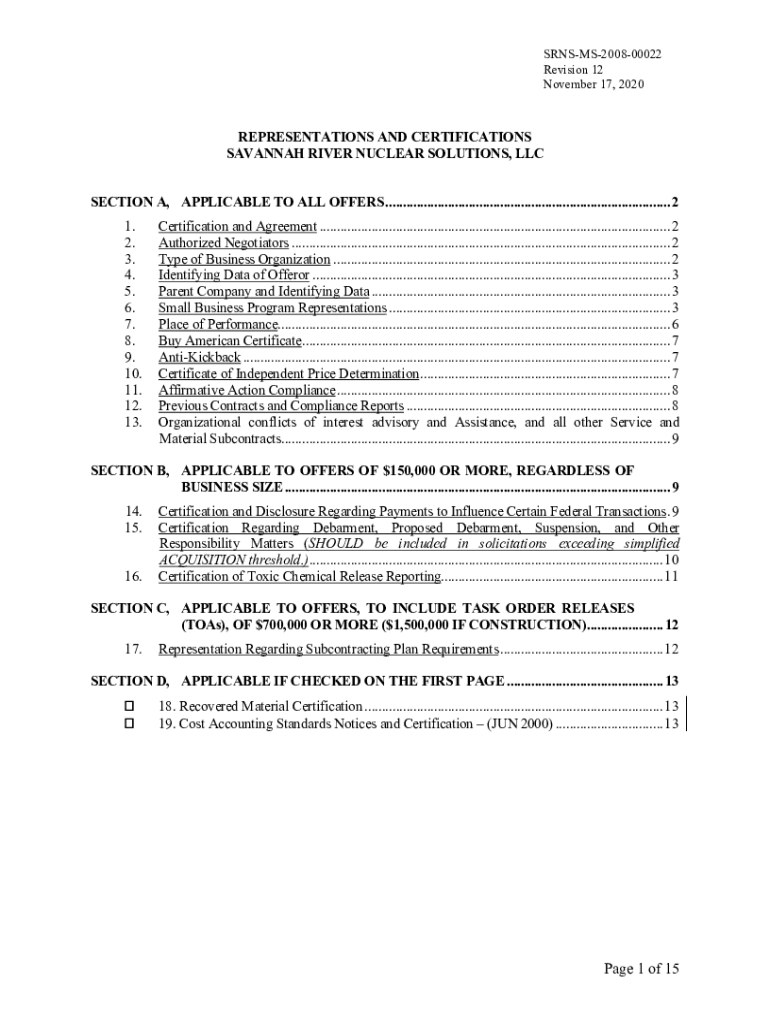
The "Savannah River Nuclear Solutions Savannah River Nuclear" refers to critical documents and processes associated with federal contracting and compliance at the Savannah River Site, managed by Savannah River Nuclear Solutions, LLC. This includes guidelines and certifications required from offerors, demonstrating compliance with federal acquisition regulations. Understanding this in-depth reduces legal risks and ensures proper execution of federal contracts.
Importance of Compliance with SRNS
Adhering to guidelines outlined by Savannah River Nuclear Solutions ensures that all submissions align with legal requirements, particularly concerning security protocols and federal standards. This compliance facilitates transparent and efficient operation, as companies and individuals engaged in federal contracts must meet rigorous standards, safeguarding sensitive information and maintaining data integrity.
How to Access Savannah River Nuclear Solutions Documentation
Documentation pertaining to "Savannah River Nuclear Solutions Savannah River Nuclear" can typically be accessed via authorized channels. Contractors may receive documentation directly from SRNS upon being considered for a contract. Alternatively, they may find specific documents online through government or company portals dedicated to secure document distribution.
Steps to Complete Required Forms
- Review the Document: Carefully read the entire document to understand each section's requirements.
- Gather Necessary Information: Ensure all required data, including business organization details, small business certifications, and contact information, is collected.
- Complete Each Section Accurately: Fill out the form meticulously, providing truthful and precise information at each step.
- Attach Required Supporting Documents: Include any supplemental documents, such as proof of business structure or federal compliance certifications.
- Submit the Form: Follow specific submission instructions provided, whether online, via mail, or in person, ensuring timely delivery to avoid delays.
Key Elements of the Documentation
- Certification and Agreement: This part involves affirming compliance with legal statutes and organizational policies.
- Business Organization Type: Businesses must declare their legal structure (e.g., LLC, Corporation) for accurate representation.
- Federal Regulation Compliance: A focus on aligning with standards for environmental sustainability, safety, and security.
- Debarment and Lobbying Activities: Disclosures about past or current debarment actions and lobbying involvements.
Legal Terms and Provisions
Understanding legal terminology in these documents is crucial. Terms like "debarment," "lobbying certification," and "cost accounting standards" each have significant implications for legal compliance and contracting obligations.
Document Security and Authentication
Given the sensitive nature of the information involved, all documents must be protected by appropriate security measures, including 256-bit SSL encryption. Authentication ensures that only authorized parties can access, edit, or submit these forms, thereby maintaining the integrity and confidentiality of the data contained within.
Common Use Cases for Businesses
Businesses engaging in federal contracts, particularly within the energy sector, will find this documentation integral. Compliance ensures eligibility and favorable outcomes in contract bidding processes, ultimately aiding in successful project execution.
Software and Technology Compatibility
Leveraging technology solutions like DocHub, contractors can efficiently edit, manage, and submit their documents. Integration with platforms like Google Workspace can streamline processes, facilitating real-time collaboration and workflow efficiency.
Federal Deadline Considerations
Meeting established deadlines is crucial. Contractors should note any and all specified dates for submission, as delays or non-compliance can lead to missed opportunities or penalties. Efficient time management and tracking tools can offer significant advantages in this domain.




