
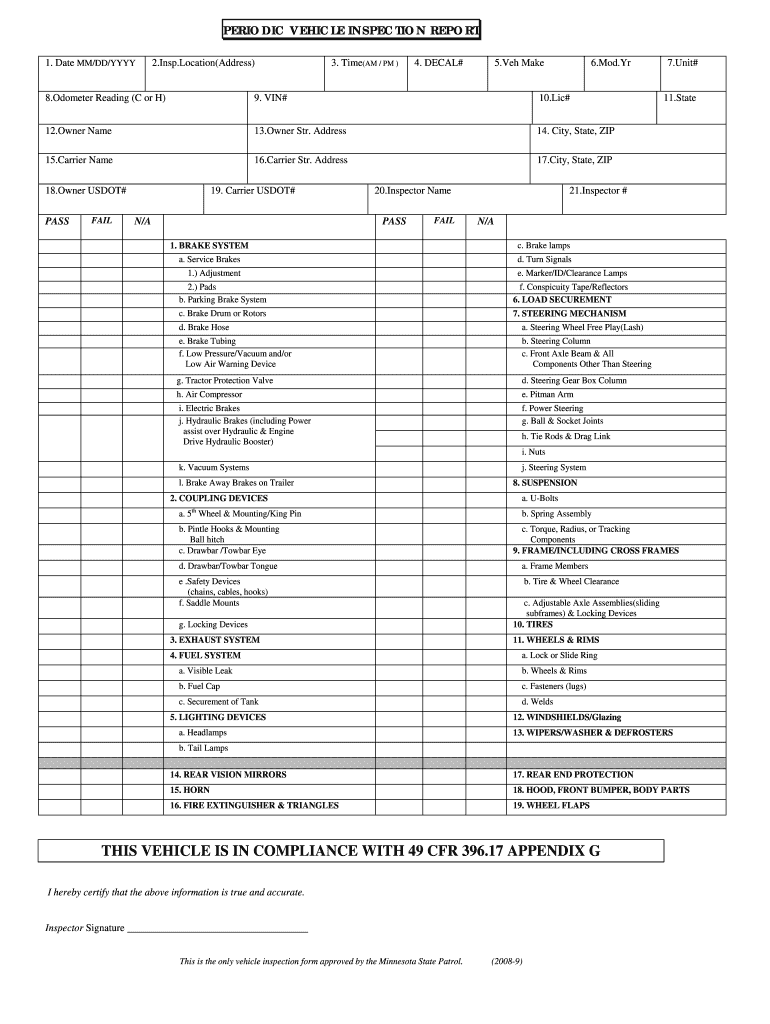







Definition and Meaning of the Minnesota Periodic Vehicle Inspection Report
The Minnesota Periodic Vehicle Inspection Report is a formal document designed to verify the compliance of a vehicle with various safety and operational standards as mandated by state regulations. This report serves a dual purpose: it provides an official record that a vehicle has been inspected for safety and operationally sound features, and it documents any issues that may need addressing to ensure conformity with state laws.
Purpose of the Report
- Safety Assurance: The main objective is to ensure that vehicles operate safely on Minnesota roads, thereby protecting drivers, passengers, and pedestrians.
- Regulatory Compliance: The report verifies adherence to the standards set forth by the Minnesota Department of Transportation (MnDOT), specifically in relation to state laws and federal regulations, such as those outlined in 49 CFR 396.17.
Specific components of the inspection often include checks on brakes, suspension, lighting systems, steering mechanisms, and emissions to maintain a vehicle's roadworthiness.
Steps to Complete the Minnesota Periodic Vehicle Inspection Report
Completing the Minnesota Periodic Vehicle Inspection Report requires attention to detail and adherence to specific procedures. Below are comprehensive steps to facilitate this process:
- Prepare for Inspection: Gather necessary information and documents, including the vehicle’s identification number (VIN), registration, and any previous inspection reports.
- Conduct the Inspection: A certified inspector will evaluate various vehicle systems, including:
- Braking system functionality
- Steering mechanism integrity
- Suspension performance
- Lighting condition and functionality
- Emissions compliance
- Document Findings: After inspection, the inspector will fill out the report detailing compliance status, including noting any deficiencies or required repairs.
- Obtain Signature: The inspector must sign the report, affirming the accuracy of the inspection.
- Submit the Report: Depending on requirements, submit the completed report to the appropriate state authority or retain for personal records.
This structured approach ensures that every aspect of vehicle safety is thoroughly assessed and documented.
Important Terms Related to the Minnesota Periodic Vehicle Inspection Report
Understanding key terms associated with the Minnesota Periodic Vehicle Inspection Report can enhance clarity and comprehension. Here are several important definitions:
- VIN (Vehicle Identification Number): A unique code that identifies individual motor vehicles, crucial for all vehicle documentation.
- Safety Inspection: A systematic examination aimed at ensuring a vehicle operates safely and meets legal requirements.
- Compliance: The condition of meeting established rules and standards set by authorities, essential for legal and operational validation.
- Inspector: A certified individual responsible for conducting safety inspections and completing the inspection report.
Familiarity with these terms provides a clearer understanding of the documentation process and its implications.
Legal Use of the Minnesota Periodic Vehicle Inspection Report
The Minnesota Periodic Vehicle Inspection Report holds legal significance, functioning as a formal assertion of a vehicle's compliance with safety and operational standards.
Legal Implications
- Regulatory Validation: Compliance with the inspection report can be legally required for vehicle registration and operation within the state.
- Liability: In the event of an accident, proof of a valid inspection can influence liability considerations, emphasizing the importance of maintaining accurate records.
Failing to secure and maintain a properly completed inspection report can lead to legal repercussions, including fines or complications in vehicle registration.
State-Specific Rules for the Minnesota Periodic Vehicle Inspection Report
Minnesota imposes specific regulations governing the periodic vehicle inspection process.
Key Regulations
- Inspection Frequency: Certain vehicles, such as commercial trucks and buses, must undergo inspections annually, while others may have varying requirements based on age or type.
- Emissions Testing: Depending on the vehicle's age and type, different emissions testing may be mandated. Compliance ensures accountability for environmental standards.
- Documentation Requirements: Appropriate forms must be filled out meticulously and submitted to state authorities for record-keeping.
These rules are crucial for maintaining safety standards across Minnesota's diverse vehicle fleet.
Examples of Using the Minnesota Periodic Vehicle Inspection Report
Real-world scenarios illustrate the practicality and importance of the Minnesota Periodic Vehicle Inspection Report. Consider the following instances:
- Commercial Fleets: A trucking company must maintain up-to-date inspection reports to comply with state regulations, helping to avoid costly fines and ensure vehicle safety for their drivers.
- Personal Vehicles: An individual preparing to sell their car might obtain a recent inspection report to assure potential buyers that the vehicle is in safe, operational condition.
- Insurance Compliance: Insurance companies may require proof of inspection for claims processing, ensuring that vehicle owners are driving compliant and safe vehicles.
These examples underscore the report's essential role in various contexts, enhancing overall vehicle safety and regulatory adherence.




