







Definition and Meaning of Certification Representation
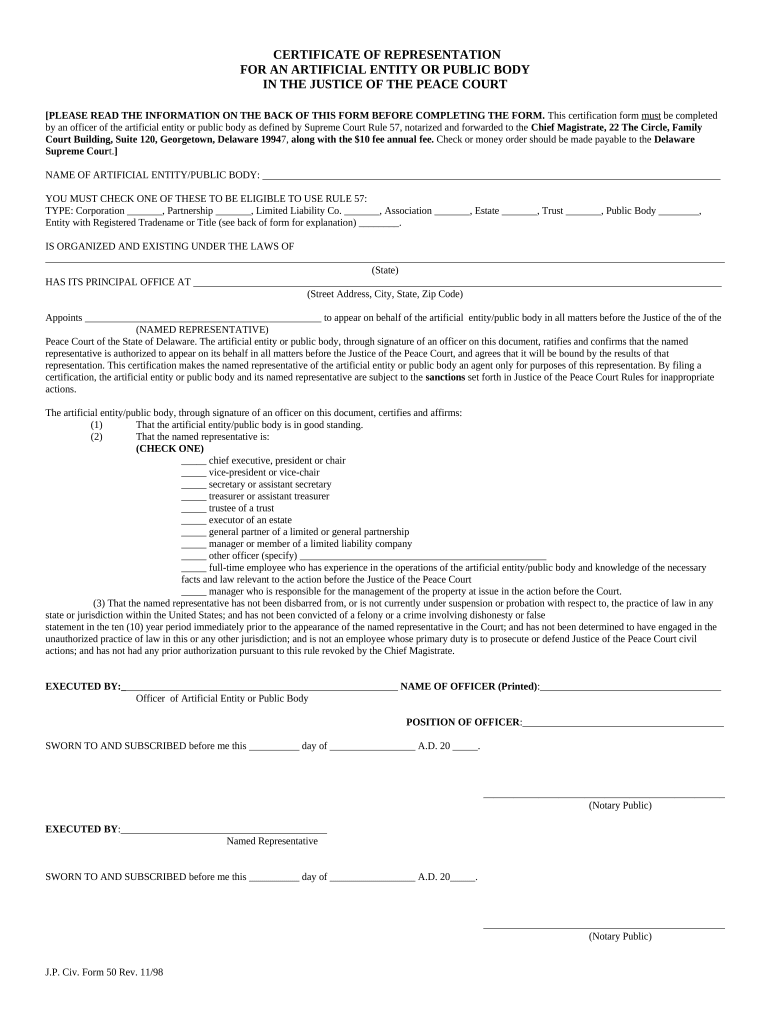
Certification representation is a formal document allowing specified entities to act without an attorney in legal proceedings, particularly within specific jurisdictions such as the Justice of the Peace Court in Delaware. This document is a declaration of the qualifications of the appointed representative who can speak or act on behalf of the entity. The legal foundation of such a certificate is often tied to specific state regulations, highlighting its importance in granting access to legal processes for eligible entities, such as corporations, partnerships, or other artificial representations.
Purpose and Scope
The primary purpose of a certification representation is to authorize a person to represent an organization in a legal capacity, ensuring that all proceedings are conducted in accordance with the legal frameworks of the jurisdiction. Key aspects include:
- Eligibility Criteria: Only certain entities are eligible to use this certification, which typically includes nonprofit organizations, corporations, and certain businesses.
- Limits on Use: The certification may not extend to all legal proceedings; specific jurisdictions, like Delaware, outline the limitations of its application under local court rules.
Steps to Complete the Certification Representation
Completing a certification representation document requires meticulous attention to detail. This process ensures compliance with the applicable laws and meets the necessary requirements before submission.
-
Gather Required Information:
- Entity Information: Collect details regarding the organization, such as name, address, and Tax Identification Number (TIN).
- Representative Details: Identify the person who will represent the organization, including their name, title, and contact information.
-
Complete the Form:
- Fill out the certification representation form accurately, ensuring that all required fields are completed.
- It may be beneficial to use a template that conforms to the specific jurisdiction's requirements.
-
Notarization:
- After completing the form, it typically must be notarized as a means of authenticating the document and the signatures affixed thereon.
-
Submission of the Document:
- The completed and notarized certification should be filed with the relevant court or agency, following procedures laid out by local regulations.
-
Record Keeping:
- Maintain a copy of the filed document for your records. This can be crucial for future reference or additional filings.
Important Factors to Consider
- Verify if there are any associated filing fees that accompany the submission.
- Ensure that the representative is fully aware of their responsibilities as appointed under the certification representation.
Who Typically Uses the Certification Representation
The certification representation is primarily utilized by various entities that require formal representation in legal matters. Common users include:
- Corporations: Often use certification representations to allow executive officers or other designated individuals to act in legal matters without needing to hire an attorney.
- Nonprofit Organizations: Since many nonprofits operate on limited budgets, certification representation helps reduce legal costs by allowing qualified staff to represent the organization.
- Partnerships: Partners may designate one member to handle legal proceedings, making the certification a practical tool.


Case Studies
- Corporate Representation: A technology company facing litigation may appoint its Chief Operating Officer as the representative, enabling efficient communication and handling of the case.
- Nonprofit Advocacy: A nonprofit focusing on community services might utilize certification representation to represent its interests in court without incurring high attorney fees.
Key Elements of the Certification Representation
Understanding the key elements of the certification representation is essential for proper utilization:
- Identification of Entities: The document must clearly identify the entity that is being represented, ensuring that there is no ambiguity about who is empowered to act on behalf of the organization.
- Authority of the Appointee: It should specify the nature and scope of authority given to the appointed individual, delineating where their powers begin and end.
- Compliance with Local Laws: The certification must adhere to the specific legal requirements set forth by the state or local jurisdiction where the representation is applicable, such as Delaware’s Supreme Court Rule 57.
Examples of Key Elements
- Title and Role: Clearly state "Representative" along with the name and position of the individual authorized to act.
- Scope of Authority: Example text could include "This certification authorizes the representative to file motions, attend hearings, and receive communications related to the case."
Legal Use of the Certification Representation
The legal utility of certification representation varies by jurisdiction, highlighting the need for users to familiarize themselves with relevant statutes and rules.
Compliance and Legal Standing
- Validity: For the certification to be legally valid, it must be executed following state-specific guidelines. Improper execution can lead to legal complications.
- Challenges in Court: If the certification is questioned in court, it may be subject to scrutiny regarding the authority of the representative, necessitating thorough documentation.
Legal Ramifications
- Consequences of Misrepresentation: Providing false information or appointing an unqualified representative can result in penalties, including the dismissal of the case or possible legal sanctions against the appointing entity.
- Revocation of Authority: The authority granted via certification representation can be revoked if it is determined that the representative is not acting in the best interests of the represented entity.
Through thorough knowledge and accurate application, organizations can effectively utilize certification representation to navigate legal landscapes while minimizing the need for extensive legal representation.




