
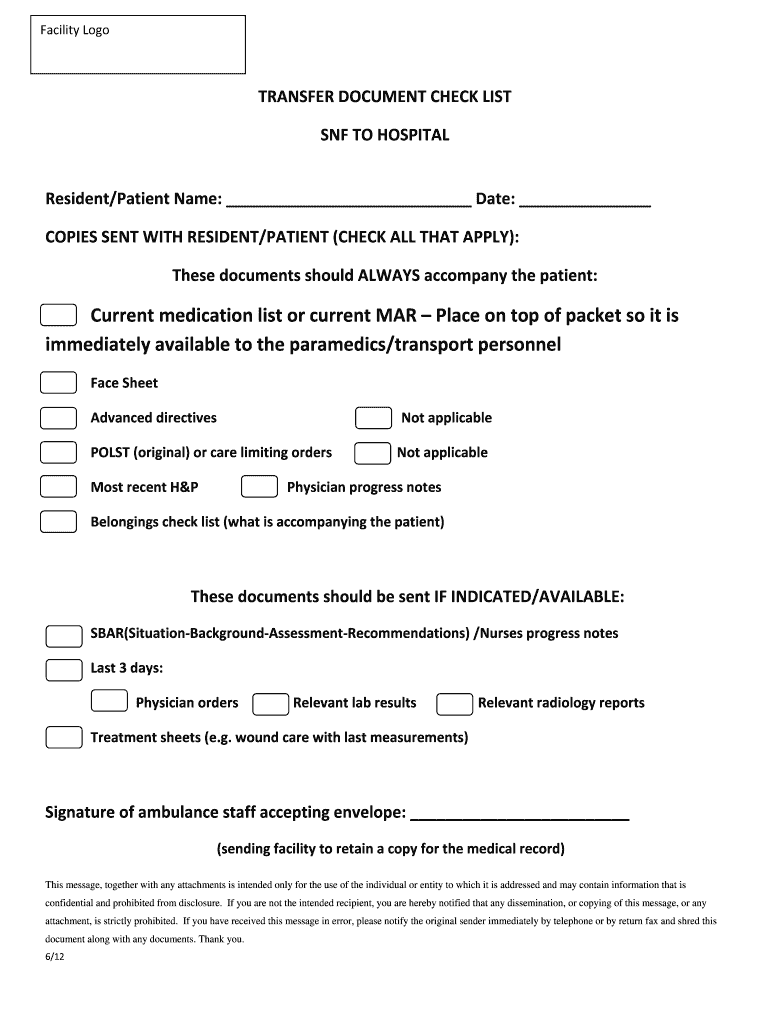







Definition and Meaning of the Transfer Hospital Form
The transfer hospital form is a critical document that facilitates the safe and efficient transfer of patients between healthcare facilities, especially from a Skilled Nursing Facility (SNF) to a hospital. This form captures essential patient information, including medical history, current medications, and contact details for responsible parties. It is crucial for ensuring continuity of care and providing necessary medical data to new healthcare providers. By clearly outlining the patient's condition and treatment protocols, the transfer hospital form plays a significant role in the smooth transition of patient care, thereby reducing the risk of medical errors and improving patient outcomes.
Key Components of the Transfer Hospital Form
-
Patient Information: This includes the patient's name, date of birth, medical record number, and contact information. Accurate data entry in this section is vital for identifying the patient and maintaining continuity of care.
-
Clinical History: This section details the patient's medical background, including diagnoses, previous treatments, and current health status. This information is crucial for healthcare providers at the receiving facility to make informed decisions regarding ongoing treatment.
-
Medication List: A complete list of current medications, dosages, and administration schedules helps ensure that the patient continues to receive necessary treatments without interruption. This is especially important for medications that may require careful monitoring.
-
Advanced Directives: Information about any advanced directives or do-not-resuscitate (DNR) orders should be included to respect the patient's wishes regarding end-of-life care and treatment options.
How to Use the Transfer Hospital Form
Using the transfer hospital form effectively involves several steps to ensure completeness and accuracy. The form should be filled out by authorized personnel, often in collaboration with the patient and relevant family members or caregivers. Below are the essential steps for utilizing the transfer hospital form:
-
Gather Necessary Information: Before completing the form, collect all required information about the patient, including medical history, medication lists, and contact details of responsible parties.
-
Complete Each Section: Carefully fill in each section of the form. Ensure that all fields are completed accurately to prevent misunderstandings or delays in treatment.
-
Review for Accuracy: After filling out the form, review it with relevant healthcare personnel to confirm that all provided information is precise and comprehensive.
-
Submit the Form: Send the completed transfer hospital form to the receiving hospital along with the patient or through appropriate electronic health record (EHR) systems, if applicable.
-
Communicate with the Receiving Facility: Prior to the transfer, communicate with the healthcare professionals at the receiving facility to confirm they have received the form and can accommodate the patient's needs.
Steps to Complete the Transfer Hospital Form
Completing the transfer hospital form involves several meticulous steps that ensure the necessary information is gathered and recorded correctly. Here is a step-by-step guide to help streamline this process:
-
Identify Stakeholders: Determine who will be involved in filling out the form, including nurses, case managers, and possibly family members.
-
Collect Patient Information: Document the patient’s full name, date of birth, patient identification number, and other vital statistics.
-
Provide Clinical History: Summarize the patient’s medical history, including diagnoses, surgeries, and ongoing treatments that are relevant to their care during the transfer.
-
List Current Medications: Include all medications that the patient is currently taking, specifying dosages and administration routes to ensure continuity in treatment.
-
Document Advanced Directives: Include information about any advanced directives the patient has, respecting their wishes during the transfer and subsequent care.
-
Final Review and Verification: Have a qualified healthcare professional review the form for completeness and accuracy, making necessary adjustments before submission.
-
Submit and Transfer: Ensure the form is submitted along with the patient and prepare for any follow-up actions needed at the receiving facility.
Important Terms Related to the Transfer Hospital Form
To effectively navigate the transfer hospital process, it is vital to understand specific terminology associated with the form and its usage. Here are some essential terms:
-
Transfer of Care: This term refers to the process in which responsibility for a patient’s care is shifted from one healthcare provider or facility to another.
-
Advanced Directives: Legal documents that outline a patient's preferences for medical treatment in circumstances where they are unable to communicate their decisions.
-
Continuity of Care: A concept in healthcare that emphasizes the importance of consistent, coordinated care across different settings and providers.
-
Clinical History: A detailed account of a patient's previous medical issues, treatments, and outcomes, providing context for ongoing care needs.
-
Medication Reconciliation: The process of ensuring that a patient’s medication lists are accurate and consistent across different healthcare settings, minimizing the risk of errors.
Who Typically Uses the Transfer Hospital Form
The transfer hospital form is primarily used by healthcare providers and facilities involved in the patient transfer process. Here are some of the key users of this form:
-
Healthcare Professionals: Nurses, doctors, and case managers who are responsible for ensuring patients are transferred safely while maintaining a comprehensive record of medical information.
-
Administrative Staff: Team members who manage the logistics of patient transfers, including paperwork and communication with receiving facilities.
-
Patients and Family Members: They may be involved in reviewing the information to ensure it accurately reflects the patient's wishes and needs, particularly with regard to advanced directives and medication lists.
-
Receiving Hospitals: Medical personnel at hospitals receiving patients from other facilities use this form to prepare for admissions and ensure appropriate care is available upon arrival.


Legal Use of the Transfer Hospital Form
The transfer hospital form is legally significant as it ensures compliance with healthcare regulations and standards regarding patient transfers between facilities. Here are critical legal aspects to consider:
-
Adherence to HIPAA Regulations: The form must comply with the Health Insurance Portability and Accountability Act (HIPAA), which governs the privacy and security of medical information.
-
Legally Binding Consent: The patient's signature on the transfer hospital form often signifies informed consent for treatment at the receiving facility, protecting both the patient and the healthcare providers involved.
-
Documentation for Legal Protection: Accurate completion of the transfer hospital form serves as a legal record of the patient's information, which can protect healthcare providers from liability claims arising from improper patient hand-offs.
-
Facility Policies and Procedures: Each medical facility may have specific policies regarding patient transfers that must be considered when completing the transfer hospital form to ensure compliance with internal guidelines and state laws.




