
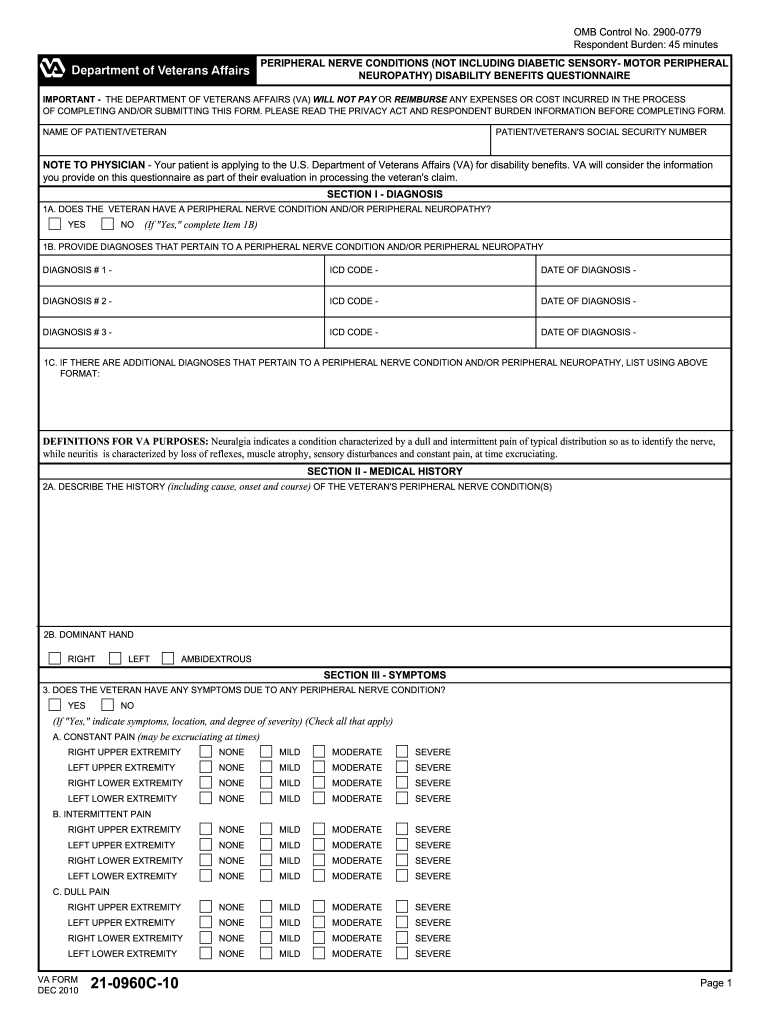







Definition & Meaning of VA Form 21-0960C-10
The VA Form 21-0960C-10, also known as the Peripheral Nerves Disability Benefits Questionnaire (DBQ), is a specific document utilized by veterans seeking disability benefits for conditions related to peripheral nerves. This form is instrumental in the evaluation process conducted by the Department of Veterans Affairs (VA) to assess how neurological conditions affect a veteran's everyday life and ability to work.
Understanding this form is essential for veterans as it requires detailed medical information from both the veteran and their healthcare provider. The questionnaire includes sections for diagnosis, medical history, current symptoms, and the impact of those symptoms on the veteran’s functional capacity. It is particularly focused on neuropathic conditions excluding diabetic sensory-motor peripheral neuropathy. A thorough completion of this form enhances the accuracy of the VA's evaluation process, ultimately influencing the disability rating awarded to the veteran.
How to Use the VA Form 21-0960C-10
Using the VA Form 21-0960C-10 involves several key steps to ensure that the information provided is accurate and comprehensive. Initially, the veteran must obtain the form, which can be printed or filled out online. It is important to complete the form in a clear, legible manner.
-
Gather Medical Records: Before starting the form, veterans should collect relevant medical documents that detail their condition, treatments received, and physician evaluations. This information is crucial for filling out the sections accurately.
-
Complete the Veteran Information Section: Fill in personal identification details, including name, service number, and contact information.
-
Provide Medical History: Detail the history of the peripheral nerve condition, including onset dates and relevant treatments. Include information regarding previous diagnoses and surgeries related to the condition.
-
Describe Symptoms: Accurately describe symptoms experienced. This section may require input from a physician, particularly regarding the severity and frequency of symptoms like pain, numbness, and weakness.
-
Assess Functional Impact: Evaluate how the condition has affected capabilities related to work and daily activities. This is a crucial aspect that the VA considers during the disability evaluation.
-
Physician's Signature: After the veteran has completed their sections, the healthcare provider must review and sign the form, verifying the accuracy of the provided medical information.
Steps to Complete the VA Form 21-0960C-10
Completing the VA Form 21-0960C-10 effectively requires meticulous attention to detail. The following steps outline how to ensure the form is filled out correctly:
-
Download the Form: Access the VA website or authorized providers to download the latest version of the VA Form 21-0960C-10.
-
Initial Sections: Complete the identifying sections, ensuring all personal information is accurate. Mistakes in this part can delay processing.
-
Medical History Input: Provide detailed medical history regarding the peripheral nerve condition, including specific dates of diagnosis and treatment history.
-
Symptom Documentation: Describe all symptoms experienced, incorporating how they impact daily functioning. Be as specific as possible about the nature and duration of the symptoms.
-
Functional Impact Analysis: This section should clearly state how the disability has affected the veteran’s ability to perform necessary daily tasks and maintain employment.
-
Certification by Healthcare Provider: Have the filled form reviewed and signed by a qualified healthcare provider. This person must be knowledgeable about the veteran’s condition to accurately represent their medical status.
-
Submission: Submit the completed form to the appropriate VA office, either digitally or via mail, depending on the preferred submission method.
Key Elements of the VA Form 21-0960C-10
The VA Form 21-0960C-10 comprises several critical sections that must be addressed comprehensively. Understanding these key elements can aid veterans in accurately presenting their cases for disability benefits:
-
Veteran Identification: Information that establishes the identity of the veteran applying for benefits.
-
Condition Diagnosis: A clear diagnosis section where the veteran must provide details of the neurological condition affecting them.
-
Medical History: A section that requires thorough detailing of past medical treatments, surgeries, and ongoing management strategies related to the peripheral nerves.
-
Symptomology Reporting: Veterans must catalogue symptoms associated with their condition, including pain, sensory loss, and motor skill degradation.
-
Functional Impact Assessment: An evaluation focused on how the condition inhibits the veteran’s personal and professional life.
-
Physician’s Verification: An essential element requiring healthcare providers to validate the accuracy of the details reported by the veteran.
This comprehensive information enables the VA to assess the veteran’s claim thoroughly and accurately, enhancing the likelihood of receiving an appropriate disability rating.
Important Terms Related to the VA Form 21-0960C-10
Familiarity with specific terminology is crucial when navigating the VA Form 21-0960C-10. Understanding these terms can help veterans articulate their conditions more effectively:
-
Disability Benefits Questionnaire (DBQ): A standardized form used to collect medical information for VA disability claims.
-
Peripheral Neuropathy: A disorder affecting the peripheral nerves, often leading to symptoms such as pain, tingling, or numbness.
-
Neurologic Examination: A clinical assessment conducted to evaluate the functioning of the nervous system.
-
Functional Capacity: Refers to the ability to perform tasks required for daily living and employment.
-
VA Disability Rating: A percentage assigned by the VA that indicates the severity of a veteran’s disability and affects the compensation amount.
Understanding these terms enables veterans to engage more effectively in discussions regarding their conditions with physicians and VA representatives, ensuring clarity in their communications and claims.




