




Here's how it works
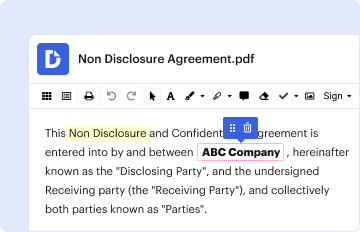
01. Edit your what disqualifies you from earned income credit online
Type text, add images, blackout confidential details, add comments, highlights and more.
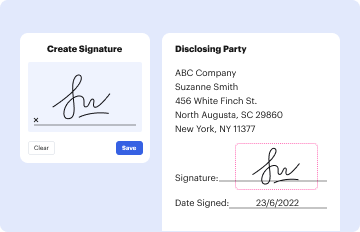
02. Sign it in a few clicks
Draw your signature, type it, upload its image, or use your mobile device as a signature pad.

03. Share your form with others
Send it via email, link, or fax. You can also download it, export it or print it out.
How to use or fill out earned income tax credit - Wisconsin Legislative Documents with our platform

- Click ‘Get Form’ to open it in the editor.
- Begin by entering your name and Social Security Number at the top of the form. This information is crucial for identifying your tax records.
- Fill in the details of the child you adopted, including their name and Social Security Number. Ensure accuracy as this will affect your credit eligibility.
- Indicate whether the adoption was finalized in the current tax year by selecting 'Yes' or 'No'. If 'No', provide the year of finalization.
- Answer questions regarding special needs status and custody with DCF, as these factors influence your credit amount.
- Complete Part A by entering the federal adoption credit allowed this tax year and calculating the applicable percentage based on residency status.
- Proceed to Part B if applicable, entering any special needs or DCF custody credits.
- Finally, review all entries for accuracy before saving or submitting your completed form through our platform.
Start using our platform today to easily complete your earned income tax credit forms for free!
Fill out earned income tax credit - Wisconsin Legislative Documents online
It's free
It's free
See more earned income tax credit - Wisconsin Legislative Documents versions
We've got more versions of the earned income tax credit - Wisconsin Legislative Documents form. Select the right earned income tax credit - Wisconsin Legislative Documents version from the list and start editing it straight away!
Got questions?
We have answers to the most popular questions from our customers. If you can't find an answer to your question, please contact us.
Contact us
How to qualify for EITC in Wisconsin?
You may be eligible for the Wisconsin Earned Income Credit if you meet these requirements: You qualify for the federal EIC. You have at least one qualifying child. You are a full-year Wisconsin resident, and. You file a joint return if you are married.
What makes a person eligible for EIC?
Earned Income and adjusted gross income (AGI) must each be less than: $59,899 ($66,819 if married filing jointly) with three or more qualifying children; $55,768 ($62,688 if married filing jointly) with two qualifying children; $49,084 ($56,004 if married filing jointly) with one qualifying child.
How do I know if I have EIC?
If you filed a 2022 tax return and received the EIC, it will be listed on IRS Form 1040, line 27.
What documents are needed for earned income credit?
California EITC requires filing of your state return (form 540 2EZ or 540) and having earned income reported on a W-2 form (i.e. wages, salaries, and tips) subject to California withholding. Self-employment income cannot be used to qualify for state credit.
How to claim $3600 child tax credit?
You can claim the Child Tax Credit by entering your children and other dependents on Form 1040, U.S. Individual Income Tax Return, and attaching a completed Schedule 8812, Credits for Qualifying Children and Other Dependents.
Security and compliance
At DocHub, your data security is our priority. We follow HIPAA, SOC2, GDPR, and other standards, so you can work on your documents with confidence.
Learn more


People also ask
Who qualifies for EIC in Wisconsin?
The federal Earned Income Tax Credit (EITC) and Wisconsin Earned Income Credit (EIC) are available to working individuals who have low or moderate income. To qualify for these tax credits, individuals must have earned income from employment or self-employment.
What are the income tax changes for Wisconsin in 2025?
Wisconsins personal income tax uses four rate brackets: 3.5%, 4.4%, 5.3% and 7.65%. Under Act 15 and beginning in 2025, more taxpayers will be able to benefit from the 4.4% bracket. This is because the upper end of that brackets income range will increase from: $29,370 to $50,480 for individual filers.
Did they pass the $3600 Child Tax Credit?
In 2021, that credit was expanded to give families up to $3,600, much of it in the form of monthly checks, instead of an annual lump sum. The 2021 expansion allowed the poorest families in the country, those who dont file income taxes, to access the child tax credit for the first time in its history.