Form cafc721 notice of hearing 2009-2026

Get Form
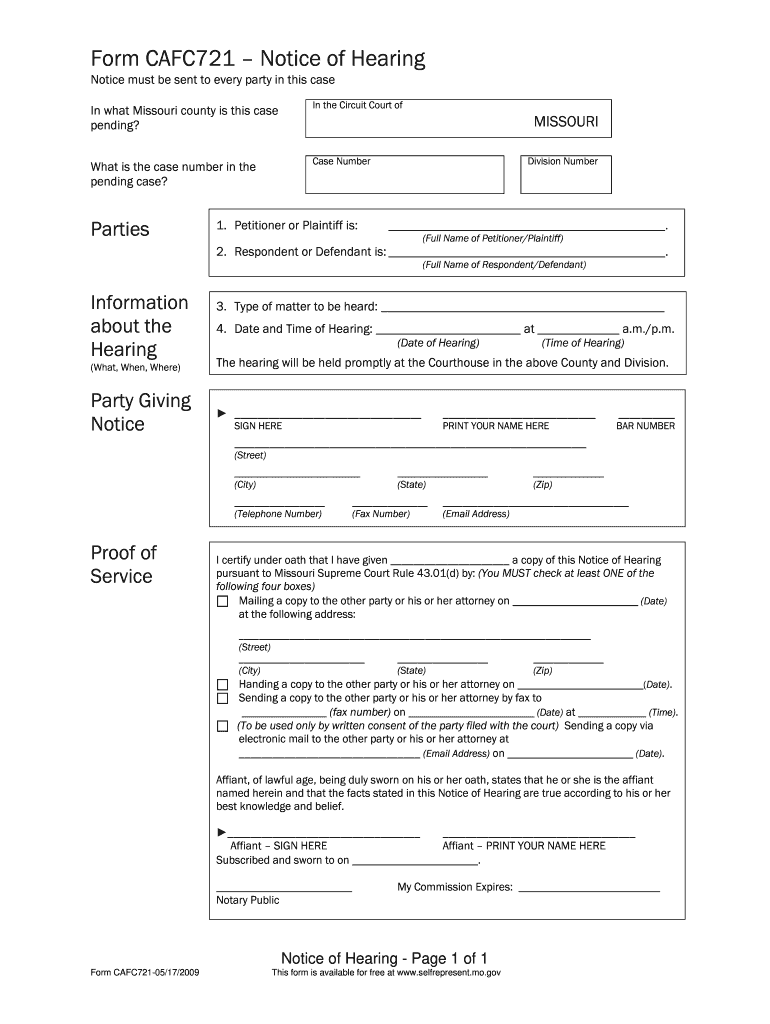
form cafc721 notice of hearing 2009 Preview on Page 1

Here's how it works

01. Edit your form online
Type text, add images, blackout confidential details, add comments, highlights and more.
02. Sign it in a few clicks
Draw your signature, type it, upload its image, or use your mobile device as a signature pad.
03. Share your form with others
Send it via email, link, or fax. You can also download it, export it or print it out.

How to use or fill out form cafc721 notice of hearing 2009 with our platform

Form edit decoration
9.5
Ease of Setup
DocHub User Ratings on G2
9.0
Ease of Use
DocHub User Ratings on G2
  1. Click ‘Get Form’ to open the form in the editor.
  2. Begin by entering the Missouri county where your case is pending in the designated field.
  3. Input the case number associated with your pending case in the provided space.
  4. Fill in the full name of the Petitioner or Plaintiff, followed by the full name of the Respondent or Defendant.
  5. Specify the date and time of the hearing, ensuring accuracy for all parties involved.
  6. Indicate the type of matter to be heard in the appropriate section.
  7. Sign and print your name where indicated, along with your bar number if applicable.
  8. Complete the Proof of Service section by checking at least one box and providing necessary details about how notice was given.
  9. Finally, have your affidavit signed and notarized as required before submission.

Start using our platform today for free to streamline your document editing and form completion!

See more form cafc721 notice of hearing 2009 versions

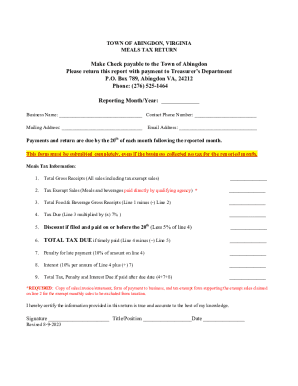
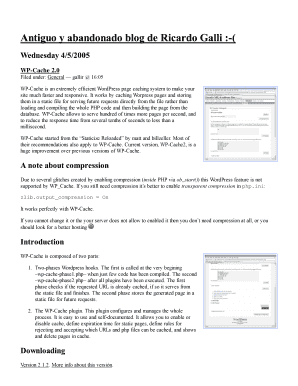
We've got more versions of the form cafc721 notice of hearing 2009 form. Select the right form cafc721 notice of hearing 2009 version from the list and start editing it straight away!
Versions Form popularity Fillable & printable
2016 4.8 Satisfied (209 Votes)
2012 4.3 Satisfied (73 Votes)
2009 4.4 Satisfied (119 Votes)
be ready to get more

Complete this form in 5 minutes or less

Get form

Got questions?

We have answers to the most popular questions from our customers. If you can't find an answer to your question, please contact us.
Contact us
A notice of hearing is a legal document that informs all parties involved about an upcoming court proceeding. It is typically filed by either the plaintiff or the defendant and includes essential details such as the name of the judge, the date and time of the hearing, and the location of the courthouse.
The notice document is called a Notice of Ruling, and only the party or partys attorney if represented by counsel signs it. However, the actual order which the judge signs is called the Order After Hearing.
What happens at the hearing? The judge will normally want to hear first from the claimant (the person who started the case, or made the application) then the defendant (the per- son disputing it). Seeing a person give evidence helps the judge de- cide whether that person is telling the truth.
A hearing is usually shorter and often less formal than a trial but there are some essential differences you should be aware of, especially if you have an upcoming Court date. A hearing can usually determines procedural matters before going to trial.
(b) All parties shall be afforded an opportunity for a hearing after reasonable notice of not less than 14 days; however, the 14-day notice requirement may be waived with the consent of all parties. The notice shall include: 1. A statement of the time, place, and nature of the hearing.

Security and compliance

At DocHub, your data security is our priority. We follow HIPAA, SOC2, GDPR, and other standards, so you can work on your documents with confidence.

Learn more
ccpa2
pci-dss
gdpr-compliance
hipaa
soc-compliance

People also ask

When your hearing is finished, the judge or registrar will tell you when you can leave the courtroom. After the hearing, the following things will happen: The judge will consider all the facts of your case and make a decision.
At its core, the Notice of Submission serves as the ceremonial herald. It announces that a particular document or case is now poised for final scrutiny. Imagine it as the prologue to a legal narrative, setting the stage for the crescendo of analysis and decision-making that is about to unfold.