




01. Edit your hawaii agriculture form online online
Type text, add images, blackout confidential details, add comments, highlights and more.

Type text, add images, blackout confidential details, add comments, highlights and more.

Draw your signature, type it, upload its image, or use your mobile device as a signature pad.

Send hawaii agriculture form via email, link, or fax. You can also download it, export it or print it out.
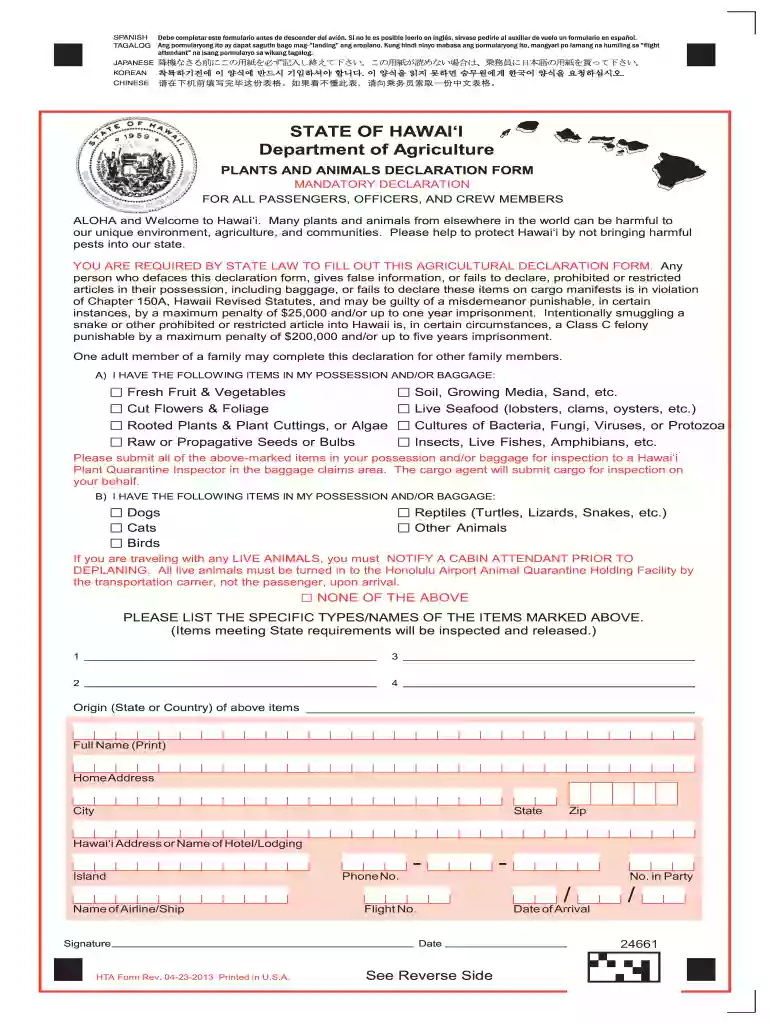
The Hawaii agriculture form serves as an essential document designed to help protect the state's unique ecosystem by regulating the introduction of agricultural products, plants, and animals. This form is part of the broader efforts by the Hawaii Department of Agriculture to prevent the spread of pests and diseases that could harm local agriculture and natural resources. Additionally, the agriculture declaration form allows travelers and residents who bring agricultural items into the state to declare these items, ensuring compliance with state regulations.
The declaration is mandatory for anyone entering Hawaii with agricultural products, including plants, fruits, vegetables, and animals. Filling out this form provides a clear record of what is being brought into the state, allowing for necessary inspections and follow-ups that maintain Hawaii’s agricultural health. Non-compliance with the regulations specified in this form could result in significant fines and penalties, highlighting its importance in safeguarding the environment.
Using the Hawaii agriculture form involves several straightforward steps that help ensure compliance with state regulations. Individuals bringing agricultural items to Hawaii must fill out the form accurately and completely.
Access the Form: The form is available online and can be filled out digitally. Users can find the Hawaii agriculture form on the Hawaii Department of Agriculture's website or through platforms that provide document services.
Provide Personal Information: The form will require personal details, including full name, contact information, and travel details, such as the point of entry into Hawaii.
Declare Items: Clearly list all agricultural products, including plants, fruits, and animals. Be specific about the types and quantities of each item. This section helps authorities assess the potential risk each item may pose.
Submit the Form: After completing the form, it can be submitted online or printed out for submission upon arrival in Hawaii. For online submissions, users should ensure their internet connection is secure.
Retain Documentation: It is essential to keep a copy of the submitted form for personal records in case additional inspections or inquiries are needed.
By diligently completing and submitting the Hawaii agriculture form, travelers contribute to protecting Hawaii’s unique agricultural environment.
Successfully completing the Hawaii agriculture form requires attention to detail and an understanding of the essential sections of the form. Here are the detailed steps to ensure accurate completion:
Begin with the Header: Start by filling in the required header information, including your full name, contact number, and residential address, if applicable.
Travel Information: Indicate your flight number, arrival date, and destination within Hawaii. This part of the form is critical for tracking and managing incoming agricultural products.
Item Declaration:
Check for Compliance: Review the state-specific regulations that apply to the agricultural items being declared. Some items may be restricted or require permits.
Final Review and Signature: Before submitting, double-check all entered information for accuracy. Provide a signature or electronic verification as required to validate the declaration.
The clarity and accuracy of this form help to minimize the risk of inspections and potential penalties.
Understanding key terms related to the Hawaii agriculture form can ease the process of filling it out and ensure compliance with local regulations. Some important terms include:
Familiarity with these terms enhances one’s understanding of the form’s purpose and requirements, facilitating a smoother submission process.
State-specific rules for the Hawaii agriculture form are imperative to ensure the protection of the local environment. These rules vary significantly and are tailored to address the unique ecological challenges faced by Hawaii. Some key rules include:
Restricted and Prohibited Items: Before travel, familiarize yourself with items that are restricted or prohibited from entry into Hawaii. This may include certain fruits, vegetables, and live plants. Always verify with updated state resources prion to travel.
Inspection Requirements: Upon arrival, agricultural items declared on the form are often subject to inspection by the Hawaii Department of Agriculture. Passengers must be prepared to present the declared items for examination.
Penalties for Non-Compliance: Failing to declare agricultural items can lead to substantial fines and possible confiscation of items. Understanding the gravity of these consequences emphasizes the importance of accurate declarations.
Permitted Varieties: Some agricultural items may be allowed if they are brought in from specific regulated areas and accompanied by necessary permits. These rules are subject to change, so check regularly for updates.
By adhering to these state-specific rules, individuals can help maintain Hawaii’s agricultural integrity and unique biodiversity.
We've got more versions of the hawaii agriculture form online form. Select the right hawaii agriculture form online version from the list and start editing it straight away!
At DocHub, your data security is our priority. We follow HIPAA, SOC2, GDPR, and other standards, so you can work on your documents with confidence.
The Hawaii Department of Agriculture has launched a digital Agriculture Declaration Form for select flights arriving in Hawaii. For more information, pleaseRead more
When completing the registration form, you must provide your contact information, Social Security number, exam scheduling preferences and payment. PrometricRead more


