01. Edit your expunction record online
Type text, add images, blackout confidential details, add comments, highlights and more.

Type text, add images, blackout confidential details, add comments, highlights and more.

Draw your signature, type it, upload its image, or use your mobile device as a signature pad.

Send it via email, link, or fax. You can also download it, export it or print it out.
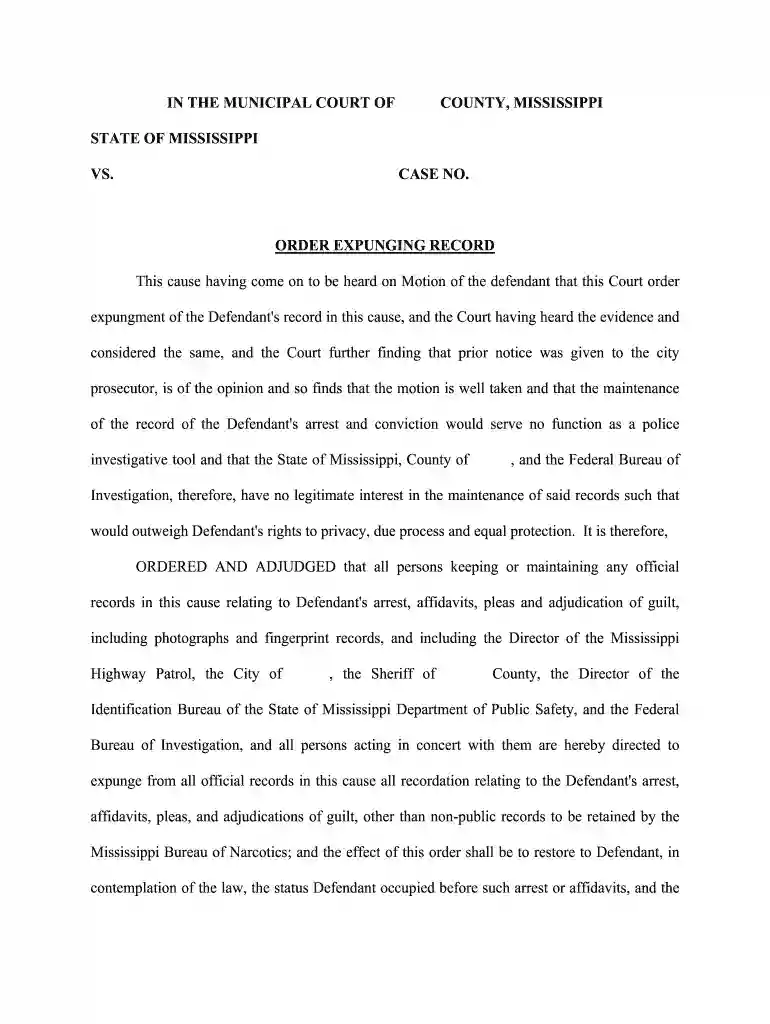
An expunction record is a legal document that orders the removal or sealing of an individual’s criminal record under specific circumstances, typically following a judicial decision. This process, known as expungement, eliminates public access to the individual's arrest or conviction records, effectively restoring their legal status to what it was before the event occurred. The aim is to allow individuals to move forward without the stigma of a criminal record, improving their chances for employment, housing, and other opportunities.
To obtain an expunction record, an individual must first determine if they qualify according to their state's specific laws. This process generally involves filing a petition in the court where the arrest or conviction took place. The petition requires substantial documentation, including police reports, court judgments, and proof of completed sentencing conditions or probation, if applicable. Once the petition is submitted, a hearing is typically scheduled to review the request, during which the petitioner may need to justify why expungement serves the public interest and their personal rehabilitation.
Seeking an expunction allows individuals to effectively erase past criminal records from public view, offering multiple benefits. Primarily, it aids in overcoming barriers to employment, housing, and education that a criminal background may impose. Additionally, expunction can help restore civil rights, such as the right to vote or possess firearms, that may be lost due to a criminal conviction. Beyond practical benefits, expunction can also provide a sense of closure and psychological relief, fostering a fresh start.
Legally, an expunction record serves as an official directive that notifies state and federal agencies to remove or seal relevant criminal records from their databases. This means the individual’s details will no longer appear in public background checks. Employing agencies and landlords, for instance, cannot consider sealed records when making decisions. Failure by agencies to comply with the expunction order could result in legal penalties, underscoring the binding nature of the document.
The rules governing expunction records vary significantly by state. Some states offer automatic expungement under specific conditions, while others require a petition and court hearing. The eligibility criteria can include factors such as the nature of the offense, the time elapsed since the conviction, and the individual’s subsequent conduct. For instance, while one state might allow expungement for non-violent offenses, another might extend this to certain misdemeanors or even felonies after a defined period without further legal incidents.
The pursuit of an expunction record necessitates comprehensive documentation, which typically includes a certified copy of the conviction or arrest record, proof of completed sentences or probation, and character references. Many states also require a fingerprints card, a sworn affidavit from the petitioner, and sometimes even a background check to substantiate the individual's history post-conviction. These documents collectively determine the eligibility for expungement and aid in demonstrating rehabilitation.
Eligibility for obtaining an expunction record is contingent upon several factors including the nature of the crime, the completion of all sentencing terms, and a defined period without subsequent offenses. Generally, only non-violent offenses or misdemeanors qualify for expungement, although some states have provisions for minor felonies given the individual has shown considerable rehabilitation. Legal age, restitution to victims, and full disclosure of the conviction history are also commonly considered.


The application process for expungement generally initiates with filing a petition in the appropriate court, accompanied by payment of a fee unless waived for indigence. Once filed, the court reviews the case and schedules a hearing. The petitioner must appear to make their case if necessary. Depending on the jurisdiction, processing times can vary from a few weeks to several months. After approval, it may take additional time for various agencies to update or seal the records.
Consider a young adult arrested for a misdemeanor which, after serving the sentence and exhibiting exemplary behavior thereafter, applies for expungement. Post-expunction, they apply for a job in a competitive industry. The expunction record prevents potential employers from seeing their past conviction, leveling the playing field for job interviews. Similarly, a veteran seeking housing benefits might previously have encountered significant obstacles due to their record, which are alleviated post-expunction.
By understanding these elements, individuals can navigate the complexities of the expungement process more effectively, ensuring they meet all requirements to achieve a favorable outcome.
At DocHub, your data security is our priority. We follow HIPAA, SOC2, GDPR, and other standards, so you can work on your documents with confidence.