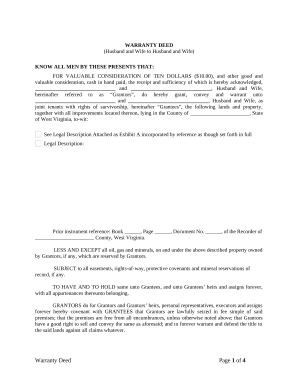
Get and handle West Virginia Property Laws online

Accelerate your file managing with the West Virginia Property Laws category with ready-made form templates that suit your requirements. Access your form template, change it, complete it, and share it with your contributors without breaking a sweat. Start working more efficiently together with your documents.

The best way to manage our West Virginia Property Laws:

  1. Open our West Virginia Property Laws and look for the form you require.
  2. Preview your document to ensure it’s what you want, and click on Get Form to start working on it.
  3. Change, include new text, or point out important information with DocHub features.
  4. Prepare your form and save the changes.
  5. Download or share your document template with other people.

Examine all of the opportunities for your online document management using our West Virginia Property Laws. Get your totally free DocHub profile today!


Video Guide on West Virginia Property Laws management

video background

Commonly Asked Questions about West Virginia Property Laws

There are no state laws in West Virginia prohibiting home burial, but local governments may have rules governing private burials. Before burying a body on private property or establishing a family cemetery, you should check with the county or town clerk for any zoning laws you must follow.
Abandonment defined. Abandonment means any conduct by the birth mother, legal father, determined father, outsider father, unknown father or putative father that demonstrates a settled purpose to forego all duties and relinquish all parental claims to the child.
File a Claim Online! If you would prefer a faster option to file your claim, you can go to .wvtreasury.com and click the Unclaimed Property SEARCH button. You will be directed to the Unclaimed Property website where you can search for your property and file your claim online.
Homestead Statutes in West Virginia State homestead laws vary in the amount of acreage or value of property they allow to be designated as a homestead. West Virginia statutes limit the homestead exemption to $5,000 of real estate and $1,000 of personal possessions.
West Virginia Dormancy Periods Generally, most property types have a five-year dormancy period. Accounts are considered dormant if the owner of a property has not indicated any interest in the property or if no contact has been made for the allotted dormancy period for that property.
Presumptions of abandonment. (18) All other property, three years after the owners right to demand the property or after the obligation to pay or distribute the property arises, whichever first occurs.
Private Land West Virginia Law indicates that any parcel of land that is posted, fenced, or cultivated for crops is considered private property. If a person proceeds onto such land, then he or she is trespassing by definition of the law.
The landlord may dispose of personal property left on the property after thirty days without incurring any liability or responsibility to the tenant or any other person if the tenant has not paid the landlord the reasonable costs of leaving the personal property on the landlords property and has not taken possession