Manage Minnesota State Law Forms quickly online

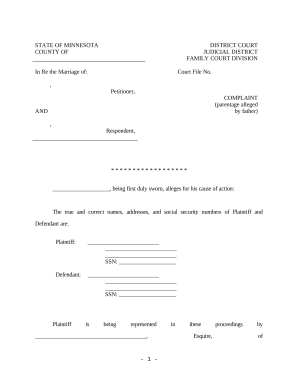
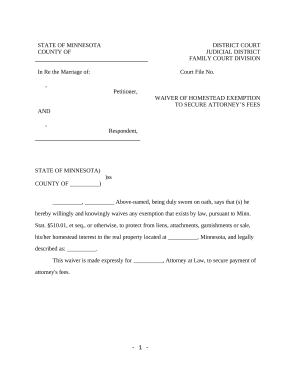
Document managing can overpower you when you can’t locate all of the forms you require. Fortunately, with DocHub's vast form categories, you can get everything you need and swiftly take care of it without switching between apps. Get our Minnesota State Law Forms and start utilizing them.

How to use our Minnesota State Law Forms using these basic steps:

  1. Check Minnesota State Law Forms and choose the form you require.
  2. Review the template and click Get Form.
  3. Wait for it to upload in the online editor.
  4. Adjust your template: include new information and images, and fillable fields or blackout some parts if necessary.
  5. Complete your template, save changes, and prepare it for sending.
  6. When ready, download your form or share it with your contributors.

Try out DocHub and browse our Minnesota State Law Forms category easily. Get your free profile right now!

Video Guide on Minnesota State Law Forms management

video background

Commonly Asked Questions about Minnesota State Law Forms

Some kinds of property and assets do not need to be probated. These include property owned as joint tenants, jointly held bank accounts, payable-on-death accounts, life insurance proceeds to a specific beneficiary, and pension benefits with a designated beneficiary in the event you die.
Who Gets What in Minnesota? If you die with:heres what happens: children but no spouse children inherit everything spouse but no descendants spouse inherits everything spouse and descendants from you and that spouse, and the spouse has no other descendants spouse inherits everything4 more rows
School Attendance is Required by Law Minnesota law requires that every child between 7 and 17 years of age must receive an education. Minnesota State Statute 120. A22 requires that every child from age 7, or upon enrollment in school, is required to attend school each and every day and every class period.
You must file the original motion and supporting documents (attachments) and affidavit of service at the court location in which your case was initiated. You must pay a motion fee when filing these documents with the court. Please note that you must also pay the filing fee if it has not been previously paid.
Non-probate assets are those that transfer directly upon the owners death and dont need court intervention for this transfer. Common examples include life insurance proceeds, property held in joint tenancy, trust assets, accounts with payable-on-death designations, and retirement plans with beneficiary designations.
Joint ownership options are a popular strategy for avoiding probate in Minnesota. Holding assets jointly with another person means the assets transfer directly to the surviving owner upon your death, thereby bypassing the probate necessity.
Affidavit of No-Probate (PS2071) is used by one or more heirs at law (adult children, parents, siblings), who affirm they have the authority to represent all heirs and that the estate is not subject to probate.
A motion to quash a warrant is a request for the court to effectively get rid of the warrant and set a court date. The court may refer quashing the warrant as recalling the warrant.