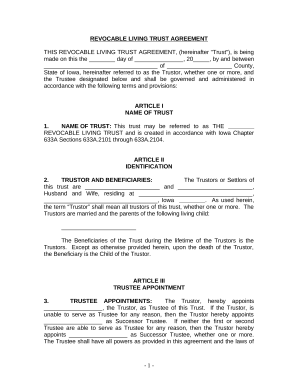
Handle Living Trust for Husband and Wife quickly online

Document administration can overpower you when you can’t locate all the forms you need. Luckily, with DocHub's vast form categories, you can discover all you need and easily handle it without the need of changing among applications. Get our Living Trust for Husband and Wife and begin working with them.

The best way to manage our Living Trust for Husband and Wife using these easy steps:

  1. Examine Living Trust for Husband and Wife and choose the form you need.
  2. Preview the template and then click Get Form.
  3. Wait for it to upload in the online editor.
  4. Adjust your document: include new information and images, and fillable fields or blackout certain parts if required.
  5. Complete your document, preserve changes, and prepare it for delivering.
  6. When all set, download your form or share it with other contributors.

Try out DocHub and browse our Living Trust for Husband and Wife category without trouble. Get a free profile today!


Video Guide on Living Trust for Husband and Wife management

video background

Commonly Asked Questions about Living Trust for Husband and Wife

In the overwhelming majority of cases, it is our recommendation to our married clients that they name their spouse as the primary beneficiary of their retirement account and name the Trust as the second or alternate or contingent beneficiary.
A joint trust gives the surviving spouse more flexibility to use all of the assets of the trust after the death of the first spouse. A joint revocable trust is also easier to fund and maintain during a couples lifetime. All assets simply go into the same place; theres no need to decide which trust an asset goes into.
There are some drawbacks though. For example, a Joint Trust may not offer asset protection in cases of creditors or judgements against either spouse. Because everything is in one Trust, all assets would be vulnerable to judgements. Another possible disadvantage could be a lack of flexibility after one spouses death.
Yes, but naming the surviving spouse, as a Trustee should be done only after reviewing all the facts and counseling with your advisors. In a first time marriage where both spouses have great confidence in each other, it is common for the surviving spouse to be designated as a Trustee of the Family and Marital Trusts.
In addition, during their lifetimes, each spouse has equal control over the trusts assets, which can make it simpler to manage and to conduct transactions involving the assets. On the other hand, for spouses who arent comfortable sharing control of their combined assets, separate trusts may be the way to go.
Asset protection If shielding assets from creditors is a concern, separate trusts usually offer greater protection. With a joint trust, if a creditor obtains a judgment against one spouse, all of the trust assets may be at risk.
Separate trusts may be a good option for couples who own separate property that they brought into the marriage, either from inheritances or previous marriages, but they can be more expensive and more complicated to administer. Joint trusts, on the other hand, allow for more flexibility.