Type text, add images, blackout confidential details, add comments, highlights and more.
02. Sign it in a few clicks
Draw your signature, type it, upload its image, or use your mobile device as a signature pad.
03. Share your form with others
Send it via email, link, or fax. You can also download it, export it or print it out.
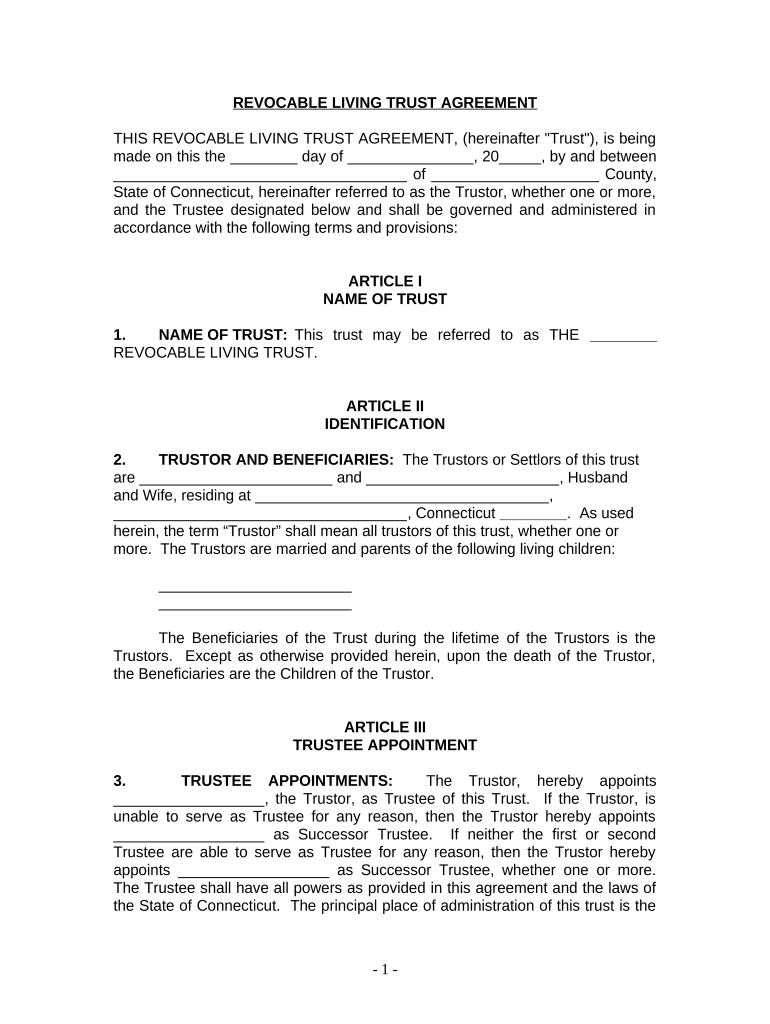
How to use or fill out Living Trust for Husband and Wife with Minor and or Adult Children - Connecticut
Ease of Setup
DocHub User Ratings on G2
Ease of Use
DocHub User Ratings on G2
Click ‘Get Form’ to open it in the editor.
Begin by entering the date at the top of the document. This is crucial as it marks the official start of your trust.
In Article I, specify the name of your trust. This should be a unique title that reflects its purpose, such as 'The [Your Family Name] Revocable Living Trust'.
Proceed to Article II where you will identify the Trustors. Fill in your names and address, ensuring accuracy as this establishes your legal identity within the trust.
List all living children under the Beneficiaries section. This ensures they are recognized as beneficiaries during your lifetime.
In Article III, appoint a Trustee by filling in their name. You may also designate a Successor Trustee if needed.
Continue through Articles IV to XII, carefully filling out each section regarding assets, powers, distributions, and other provisions relevant to your family’s needs.
Start using our platform today to easily create and manage your Living Trust for free!
Fill out Living Trust for Husband and Wife with Minor and or Adult Children - Connecticut online It's free
living trust costdoes a living trust avoid probateliving trust ctct testamentary trustct wills and trustsct trust lawstypes of trusts in ctconnecticut designated representative statute
Security and compliance
At DocHub, your data security is our priority. We follow HIPAA, SOC2, GDPR, and other standards, so you can work on your documents with confidence.
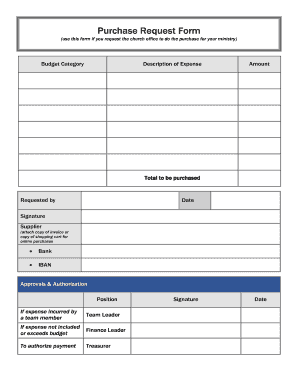
Purchase Request Form (use this form if you request the church office to do the purchase for your ministry) Budget Category Description of Expense Amount - ibcberlin
Purchase Request Form (use this form if you request the church office to do the purchase for your ministry) Budget Category Description of Expense Amount - ibcberlin
The document is a Purchase Request Form designed for church ministry expenses, requiring details such as budget category ...
by ES Taylor Poppe 2022 allocation of property between a surviving spouse and child in response to a series of hypothetical scenarios. 24 These scenarios manipulate the.Read more
A trust may be created by: (1) Transfer of property to another person as trustee during the settlors lifetime, by deed or otherwise, or by will or otherRead more
Cookie consent notice
This site uses cookies to enhance site navigation and personalize your experience.
By using this site you agree to our use of cookies as described in our Privacy Notice.
You can modify your selections by visiting our Cookie and Advertising Notice.