Improve your form administration with Legal Forms for Estate Distribution

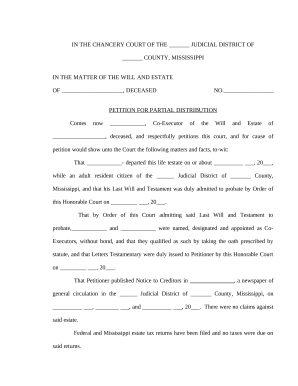
Your workflows always benefit when you can easily obtain all the forms and files you need on hand. DocHub offers a vast array of forms to ease your everyday pains. Get a hold of Legal Forms for Estate Distribution category and quickly browse for your form.

Start working with Legal Forms for Estate Distribution in a few clicks:

  1. Open Legal Forms for Estate Distribution and get the form you require.
  2. Click on Get Form to open it in our online editor.
  3. Start adjusting your file: add more fillable fields, highlight sentences, or blackout sensitive data.
  4. The app saves your changes automatically, and after you are all set, you can download or share your form with other contributors.

Enjoy effortless form administration with DocHub. Discover our Legal Forms for Estate Distribution online library and locate your form today!


Video Guide on Legal Forms for Estate Distribution management

video background

Commonly Asked Questions about Legal Forms for Estate Distribution

In a probate case, an executor (if there is a will) or an administrator (if there is no will) is appointed by the court as personal representative to collect the assets, pay the debts and expenses, and then distribute the remainder of the estate to the beneficiaries (those who have the legal right to inherit), all
Report income distributions to beneficiaries and to the IRS on Schedule K-1 (Form 1041). For calendar year estates and trusts, file Form 1041 and Schedule(s) K-1 on or before April 15 of the following year.
In general, any inheritance you receive does not need to be reported to the IRS. You typically dont need to report inheritance money to the IRS because inheritances arent considered taxable income by the federal government. That said, earnings made off of the inheritance may need to be reported.
One good way is to leave the inheritance in a trust. The trust can be set up with some provisions, such as making distributions over time. A trust can also remove the issue of probate, allowing the inheritance to pass without issue.
Income required to be distributed to the beneficiaries is taxable to them regardless if it is distributed during the year. The trust or estate receives a deduction for distributions of income made to the beneficiaries. The distribution deduction is limited to the distributable net income (DNI) of the trust or estate.
It outlines the distribution of assets after death to specific beneficiaries. The letter includes the name of the deceased, the date of their death, and a list of assets and their respective beneficiaries.
Common estate planning documents are wills, trusts, powers of attorney, and living wills. Everyone can benefit from having a will, no matter how small their estate or simple their wishes. Online estate planning services offer basic packages for less than $200.
Report your early distribution on your U.S. Individual Income Tax Return (IRS Form 1040) and attach Additional Taxes on Qualified Plans (including IRAs) and Other Tax-Favored Accounts (IRS Form 5329) .
Under California probate laws, payment should be made in the following order: Debts to the U.S. government and the state of California. Estate administration expenses. Secured obligations.
The main ways to control the disposition of your estates assets include writing a will, selecting beneficiary designations, and creating a trust. How to ensure your assets will be distributed ing to your wishes troweprice.com take-care-of-your-heirs troweprice.com take-care-of-your-heirs