





Definition & Meaning of Estate Distribution Letter Sample
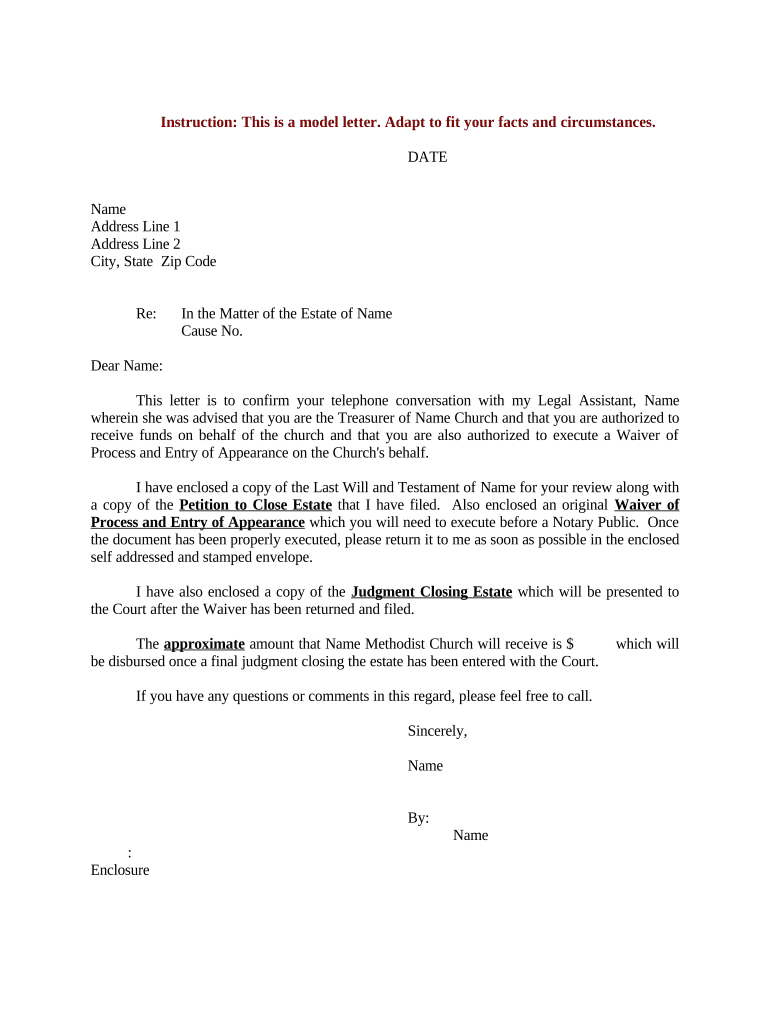
An estate distribution letter sample serves as a formal document that outlines how an estate’s assets will be allocated among beneficiaries after the death of an individual. This letter is typically prepared by the executor of the estate and communicates important information regarding the distribution of assets such as property, monetary funds, and personal belongings. The letter provides beneficiaries with details on what they can expect to receive, the timelines involved, and any necessary actions they may need to take.
Key Features of the Estate Distribution Letter:
- Identification of Beneficiaries: Clearly states who will receive parts of the estate.
- Asset Breakdown: Lists specific assets and their assigned beneficiaries.
- Legal References: May include references to the Last Will and Testament or relevant state laws governing asset distribution.
- Distribution Timeline: Indicates when beneficiaries can expect to receive their distributions.
Understanding the purpose and structure of this letter is important for both executors and beneficiaries to ensure compliance with legal requirements and to facilitate smooth communication.
How to Obtain the Estate Distribution Letter Sample
Acquiring an estate distribution letter sample can be done through several avenues, ensuring that the executor has the necessary framework to base their letter on. Here are some strategies for obtaining a reliable sample:
- Online Resources: Platforms like document management providers, legal websites, and nonprofit organizations often provide free templates or samples to help users draft their letters.
- Legal Professionals: Consulting with an estate attorney can provide personalized guidance and a tailored sample that aligns with individual circumstances.
- Libraries and Law Schools: Many libraries and educational institutions maintain resources for estate planning, which may include sample letters.
- Community Resources: Local estate planning workshops or seminars may offer templates or guidance for writing estate distribution letters.
It is essential to ensure that the sample aligns with relevant laws and addresses the specific details of the estate in question.
Steps to Complete the Estate Distribution Letter Sample
Completing an estate distribution letter requires careful attention to detail and adherence to legal and personal requirements. Here are key steps in the process:
- Start with Basic Information: Include the date, your name as the executor, and information about the deceased.
- List Beneficiaries: Clearly list the names and addresses of each beneficiary who will receive assets.
- Detail Asset Distribution:
- Specify the assets being distributed, noting if they are real estate, financial accounts, or personal belongings.
- Indicate any conditions or timelines regarding the distribution of these assets.
- Include Legal References: Cite relevant sections of the Last Will and Testament or state laws for clarity and legitimacy.
- Sign and Date: Conclude the letter with your signature to validate the document, signifying that it has been prepared in good faith.
Following these steps ensures that the letter is comprehensive, clear, and legally sound.
Important Terms Related to Estate Distribution Letter Sample
Understanding the terminology associated with estate distribution letters enhances clarity and comprehension. Here are key terms and their meanings:
- Executor: The individual appointed to manage the estate’s affairs, ensuring it is administered according to the deceased's wishes.
- Beneficiary: A person designated to receive assets or benefits from the estate.
- Testamentary Trust: A trust created as part of a will, often specifying how assets should be managed for beneficiaries.
- Intestate: Referring to a person who dies without a valid will, leading to assets being distributed according to state laws.
- Asset Allocation: The process of determining how an estate's assets will be divided among beneficiaries.
Familiarity with these terms aids in understanding the implications of the estate distribution letter and the surrounding processes.
Key Elements of the Estate Distribution Letter Sample
When drafting an estate distribution letter, certain elements must be included to ensure clarity and legality. The following key elements are essential:
- Opening Statement: An introduction that identifies the purpose of the letter and its context.
- Identification Details: Name, address, and contact information of the executor and the deceased.
- Comprehensive Asset List: An extensive enumeration of all assets, including their estimated values and how they are to be distributed.
- Legal Language: References to relevant laws or documents (e.g., the Will) that govern the distribution of the estate.
- Next Steps for Beneficiaries: Directions on what beneficiaries should do next, such as confirming receipt or any required actions they need to undertake.
Incorporating these elements contributes to the document's professionalism and enhances communication among all parties involved.