
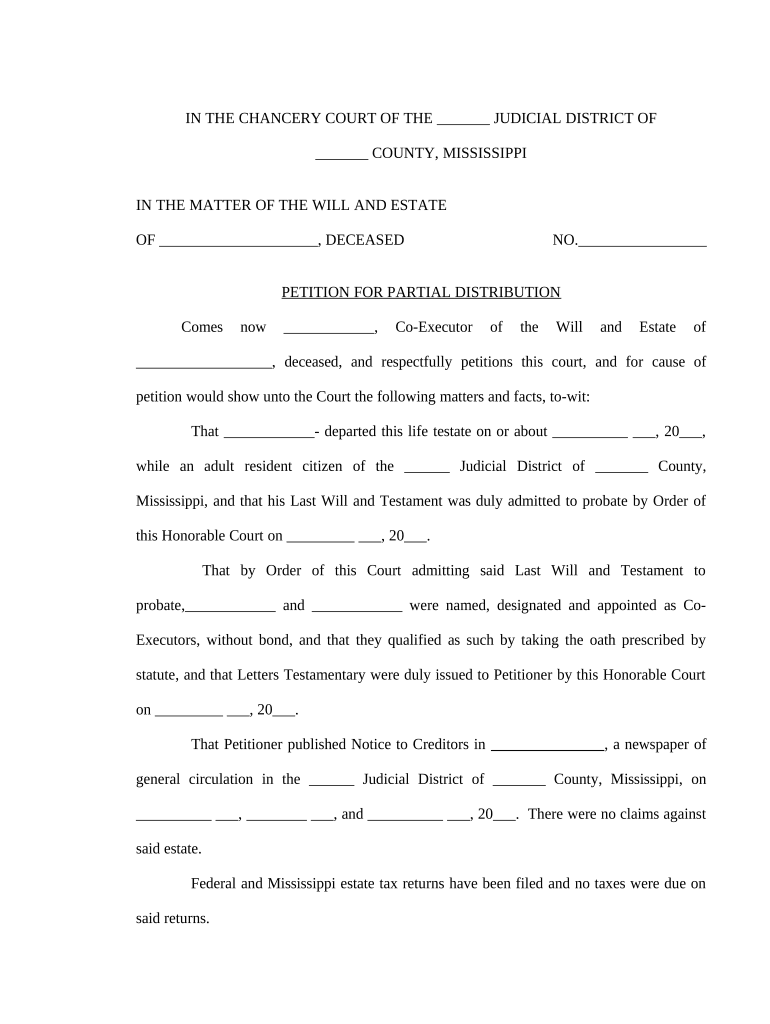







Definition and Meaning of Partial Distribution Estate Form
The partial distribution estate form is a legal document used in the probate process when an estate is being settled. It authorizes the distribution of a portion of the estate assets to beneficiaries while the administration of the estate continues. This form is essential for ensuring that beneficiaries receive their entitled share without waiting for the entire estate to be settled, which can often take months or even years. The document serves as a formal request to the court to approve the partial distribution and outlines the reasons for the request.
How to Use the Partial Distribution Estate Form
To utilize the partial distribution estate form, follow these steps:
- Identify Beneficiaries: Before completing the form, determine which beneficiaries will receive the partial distribution.
- Gather Required Information: Collect essential details about the estate, including asset values, liabilities, and prior distributions made to beneficiaries.
- Complete the Form: Fill out the form with accurate information, detailing the requested amount to be distributed to each beneficiary, along with relevant estate information.
- File the Form with the Court: Once completed, submit the form to the relevant probate court for approval. This step is crucial and ensures legal compliance.
Each state may have specific details that need to be included, so it is advisable to check local requirements or seek legal assistance if unsure.
Steps to Complete the Partial Distribution Estate Form
Completing the partial distribution estate form involves several crucial steps to ensure all necessary information is included for review by the probate court:
- Step 1: Download the Correct Form: Obtain the latest version of the partial distribution estate form from your state’s probate court website.
- Step 2: Provide Personal Information: Fill in your personal information as the executor or administrator of the estate, including your name, address, and contact details.
- Step 3: Detail Estate Information: Clearly outline the estate’s information, including the deceased's name, date of death, and the estate's case number.
- Step 4: List Beneficiaries and Distributions: Specify which beneficiaries are to receive the partial distribution, the amounts, and any conditions associated with their distributions.
- Step 5: Affirm Financial Status of the Estate: Confirm that all tax obligations have been met and there are no outstanding claims against the estate, which could impact the distribution.
Once the form is filled out and reviewed for accuracy, it should be filed with the appropriate court along with any required fees.
Important Terms Related to Partial Distribution Estate Form
Understanding key terminology related to the partial distribution estate form enhances comprehension of the document's implications and requirements. Important terms include:
- Beneficiary: An individual or entity entitled to receive a share of the estate’s assets.
- Executor: The person appointed to administer the estate, ensuring that the will is executed according to the deceased's wishes.
- Probate: The legal process through which a deceased person's will is validated and their estate is settled.
- Distribution: The act of disbursing assets from the estate to the beneficiaries.
- Tax Obligations: Financial duties required by federal and state law that the estate must fulfill before distributions can occur.
These terms are frequently encountered and understanding them is vital for correctly managing estate distributions.
Examples of Using the Partial Distribution Estate Form
Utilizing the partial distribution estate form can be illustrated through real-world scenarios, aiding in comprehension:
- Example 1: An individual passes away, leaving behind several assets, including a home and investments. The executor can file a partial distribution form to distribute a cash advance from the estate to each of the beneficiaries while the estate is still in probate.
- Example 2: In cases where some beneficiaries need funds urgently—perhaps for medical expenses—the executor can request a partial distribution of a percentage of the estate's liquid assets while waiting for the completion of the asset valuations and sale of real estate.
- Example 3: If prior distributions were made to beneficiaries, the executor must disclose these amounts in the form, ensuring transparency and that no beneficiary is unfairly favored during the final distribution.
These examples illustrate the benefits of the partial distribution estate form, providing beneficiaries with much-needed resources in a timely manner while ensuring legal compliance throughout the process.




